Thareed: A Practical Guide to the Gulf's Traditional Lamb and Bread Stew
Discover thareed, a beloved Gulf dish of tender lamb and vegetables served over thin bread, and learn how to enjoy it like a local.
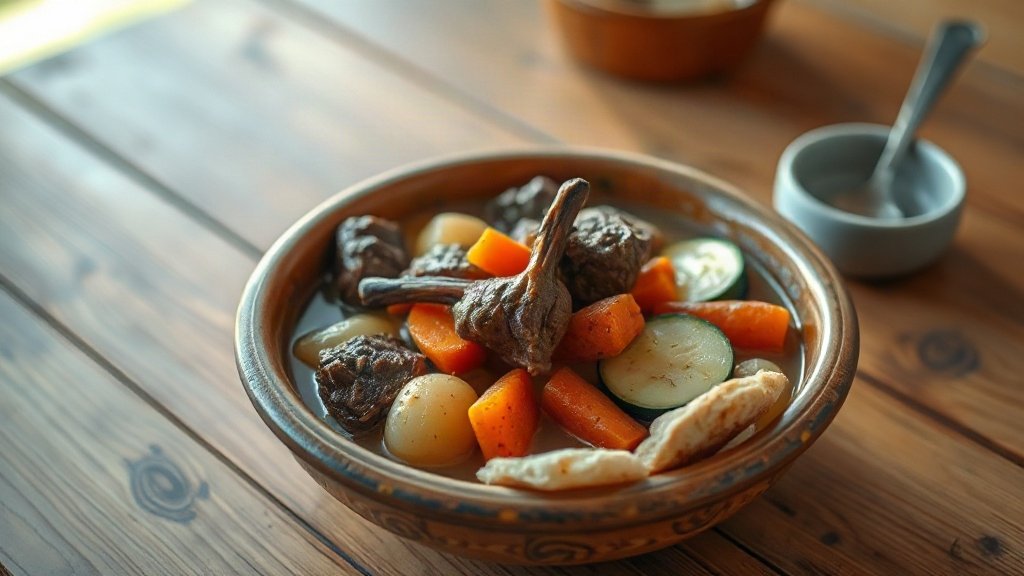
Illustration: AI-generated image
Thareed (also spelled tharid) is one of the Gulf's most comforting and historic dishes: a hearty stew of slow-cooked lamb, seasonal vegetables and aromatic spices, ladled over layers of thin, crispy bread that soften as they soak up the rich broth. Found across the Arabian Peninsula, especially in Saudi Arabia, the UAE, Qatar, Bahrain, Kuwait and Oman, it is a staple of family gatherings and particularly associated with the holy month of Ramadan, when it is often served to break the fast.
What goes into thareed
The exact recipe varies from household to household, but the core elements remain consistent. Lamb is usually the meat of choice, cut into generous pieces and simmered until meltingly tender. The broth is flavoured with a blend of spices such as turmeric, coriander, cumin, black pepper, cinnamon and cardamom, along with onions, garlic and sometimes tomato paste or fresh tomatoes. Vegetables like potatoes, carrots, courgettes, pumpkin and green beans are added to the pot, creating a wholesome one-dish meal. The defining feature, however, is the bread: thin flatbreads, often regag (a paper-thin Emirati bread) or khubz, are torn into pieces and placed in a deep serving dish. The stew is poured over the top, allowing the bread to absorb the flavourful liquid while retaining a slight bite.
A dish with deep roots
Thareed holds a special place in Islamic tradition. It is widely reported in hadith literature that the Prophet Muhammad praised tharid as the best of dishes, comparing it to his wife Aisha among women—a testament to its cultural and spiritual significance. This has made it a particularly beloved dish during Ramadan, as it is both nourishing and easy to eat after a day of fasting. In many Gulf homes, large platters of thareed are shared communally, with diners gathering around to eat with their right hands or spoons.
How to try thareed as a visitor
Thareed is widely available in local restaurants across the Gulf, from casual eateries to more upscale traditional dining venues. It is often listed on menus as "thareed lamb" or "thareed with vegetables." During Ramadan, many hotels and restaurants feature it on their iftar buffets, offering visitors a chance to taste it in an authentic setting. For the best experience, enjoy it with a side of fresh salad, lime wedges and perhaps a glass of laban (buttermilk) or Arabic coffee. As with many Gulf dishes, thareed is meant to be shared, so ordering a family-size portion is both economical and true to tradition.