The Majlis: A Simple Guide to Gulf Hospitality for Visitors
The majlis is the heart of Gulf social life. Here's how to understand this tradition and participate respectfully as a visitor.
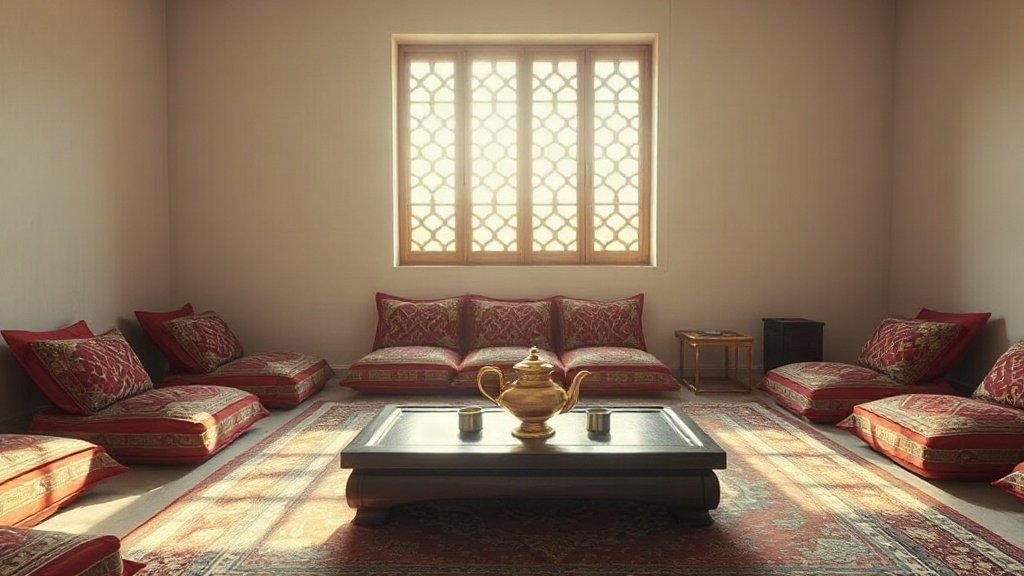
Illustration: AI-generated image
What is a majlis?
In every Gulf neighbourhood, from the old coral-stone houses of Jeddah to the modern villas of Doha, the majlis is where life happens. The Arabic word means "a place of sitting", but it is far more than a room. It is a social institution: a space where neighbours meet, travellers are welcomed, business is discussed and stories are told over cups of gahwa (Arabic coffee).
Traditionally, the majlis is a separate room or tent, often with its own entrance, so guests do not disturb the family's private quarters. It is furnished with cushions and carpets along the walls, low tables for coffee and dates, and a brass dallah (coffee pot) always on hand. In cooler months, the majlis may be a tent in the desert or a shaded corner of a courtyard.
Why it matters
The majlis is the foundation of Gulf hospitality. It is where a stranger can find a welcome, where disputes are settled by elders, and where poetry and news are exchanged. In 2015, UNESCO inscribed the majlis on the Representative List of the Intangible Cultural Heritage of Humanity, recognising its role in passing down oral heritage and strengthening community bonds.
Experiencing a majlis as a visitor
Visitors to the Gulf often wonder how to encounter this tradition. The simplest way is through a local invitation. If you have a colleague, neighbour or guide who invites you to their majlis, accept graciously. Hotels, cultural centres and heritage villages sometimes host public majlis experiences, but the most authentic moments happen by chance.
When you enter, remove your shoes if others have done so. Greet each person individually with a handshake or a nod; a simple "as-salamu alaykum" is appreciated. Men and women may sit separately, depending on the household. Follow your host's lead on where to sit. It is polite to sit cross-legged or on your knees if you can, but do not point the soles of your feet at anyone.
What to expect
Within minutes of sitting down, someone will offer you gahwa, the lightly spiced Arabic coffee served in a small handleless cup called a finjan. The cup is filled only a quarter or a third full. When you have had enough, gently shake the cup from side to side as you hand it back, or say "bas" (enough). Dates are always served alongside; take one or two, and place the pit in the small dish provided.
Conversation flows slowly. Topics range from family and health to camels, falcons and the weather. It is polite to accept a second cup of coffee, but not obligatory. If you are offered a meal, stay if you can; refusing food outright may be seen as a rejection of hospitality.
Tips for respectful participation
- Dress modestly. Loose, conservative clothing covering shoulders and knees is appropriate for both men and women.
- Accept refreshments. Even a sip of coffee or a small piece of date is a gesture of respect.
- Listen more than you speak. The majlis is often a place for quiet reflection and storytelling.
- Ask before taking photos. Some majlis are private; photographing people without permission is inappropriate.
- Do not rush. The majlis is about unhurried connection. Allow an hour or more.
A living tradition
Today, the majlis is evolving. Modern majlis rooms may have air conditioning, televisions and Wi-Fi, but the essence remains: a welcoming space for conversation and community. For travellers, stepping into a majlis is one of the most direct ways to understand the warmth at the heart of Gulf culture.