The Mirwas: Understanding the Gulf's Traditional Hand Drum
From pearl diving crews to modern heritage ensembles, this small double-headed drum has kept the rhythm of Gulf music alive for generations.
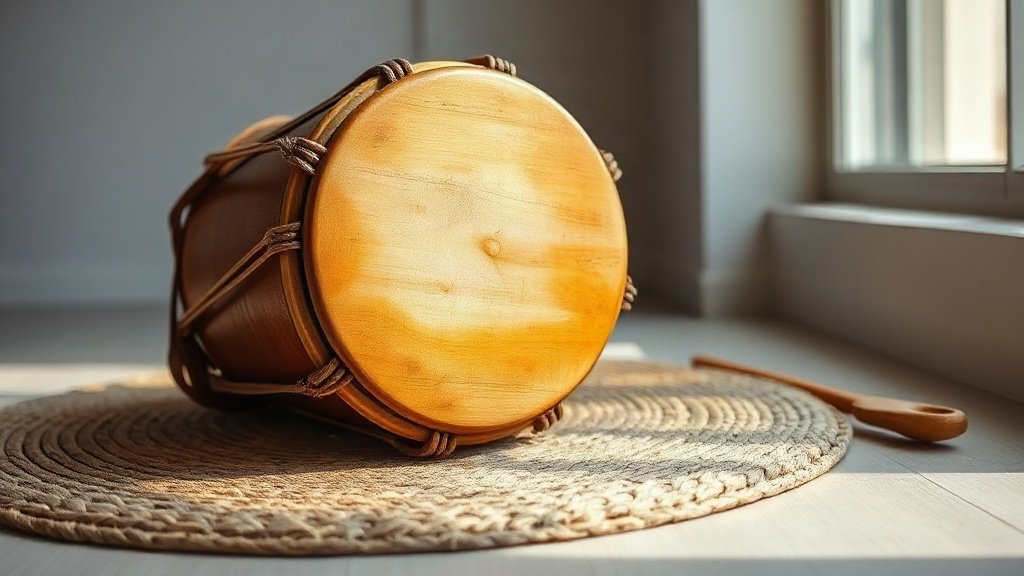
Illustration: AI-generated image
The mirwas is a small cylindrical drum, usually around 30 cm in diameter and 15 cm deep, with two heads made of goat or fish skin, laced together with leather cords. Played with a stick or with the hands, it produces a crisp, high-pitched sound that cuts through the rhythmic chants of Gulf sailors and pearl divers.
A Drum for the Sea
The mirwas was a constant companion on pearling dhows. Divers and sailors used its sharp beats to synchronise the heavy labour of hauling ropes and raising sails. In the evenings, it would set the tempo for fijiri performances, where the nahham (lead singer) led the crew in call-and-response chants. The drum's small size made it easy to carry on long voyages, and its bright tone carried well over the water. Today, the mirwas remains central to Gulf maritime heritage festivals and performances in Kuwait, Bahrain, and the eastern province of Saudi Arabia.
How It Is Played
The mirwas is typically held under the left arm or between the knees, leaving both hands free to strike the heads. One hand may use a thin stick (called a khayzaran) while the other taps the drum with fingers or palm. The resulting rhythms are intricate and syncopated, often interlocking with other percussion instruments like the jahlah (clay pot drum) and the tus (small cymbals). In sawt ensembles, the mirwas often plays a steady pulse while the oud and violin weave melodic lines above it.
Living Heritage
Though pearling has declined, the mirwas has found new life in urban music scenes and heritage revival projects. Bands in Kuwait and Bahrain continue to perform traditional sawt with the mirwas at weddings and cultural events. Music schools and cultural centres offer workshops, ensuring that the craft of building and playing this drum is passed on. For visitors to the Gulf, hearing the mirwas in a live performance is a window into the region's seafaring past.