Thareed: A Guide to the Gulf's Hearty Bread and Stew Dish
Discover thareed, a comforting Gulf classic of torn flatbread soaked in a rich meat and vegetable stew, especially beloved during Ramadan.
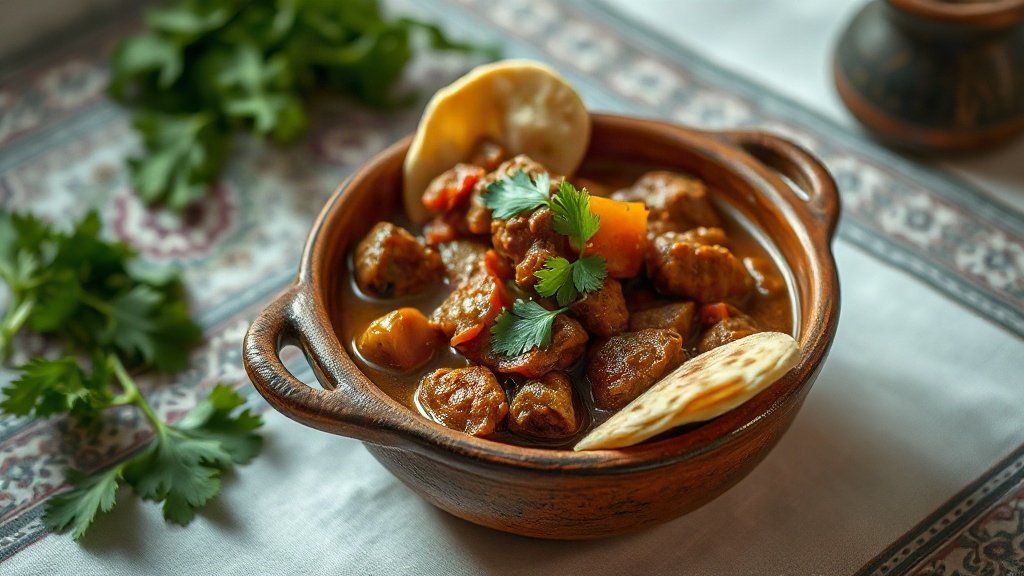
Illustration: AI-generated image
Thareed, also known as tharid, is a deeply comforting dish found across the Arabian Peninsula and wider Arab world. It combines two humble staples – bread and stew – into a satisfying meal that has sustained families for centuries, particularly during the holy month of Ramadan.
What is Thareed?
At its heart, thareed is a layered dish of torn or crumbled flatbread that is moistened and topped with a rich, spiced meat and vegetable stew. The bread – often thin regag or thicker tannour bread – absorbs the broth, transforming into a soft, flavourful base. The stew typically features lamb or chicken, along with vegetables such as potatoes, carrots, courgettes and tomatoes, all simmered with warm spices like turmeric, cumin, coriander and black pepper, and sometimes a little loomi (dried lime) for a subtle tang.
How Thareed is Made
The process is simple but relies on good ingredients. First, a stew is prepared: meat is browned with onions and garlic, then simmered with vegetables and spices until tender and the broth is well flavoured. Meanwhile, flatbread is broken into large pieces and arranged in a deep serving dish. Once the stew is ready, the broth is ladled over the bread to soften it, then the meat and vegetables are arranged on top. Some cooks like to add a final drizzle of ghee for richness, and a scattering of fresh coriander or mint.
Cultural Roots and Ramadan Tradition
Thareed holds a special place in Gulf culinary heritage. It is mentioned in classical Arabic texts and is believed to have been a favourite of the Prophet Muhammad, giving it spiritual significance for many Muslims. In the Gulf, the dish is a fixture on iftar tables during Ramadan, when its soft texture and nourishing combination of carbohydrates, protein and vegetables make it ideal for breaking the fast. Families often prepare large pots to share with neighbours and those in need, reflecting the spirit of generosity central to the month.
Variations Across the Region
While the basic concept remains the same, thareed varies from country to country. In the UAE and Oman, it is commonly made with lamb and a tomato-based broth, often accompanied by regag bread. In Saudi Arabia and Bahrain, chicken may be more typical, and the stew can be spicier, with extra chillies or a spoonful of tomato paste. Some versions include pumpkin or marrow, lending a natural sweetness. In all cases, the dish is meant to be eaten by hand, scooping up the softened bread and stew together – a tactile, communal dining experience.
Tips for Making Thareed at Home
If you would like to try making thareed, start with a good-quality flatbread; store-bought khubz or pita can work in a pinch, but homemade or traditional Gulf bread gives the most authentic result. Make your stew slightly more liquid than usual, as the bread will absorb a good amount of broth. Season generously – the bread can dull flavours, so the stew should be well spiced. Finally, serve thareed immediately after assembling to enjoy the contrast between the soaked bread and tender meat. Leftovers can be gently reheated, though the bread will become softer.
Thareed is more than a meal; it is a reminder of the Gulf's resourceful culinary past and the warmth of shared tables. Whether you encounter it at a Ramadan gathering or make it in your own kitchen, it offers a taste of tradition in every bite.