Margoog: A Guide to the Gulf's Hearty Stew with Thin Dough
Discover margoog, a comforting Gulf stew of tender meat, seasonal vegetables and delicate dough pieces, often shared during Ramadan and cooler months.
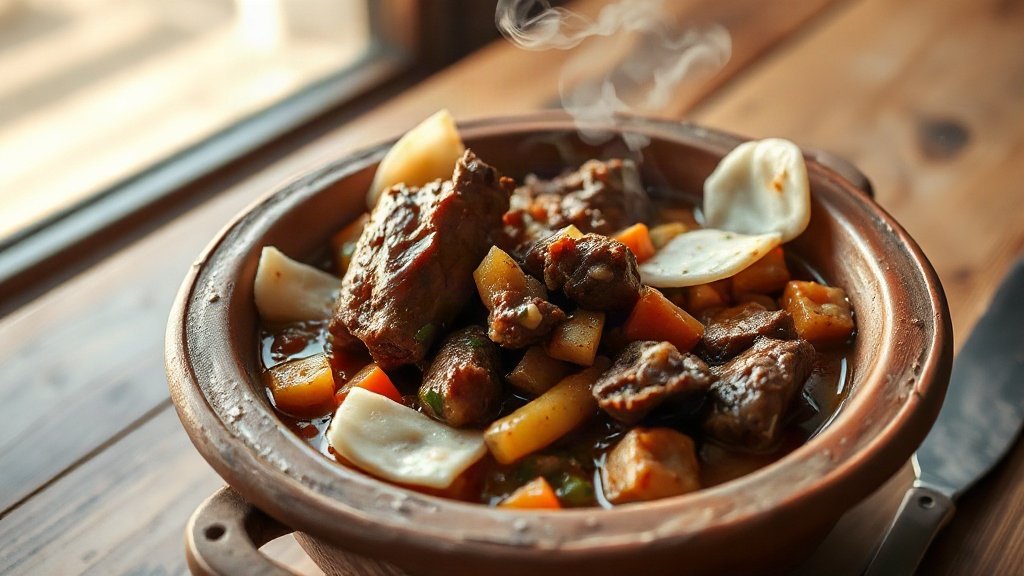
Illustration: AI-generated image
Across the Arabian Peninsula, home cooks reach for a single pot to create a meal that is both deeply comforting and wonderfully adaptable. Margoog — sometimes spelled marqooq or margouq — is a thick stew of meat, seasonal vegetables and delicate pieces of dough, simmered until everything melds into a satisfying whole. It is a staple in households from Saudi Arabia and the UAE to Qatar, Bahrain and Oman, where it appears at family tables year-round and especially during Ramadan.
What Is Margoog?
Margoog belongs to a family of one-pot dishes common across the Gulf. The word itself comes from the Arabic root meaning "to tear" or "to shred", a nod to the thin pieces of dough that are torn and dropped into the bubbling broth. Unlike many stews that are served over rice, margoog is a complete meal in a bowl: the starch comes from the dough, while the broth, meat and vegetables provide richness and texture.
Key Ingredients
The beauty of margoog lies in its flexibility. While recipes vary by household, certain elements are almost always present:
- Meat: Lamb is traditional, but chicken is also common. The meat is usually cut into small pieces and browned before simmering.
- Vegetables: Potatoes, tomatoes, courgettes, aubergines, carrots and pumpkin are favourites. Some cooks add okra or green beans when in season.
- Dough: A simple mixture of flour, water and a little salt, sometimes with whole wheat flour added. The dough is rolled thin and torn into rough shapes.
- Spices: Turmeric, cumin, coriander and black pepper are common, along with dried lime (loomi) for a gentle tang. A spoonful of tomato paste adds colour and depth.
How It Is Made
The process is straightforward but requires a little patience. The meat is first browned in a large pot with onions and spices. Water or stock is added, along with chopped tomatoes and any dried lime. The stew is left to simmer until the meat is nearly tender. Harder vegetables like potatoes and carrots go in next, followed by softer ones such as courgette and aubergine. Meanwhile, the dough is rolled out and torn into pieces roughly the size of a palm. These are dropped into the simmering liquid just before the end of cooking, so they cook through but keep a slight bite. The result is a thick, hearty stew with soft dough pieces that soak up the spiced broth.
When and How to Enjoy
Margoog is a dish for cooler evenings and festive gatherings, but it is perhaps most associated with Ramadan. After a day of fasting, a bowl of margoog offers immediate comfort without being overly heavy. It is often served with a side of plain rice or fresh bread, though many simply enjoy it on its own with a spoon. A squeeze of fresh lime or a sprinkle of chopped coriander just before serving brightens the flavours.
Regional Variations
While the core idea remains the same, each Gulf country has its own take. In Saudi Arabia, margoog may include a wider range of spices, while Emirati versions sometimes use a thinner dough and more tomato. Qatari and Bahraini cooks might add dried shrimp or fish to the broth for extra umami, and Omani versions often feature a generous amount of dried lime. These small differences reflect local tastes and the ingredients available in each area, but the essential character of margoog — warm, filling and made for sharing — stays constant.
For anyone looking to explore Gulf home cooking beyond the well-known rice dishes, margoog offers a delicious introduction to the region's love of simple, slow-simmered food.