A Guide to Kamah: The Gulf's Prized Desert Truffle
Kamah, the wild desert truffle of Arabia, appears after winter rains and is treasured across the Gulf for its earthy flavour and simple, luxurious preparations.
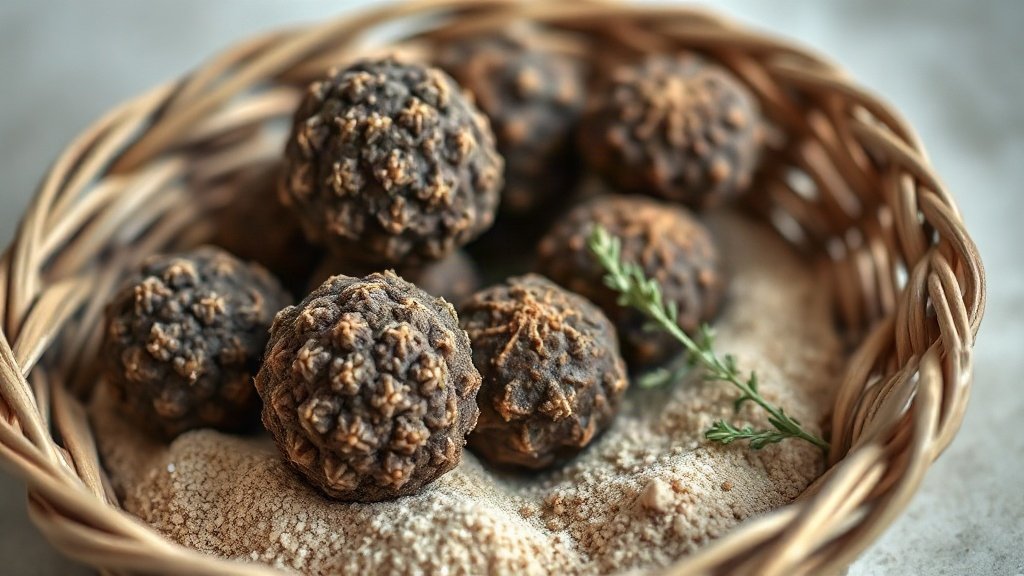
Illustration: AI-generated image
When winter rains soak the deserts of the Arabian Peninsula, a quiet transformation takes place beneath the sand. Weeks later, foragers head out at dawn to search for small, lumpy fungi known as kamah — the desert truffle. Prized across the Gulf for centuries, kamah is a seasonal delicacy that turns a simple meal into a celebration.
What Is Kamah?
Kamah (also called faqa or zubaidi in some regions) is a type of wild truffle that grows in arid and semi-arid environments, often in association with the roots of certain desert shrubs, particularly Helianthemum species. Unlike European truffles, which are intensely pungent, kamah has a milder, earthy flavour with a slightly nutty, mushroom-like taste and a firm, potato-like texture when cooked.
There are several varieties, ranging from pale cream to dark brown or black. The most sought-after are typically the lighter-coloured ones, which are considered sweeter and more delicate. Kamah is found throughout the Gulf — in Saudi Arabia, Kuwait, Qatar, the UAE, Bahrain and Oman — as well as in other parts of the Middle East and North Africa.
When and Where to Find It
Kamah appears only after sufficient rainfall, usually between December and March. The truffles develop underground and are often located by the slight cracks they create in the soil surface. For generations, Bedouin families have passed down knowledge of the best hunting grounds, and even today, many people head to the desert after a good rainy season to search for this hidden treasure.
In local markets, kamah appears in short bursts during the spring, often sold in small baskets or cloth bundles. Because it is wild and weather-dependent, availability varies greatly from year to year, which adds to its allure.
Traditional Ways to Cook Kamah
Kamah is highly versatile and is used in both savoury and simple preparations. The most traditional method is to slice it thinly and sauté it in samneh (clarified butter) with garlic and a little onion, seasoning with salt and perhaps a pinch of loomi (dried lime) for tang. It is also commonly added to rice dishes, stews, or cooked with eggs for a hearty breakfast.
Another classic preparation involves simmering kamah in milk or yoghurt, which softens its texture and brings out a creamy richness. In some Gulf households, kamah is chopped and mixed with minced meat to fill samboosa or stuffed into vegetables. Because its flavour is mild, it pairs well with warm spices such as cinnamon, cardamom and black pepper, but purists insist that simple cooking allows the truffle's own character to shine.
Why It Holds Cultural Value
Kamah is more than just food; it is a link to the region's pastoral past. Foraging for truffles was traditionally a communal activity, often involving entire families who would camp in the desert during the season. The arrival of kamah was a sign of good rains and, by extension, a good year for grazing animals and crops. Today, it remains a nostalgic symbol of abundance and connection to the land.
For anyone visiting the Gulf in spring, seeking out kamah at a local market or trying it in a traditional restaurant offers a rare taste of the desert's hidden bounty. If you are lucky enough to get fresh kamah, store it in a cool, dry place and use it within a few days — or freeze it after cleaning to enjoy later in the year.