Falconry in the Gulf: A Guide to the Ancient Hunting Tradition
Discover the history, birds, training methods, and cultural significance of falconry, a UNESCO-recognised living heritage in the Arab Gulf.
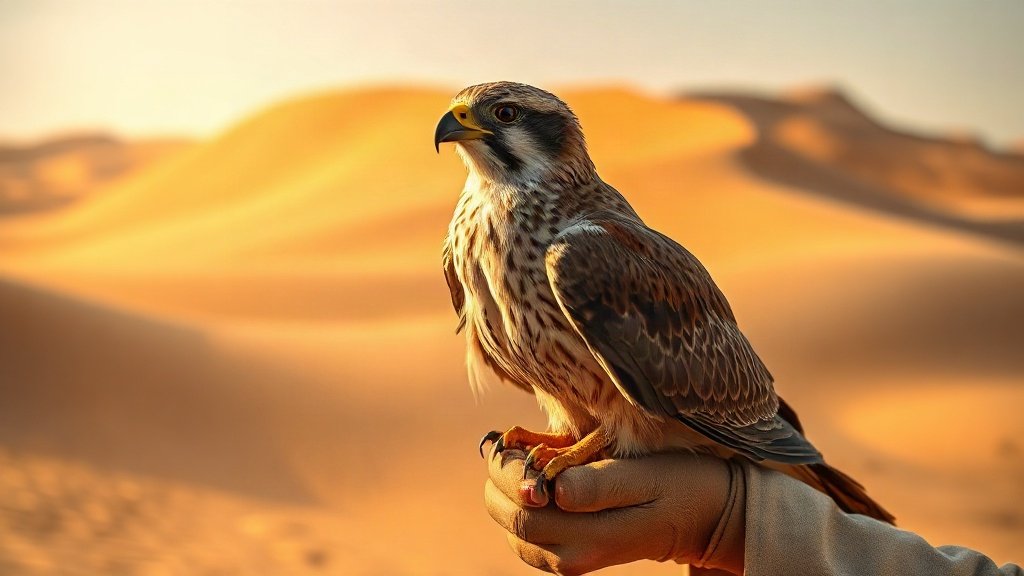
Illustration: AI-generated image
Falconry, known locally as bayzara, holds a cherished place in the cultural heritage of the Gulf states. This ancient practice of hunting with trained birds of prey dates back thousands of years and remains a living tradition, recognised by UNESCO as an intangible cultural heritage of humanity. For visitors and residents alike, understanding falconry offers a window into the values of patience, skill, and respect for nature that have shaped Gulf society.
A Bedouin Legacy
In the pre-oil era, falconry was not merely a pastime but a means of survival. Bedouin tribes relied on falcons to hunt game such as houbara bustards and hares, supplementing their diet in the harsh desert environment. The bond between falconer and bird was built on mutual trust, and the knowledge of training and caring for falcons was passed down through generations. Today, while hunting is no longer a necessity, the tradition endures as a symbol of heritage and nobility.
Birds of the Hunt
The most prized falcons in the Gulf are the saker falcon and the peregrine falcon, both known for their speed and hunting prowess. The gyrfalcon, the largest of the falcon species, is also highly valued. Each bird has distinct characteristics: the saker is renowned for its endurance, the peregrine for its diving speed, and the gyr for its power. Falcons are often identified by their plumage and size, and experienced falconers can assess a bird's potential with a keen eye.
Training and Equipment
Training a falcon requires immense patience and skill. Young birds, called hurr, are gradually accustomed to human presence and taught to return to the falconer's glove. Key equipment includes the burqa (leather hood) to keep the bird calm, the sabuk (leather jesses) attached to the legs, and the wakir (perch). The falconer uses a lure to exercise the bird and reinforce recall. Training often begins in the cooler months, and a well-trained falcon becomes a loyal hunting companion.
Cultural Significance Today
Falconry remains a vibrant part of Gulf culture. Majlis gatherings often feature conversations about falcons, and dedicated falcon hospitals and markets attest to the practice's importance. Heritage festivals celebrate falconry with demonstrations and competitions, such as racing and beauty contests, where the birds' conformation and skill are judged. Falconry also plays a role in diplomatic and social events, symbolising hospitality and prestige.
For those interested in experiencing falconry, many cultural centres and desert camps offer demonstrations, allowing visitors to witness the grace and power of these birds up close. Observing the quiet bond between falconer and falcon is a profound reminder of a heritage that continues to soar.