Bahrain Fort: A Practical Guide to the Ancient Capital of Dilmun
Explore Qal'at al-Bahrain, a UNESCO World Heritage Site that reveals 4,000 years of Gulf history through ancient ruins, a Portuguese fort and a modern museum.
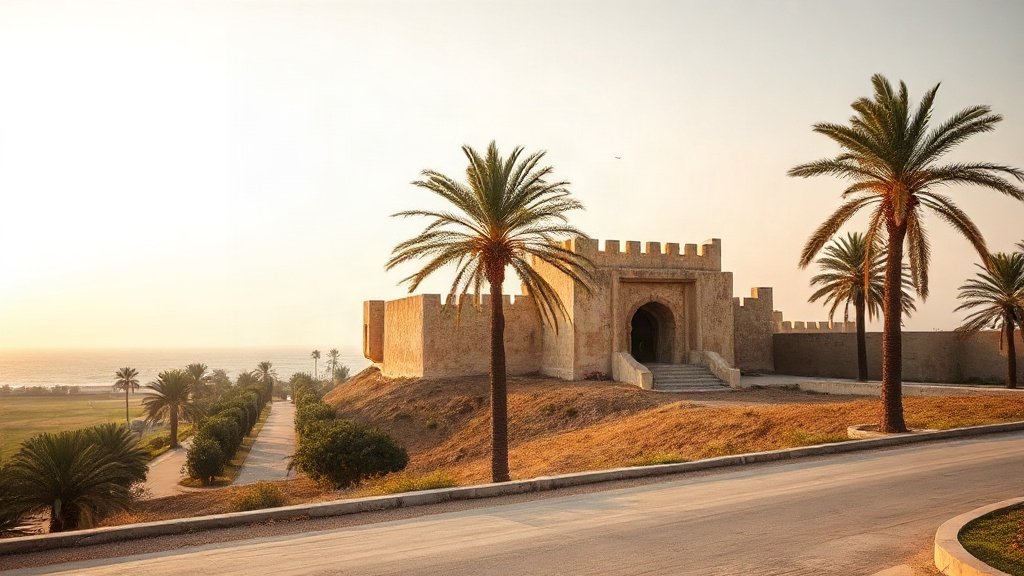
Illustration: AI-generated image
Bahrain Fort, known locally as Qal'at al-Bahrain, sits on a low hill overlooking the sea on Bahrain's northern coast. This archaeological site is far more than a single fortress: it is a layered mound of human settlement stretching back over 4,000 years. Recognised by UNESCO for its outstanding universal value, the fort offers visitors a tangible link to the ancient Dilmun civilisation, which once controlled trade across the Gulf.
What you will see
The most prominent structure is the Portuguese fort, built in the 16th century from local coral stone and limestone. Its thick walls and square corner towers are well preserved, and you can walk along the ramparts for sweeping views over the surrounding palm groves, the sea and the modern city of Manama in the distance. Below the fort, excavations have uncovered the remains of an entire ancient city: residential quarters, streets, shops and a small temple. The site is still an active dig, so you may see archaeologists at work during the cooler months.
A journey through time
The hill itself is a tell, an artificial mound created by centuries of rebuilding. The lowest layers date to around 2300 BC, when Dilmun was a vital trading hub linking Mesopotamia with the Indus Valley. Later settlements include a Hellenistic city, an early Islamic town and a medieval trading port. The fort you see today was built by the Portuguese in the 1500s, but it stands on foundations that echo every period of Bahrain's history.
The museum and visitor centre
A small but excellent museum at the entrance explains the site's chronology with artefacts, models and interactive displays. It is an ideal first stop before walking the ruins, giving context to the stones. The building itself blends modern and traditional Gulf design, with shaded courtyards and wind-tower-inspired features. Signage inside is in Arabic and English.
Practical tips for your visit
The fort is open to the public and receives far fewer visitors than Bahrain's other UNESCO site, the Pearling Path, making it a peaceful escape. Wear comfortable shoes, as the site is large and the ground uneven in places. Bring water and sun protection; there is little shade away from the fort walls. Early morning or late afternoon offers the best light for photography and the most comfortable temperatures. The fort is especially atmospheric at sunset, when the warm coral stone glows against the darkening sky.
To reach Bahrain Fort by car, take the coastal road north from Manama towards the village of Karbabad. Public buses also run nearby, but a taxi or rental car is most convenient. Combine your visit with a stop at the nearby Bahrain National Museum or a stroll through the traditional houses of Muharraq.