Exploring Oman's Aflaj: A Guide to Ancient Water Channels
Discover the ingenious 2,000-year-old irrigation channels that still sustain Omani villages, and learn where to see and appreciate these UNESCO-listed marvels.
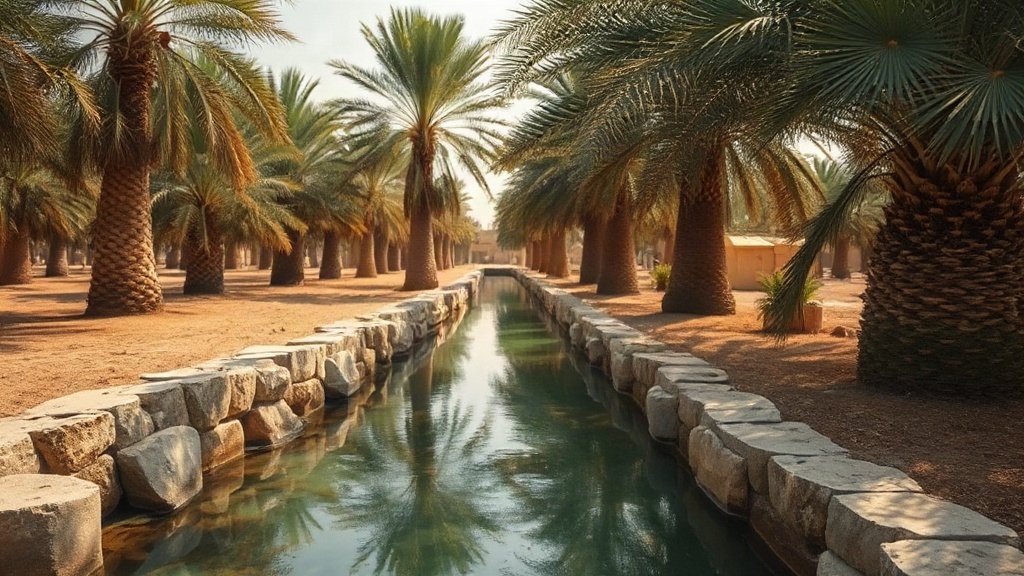
Illustration: AI-generated image
Oman's arid mountains and deserts are home to one of the Arab world's most remarkable feats of engineering: the falaj (plural: aflaj). These ancient water channels, some over 2,000 years old, use gravity alone to carry water from underground springs or mountain aquifers to villages and farms, turning harsh landscapes into lush oases of date palms, citrus trees and other crops. Recognised by UNESCO as a World Heritage Site, the aflaj of Oman offer travellers a fascinating glimpse into traditional life and sustainable water management.
What are aflaj?
A falaj is a man-made channel that taps into a water source, often via a mother well dug deep into the water table, and then slopes gently downhill, distributing water through a network of open or covered conduits to agricultural terraces and settlements. The system is entirely gravity-fed, requiring no pumps or machinery. The water is shared according to a strict, centuries-old system of time-based allocation, with each farm receiving a set turn, often measured in hours or days and regulated by a wakil (water manager).
There are three main types of falaj in Oman: ghayl (fed by surface water from wadis), aïn (fed by springs), and dawoodi (tapping deep underground aquifers via long tunnels, similar to Persian qanats). The most visually impressive are the dawoodi aflaj, which feature vertical access shafts leading down to the channel.
Where to see impressive aflaj
Oman boasts thousands of active aflaj, but several stand out for their scale, beauty and accessibility:
- Falaj Daris (Nizwa): The largest of Oman's aflaj, and a UNESCO-listed site, Falaj Daris supplies water to the Nizwa area and features a massive, photogenic channel lined with stone and shaded by palms. Visitors can walk alongside parts of the watercourse.
- Falaj Al Khatmain (Birkat Al Mouz): Located at the foot of Jebel Akhdar, this falaj runs through the ruined mudbrick village of Birkat Al Mouz, offering a striking contrast of flowing water, ancient architecture and date plantations. It is easily combined with a visit to the nearby old settlement.
- Falaj Al Malki (Izki): One of the oldest continually used aflaj, believed to date back to the pre-Islamic period. Its deep dawoodi shaft and clear water emerge near the town of Izki, which is also known for its rich archaeological sites.
- Misfat Al Abriyeen: Though not a single named falaj, this mountain village is crisscrossed by small aflaj and channels that irrigate terraced farms, and the gentle sound of flowing water accompanies you as you wander its stone paths.
What to expect when visiting
Visiting an falaj is free and does not require a guide, though a local guide can greatly enhance understanding of the water-sharing traditions and history. Many aflaj flow through or near residential areas, so it is important to be respectful: do not block the water channels, avoid washing or wading in the water where locals rely on it for drinking or irrigation, and always ask permission before entering private farmland. Wear sturdy, closed-toe shoes as the edges of the channels can be slippery and uneven. The best time to visit is between October and April, when temperatures are mild and the surrounding greenery is at its most vibrant.
For photographers, early morning or late afternoon light casts long shadows across the stone channels and makes the water glisten. Combining a falaj visit with nearby attractions such as Nizwa Fort, Jebel Akhdar or the old villages of Al Hamra and Misfat Al Abriyeen creates a rewarding day trip from Muscat or Nizwa.
Why aflaj matter today
The aflaj are not relics; they remain vital to Oman's agricultural economy and cultural identity. They embody a philosophy of communal water management that is increasingly relevant in a water-scarce region. By visiting and learning about these systems, travellers gain insight into how Gulf communities have thrived in challenging environments for millennia.