Sur: A Practical Guide to Oman’s Historic Dhow-Building Town
Discover Sur, an Omani coastal town where traditional dhows are still built by hand. Explore its shipyards, corniche and old town with our practical guide.
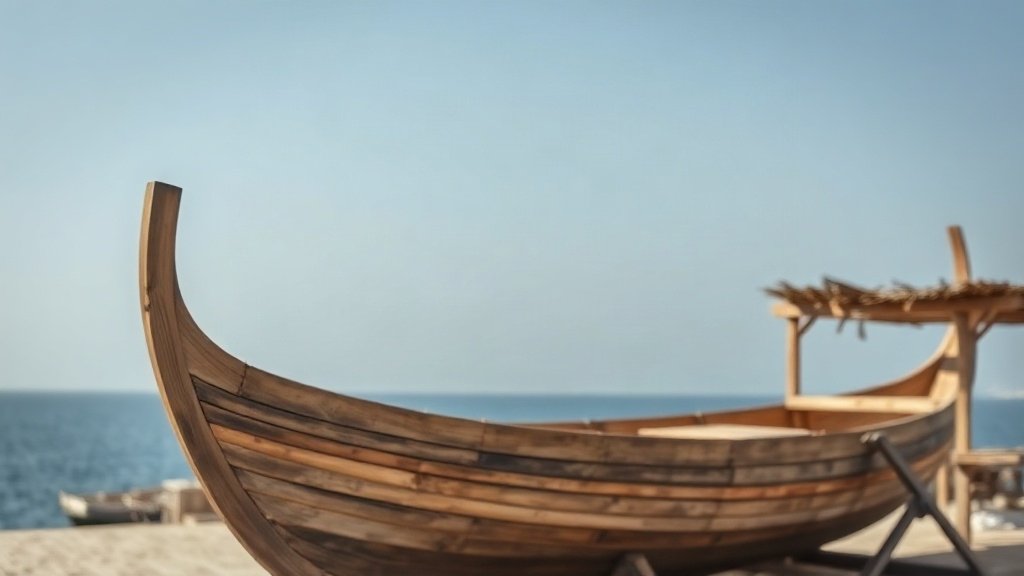
Illustration: AI-generated image
Sur, a coastal city in Oman's Ash Sharqiyah region, is a living museum of the country's maritime heritage. Unlike the glittering high-rises of Dubai or Abu Dhabi, Sur offers a quiet, authentic glimpse into the Gulf's seafaring past, where traditional wooden dhows have been built by hand for centuries. This practical guide tells you what to see, how to get there, and how to make the most of a visit.
A town shaped by the sea
Perched on the Gulf of Oman, Sur has long been a gateway for trade between the Arabian Peninsula, East Africa and the Indian subcontinent. Its natural harbour and strategic location made it a hub for merchants and sailors, and the town grew around shipbuilding, fishing and commerce. Historical records show that Sur was a major shipbuilding centre as early as the 18th century, with its vessels sailing as far as Zanzibar and other parts of the Indian Ocean. Today, the maritime connection remains strong, with the sea still central to daily life.
Watching dhows take shape
The highlight of any visit to Sur is seeing dhow building in action. Along the coast, open-air shipyards display vessels in various stages of construction. Skilled craftsmen use time-honoured techniques, shaping wooden planks and fitting them together without modern blueprints. Over the years, the town has produced a wide range of vessels, from small fishing boats to large cargo ships. The traditional dhow, with its distinctive lateen sail, was the workhorse of regional trade, and Sur's builders were renowned for their skill. While many dhows are now built for tourism or racing, the skills passed down through generations are a testament to Oman's proud seafaring traditions. Visitors are welcome to observe from a respectful distance, but it is polite to ask before taking photographs of people at work.
Strolling the corniche and beyond
The corniche is a pleasant place for a walk, with views across the water to the old town of Al Ayjah. Its whitewashed houses, watchtowers and the distinctive round Al Ayjah lighthouse make for a photogenic scene. Al Ayjah's narrow lanes are lined with restored merchant houses, some of which date back more than a century. The area is particularly atmospheric at sunset, when the light softens on the white walls and the call to prayer echoes across the water. In the evening, locals gather on the corniche to enjoy the sea breeze. For those who want to dip their toes in the water, Sur has several beaches a short drive from the centre, where the sand is soft and the sea is calm in the cooler months.
Planning your visit
Sur is roughly a two-hour drive south-east of Muscat along a well-maintained highway, making it an easy day trip or a relaxed overnight stop. The best time to visit is between October and April, when temperatures are mild. Dress modestly in line with local customs, covering shoulders and knees. While Sur is not a major tourist hub, it offers a small selection of hotels and guesthouses. If you are driving, note that fuel stations are available in Sur, and the roads are well signposted. English is widely understood in shops and restaurants, though learning a few Arabic phrases can go a long way. Combining a visit to Sur with nearby attractions, such as the turtle reserve at Ras Al Jinz or the wadis of the Sharqiyah region, is a popular way to experience eastern Oman.
Whether you are drawn by the clink of hammers on wood, the smell of the sea or the chance to step back in time, Sur rewards the curious traveller with an unhurried charm that is increasingly rare in the modern Gulf.