Samneh: A Guide to the Gulf's Golden Clarified Butter
Rich, nutty and deeply aromatic, samneh is a cornerstone of Gulf cooking. Here is what it is, how it is made and the best ways to use it.
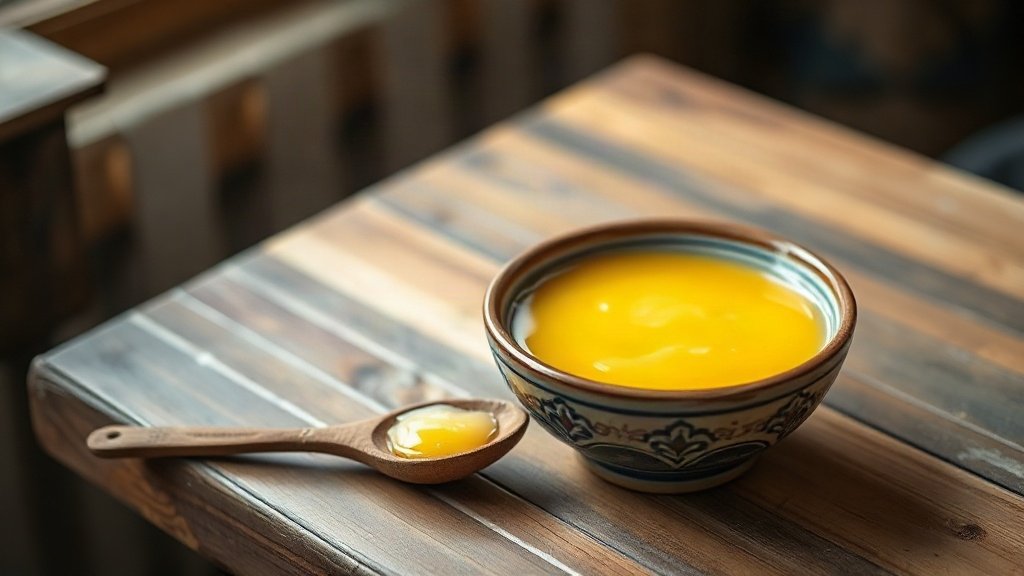
Illustration: AI-generated image
Samneh, the golden clarified butter of the Gulf, is a quiet hero in many traditional kitchens. Made by gently simmering butter until the water evaporates and the milk solids separate, it offers a rich, nutty flavour and a high smoke point that makes it ideal for everything from slow-cooked stews to delicate rice dishes.
What is Samneh?
Unlike regular butter, samneh is pure butterfat. The clarification process removes water and milk proteins, leaving behind a clear, amber liquid that solidifies into a soft, grainy texture at room temperature. Its taste is deeper and more savoury than fresh butter, often with a subtle toasty aroma that comes from browning the milk solids before they are strained away.
How Samneh is Made
Traditionally, samneh is prepared at home. Unsalted butter is heated slowly in a heavy pot until it melts and begins to bubble. As the water cooks off, the milk solids sink to the bottom and turn golden brown. The liquid is then carefully poured through a fine cloth or sieve, leaving the solids behind. The result is a clear, fragrant fat that can be stored for months without refrigeration, a practical advantage in the Gulf's warm climate.
Cooking with Samneh
Samneh's high smoke point makes it excellent for frying and sautéing. It is commonly used to:
- Fry onions and spices at the start of rice dishes like machboos and kabsa.
- Drizzle over plain rice or porridge for extra richness.
- Grease griddles for flatbreads such as regag or khubz.
- Finish slow-cooked stews, adding a glossy, buttery sheen.
Its concentrated flavour means a little goes a long way. Many cooks use half the amount of samneh compared to fresh butter.
Samneh vs Ghee: What's the Difference?
Samneh and Indian ghee are close relatives, both being clarified butter, but samneh is often cooked longer, giving it a darker colour and a more pronounced nutty taste. The terms are sometimes used interchangeably in the Gulf, though purists note that samneh typically browns the milk solids more deeply.
Storing and Using Samneh
Because it contains no water, samneh resists spoilage. It is traditionally kept in a ceramic jar or glass container in a cool cupboard, where it can last for many months. In warmer months, refrigeration prevents it from becoming too soft, though it will solidify and need to be scooped with a spoon. Always use a clean, dry utensil to avoid introducing moisture.
Samneh appears in both everyday and festive cooking across the Gulf. It is a key ingredient in celebratory dishes like harees and qoozi, and in simple breakfasts when stirred into hot balaleet or spread on warm bread with date syrup. Its deep, comforting flavour is a reminder of the region's resourceful culinary heritage.