Rangina: A Guide to the Gulf's Date and Nut Fudge
Rangina is a traditional Gulf sweet made from dates, toasted flour and ghee, often studded with nuts and perfumed with cardamom and saffron. Learn how this fudge-like dessert is made, when it is served, and how to try it at home.
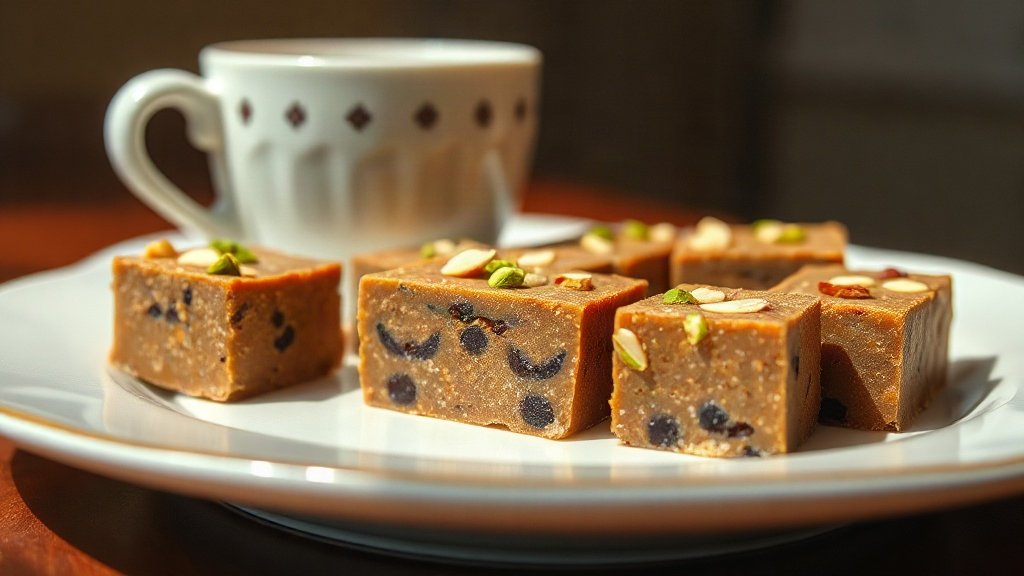
Illustration: AI-generated image
Rangina is a beloved sweet across the Gulf, a dense, fudge-like confection with a base of dates and toasted flour enriched with ghee and warm spices. It is sometimes called "date halwa" in English, but rangina has a character all its own: rich, buttery and naturally sweet, with a crumbly yet melt-in-the-mouth texture. Nuts add crunch and a hint of bitterness that balances the dates.
What is rangina?
At its heart, rangina is a mixture of mashed or puréed dates, toasted wheat flour and plenty of ghee or clarified butter. Cardamom and saffron are the most common flavourings, and a splash of rose water or orange blossom water is sometimes added. The mixture is cooked until thick, then spread into a dish and topped with chopped nuts such as almonds, pistachios or walnuts. Once cooled, it is cut into squares or diamonds, or simply scooped with a spoon.
Rangina is often associated with Ramadan, when it appears on iftar tables as a quick source of energy after a day of fasting. It is also served at Eid celebrations, weddings and other family gatherings, and it pairs beautifully with Arabic coffee (gahwa).
How is rangina made?
The method is simple but requires patience and attention. First, whole wheat flour is toasted in a dry pan over low heat until it turns a light golden brown and releases a nutty aroma. Then ghee is added, and the mixture is cooked further until the flour absorbs the fat. In a separate pot, seedless dates are softened with a little water or milk and mashed into a smooth paste. The date paste is combined with the flour mixture, along with ground cardamom, a pinch of saffron threads soaked in rose water, and sometimes a small amount of sugar or honey if the dates are not sweet enough.
The mixture is stirred continuously over low heat until it pulls away from the sides of the pan and has the consistency of thick fudge. It is then pressed into a greased tray, topped with nuts, and left to cool completely before slicing.
Regional variations
While the basic recipe is similar across the Gulf, small differences exist. In Bahrain, rangina is often made with a higher proportion of ghee, giving it a softer, meltier texture. In Saudi Arabia, it may include a spoonful of tahini for extra richness. Some cooks add toasted sesame seeds or dried coconut to the topping, while others prefer to leave the nuts out entirely for a smoother sweet. In the UAE, it is common to serve rangina with a drizzle of date syrup (dibs) for an extra layer of caramel-like flavour.
Serving rangina
Rangina is typically served at room temperature, cut into small pieces because it is very rich. It is often offered alongside Arabic coffee, whose bitterness cuts through the sweetness, or with a glass of cold milk or laban. During Ramadan, a small piece is enough to restore energy without overwhelming the appetite before the main meal.
If you are making rangina at home, keep in mind that the quality of the dates matters most. Soft varieties like khalas, sukkari or medjool work well because they mash easily and have a caramel-like sweetness. Use a good-quality ghee for the best flavour, and toast the flour until it is fragrant but not too dark, as a burnt flavour will ruin the dish.
Rangina is a wonderful introduction to Gulf sweets for anyone who loves dates and nuts. It is simple to make, endlessly customisable, and a true taste of regional hospitality.