Liwa Oasis: A Practical Guide to the Edge of the Empty Quarter
A crescent of lush date plantations and towering dunes, Liwa offers a glimpse of traditional desert life on the fringes of the Rub' al Khali.
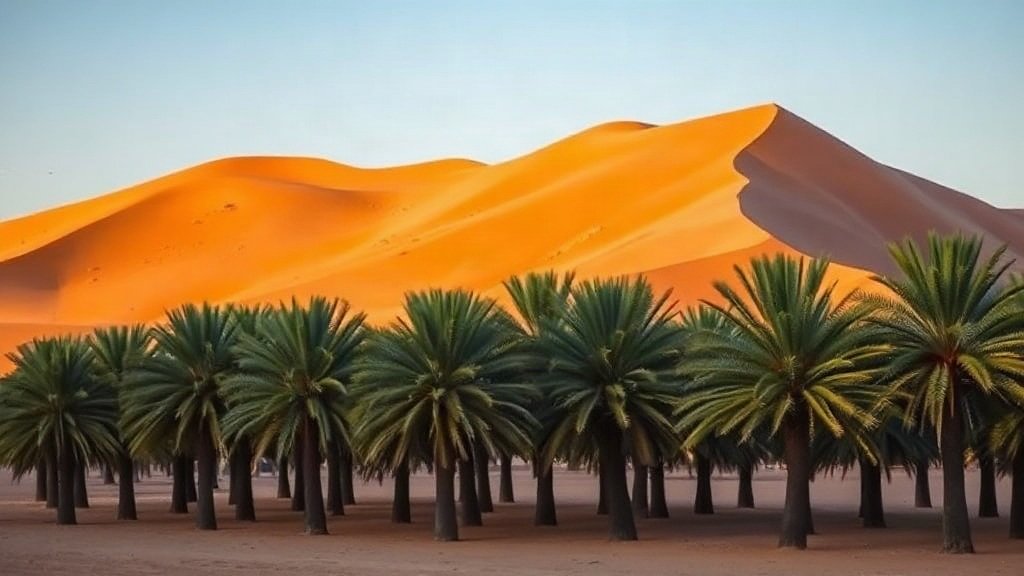
Illustration: AI-generated image
On the northern edge of the Rub' al Khali, or Empty Quarter, lies Liwa Oasis, a string of small settlements and date gardens that has sustained desert communities for centuries. Around 150 kilometres south of Abu Dhabi city, this is a place of towering orange dunes and deep silence, where the rhythm of life still follows the seasons of the date palm. For travellers, it offers a chance to experience the desert beyond the city lights without venturing into the harshest interior.
Getting There
The drive from Abu Dhabi to Liwa takes roughly two hours along well-maintained highways. The route passes through the Al Dhafra region, where the landscape gradually shifts from coastal scrub to open desert. A four-wheel drive is recommended if you plan to explore off-road areas or climb the larger dunes, but a regular saloon car can reach the main settlements and viewpoints along tarmac roads. Fuel stations are spaced far apart, so fill up in Abu Dhabi or at the town of Madinat Zayed.
What to See and Do
The heart of Liwa is its green ribbon of date farms, which relies on ancient falaj irrigation channels that bring water from the mountains far to the east. Walking through the shaded plantations, especially in the early morning or late afternoon, is a peaceful contrast to the surrounding sand. Many farms welcome respectful visitors; simply ask before entering private land.
Dune driving and sandboarding are popular activities, with several accessible slopes suitable for beginners. The most famous is Moreeb Dune, also known as Tal Mireb, one of the tallest sand hills in the world. Even from its base, the scale is humbling. For a less adrenaline-filled experience, simply find a high point at sunset and watch the dunes turn from gold to copper.
Stargazing is exceptional here due to minimal light pollution. On a clear night, the Milky Way is often visible to the naked eye. Camping is possible in designated areas and on some public land, but always check local regulations and carry out all waste.
Cultural heritage is also part of the experience. The area is dotted with restored watchtowers and fortifications that once protected the oasis settlements. These structures, built from mudbrick and palm wood, offer a glimpse into the region's defensive past. Small heritage displays in some villages explain the traditional crafts of date farming and camel husbandry.
Practical Tips
- Visit between October and April, when daytime temperatures are comfortable for outdoor activities.
- Bring plenty of water, sun protection and a hat; the desert sun is intense even in winter.
- If you plan to drive on sand, reduce tyre pressure to around 18 psi and carry a shovel, tow rope and a charged mobile phone. Travel with another vehicle if possible.
- Respect local customs: dress modestly in public areas, and ask permission before photographing people or private property.
- While there are small grocery shops and cafés in the main settlements, options are limited. Consider bringing snacks and essentials.
Liwa rewards those who slow down. It is not a place of grand attractions but of subtle beauty: the smell of ripening dates, the call of a hoopoe in the palms, the vast silence of the dunes at night. For anyone seeking a deeper connection with the desert heritage of the Arabian Peninsula, this oasis is a journey well worth making.