Bamya: A Guide to the Gulf's Comforting Okra Stew
Across the Gulf, few dishes feel as homely as a steaming pot of bamya. This slow-simmered okra stew, enriched with tender lamb and a tangy tomato sauce, is a staple of family meals.
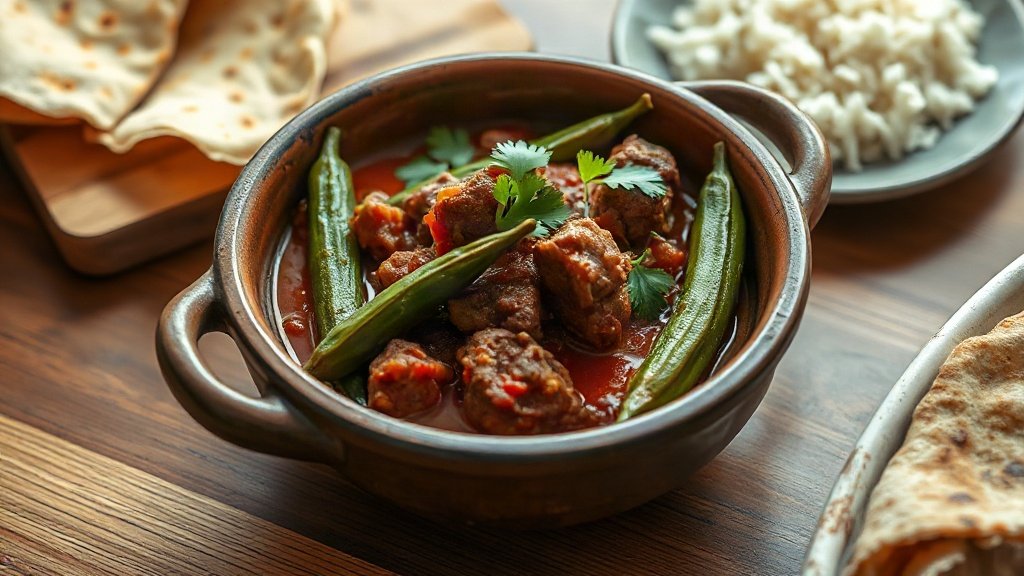
Illustration: AI-generated image
Across the Gulf, few dishes feel as homely as a steaming pot of bamya. This slow-simmered okra stew, enriched with tender lamb and a tangy tomato sauce, is a staple of family meals and a symbol of the region’s love for simple, comforting food. Whether enjoyed on a quiet weeknight or served to guests, bamya brings warmth to the table in every season.
What is Bamya?
Bamya – the Arabic word for okra – is both the name of the vegetable and the dish built around it. In the Gulf, it refers to a hearty stew where small, tender okra pods are cooked with chunks of lamb or beef, onions, garlic, and a generous amount of tomato. The sauce is often spiced with a gentle blend of coriander, cumin, black pepper, and sometimes a touch of dried lime (loomi) for a subtle tang. The result is a rich, velvety broth that clings to the okra and meat, begging to be sopped up with bread or spooned over rice.
Key Ingredients
The soul of bamya lies in its simplicity and the quality of its components. Fresh okra is prized during the cooler months, but frozen okra is widely used and works perfectly well, ensuring the dish can be made year-round. Lamb is the traditional choice, its richness balancing the acidity of the tomatoes; beef is a common alternative. The tomato base may be made from ripe fresh tomatoes, tomato purée, or a combination, often sautéed with onion and garlic until deep and fragrant. Spices are usually kept restrained to let the okra shine: ground coriander and cumin are typical, with a pinch of black pepper or chilli for warmth. In some households, a spoonful of tomato paste deepens the colour, and a squeeze of lemon or a piece of dried lime brightens the flavour.
How It’s Cooked
Preparing bamya is a slow, mindful process. The meat is first browned in a little ghee or oil, then onions and garlic are softened in the same pot. Tomatoes and spices are added, and everything is left to simmer until the meat is tender. Only then are the okra pods added – cooking them for too long can make them slimy, a texture many cooks avoid by briefly frying the okra first or by using young, small pods. The stew is cooked gently until the okra is just tender but still holds its shape, the sauce thick and glossy. It is a forgiving dish that rewards patience and a low flame.
Serving and Eating
Bamya is almost always served with white rice – typically the long-grain, fluffy variety common in Gulf kitchens. A generous ladle of stew is spooned over the rice, with some preferring the sauce to soak into the grains. Warm flatbread, such as khubz regag or tannour bread, is often placed on the side for scooping. A simple salad of cucumber, tomato, and fresh herbs may accompany the meal, and a glass of laban (yoghurt drink) provides a cooling contrast. The communal style of eating – sharing from a large platter or individual bowls at a family table – reflects the Gulf’s deep-rooted culture of hospitality.
Variations Across the Gulf
While the core recipe remains consistent, each country and family adds its own touch. In Saudi Arabia, bamya may include a small amount of tomato paste and be served with a side of fresh lemon. In the UAE, dried lime (loomi) is sometimes added for a more pronounced tang. Kuwaiti versions might use a little more spice, while Bahraini cooks often serve it with a sprinkle of fresh coriander. Some add chickpeas or potatoes for extra substance, though the classic version focuses on the okra and meat. Regardless of variation, bamya remains a beloved comfort food, offering a taste of home that resonates across borders.