A Beginner's Guide to Palm Frond Weaving in the Gulf
Learn the basics of khoos, the traditional Gulf craft of weaving dried palm fronds into baskets, mats and decorative pieces for your home.
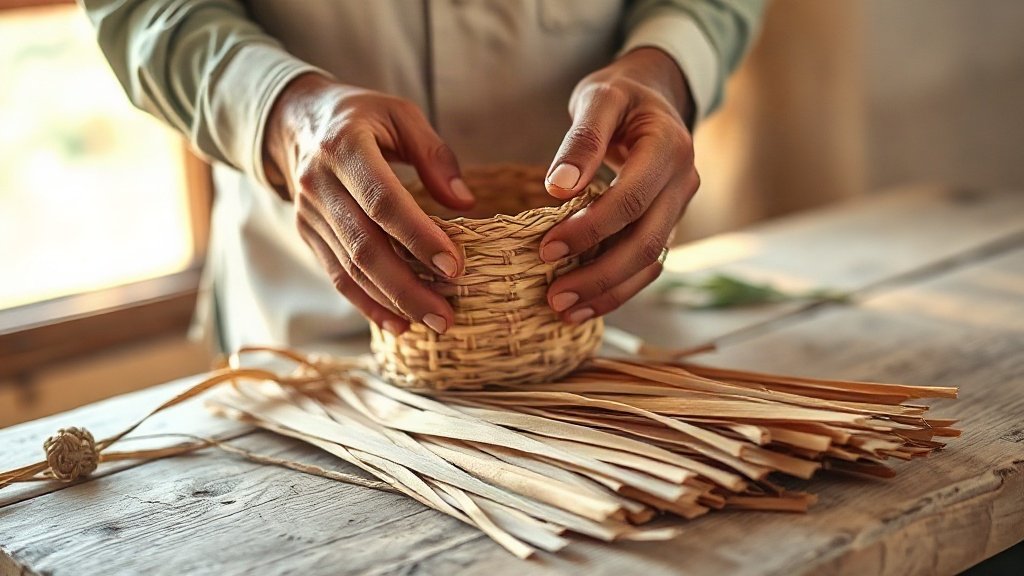
Illustration: AI-generated image
Long before plastic and mass-produced goods arrived in the Gulf, families made what they needed from the environment around them. One of the most enduring crafts is khoos — the weaving of dried palm fronds into practical and beautiful objects. Today, this traditional skill is enjoying a quiet revival among those who want to bring a touch of heritage into their homes.
What is khoos?
Khoos (also spelled khus or khoos) is the Arabic term for palm frond weaving. It uses the leaves of the date palm, which are dried, split and woven into strips. The craft has been practised for centuries across the Arabian Peninsula, producing everything from food covers and storage baskets to floor mats, fans and even simple furniture.
Each region has its own patterns and colour preferences, but the basic technique remains the same. The result is lightweight, durable and naturally beautiful — with a warm, earthy tone that suits both traditional and modern interiors.
What you need to get started
You do not need many tools or expensive materials. Traditionally, weavers use only their hands and a simple awl or needle. To begin, you will need:
- Dried palm fronds — available from craft suppliers, or you can dry fresh fronds yourself by leaving them in the sun for several days until they turn a pale straw colour.
- Scissors or a sharp knife — for trimming and splitting the fronds into even strips.
- A bowl of water — to soak the fronds and make them pliable before weaving.
- A flat work surface — a table or the floor, covered with a cloth to protect it.
Preparing the fronds
Start by removing the central spine of each frond. You will be left with two long, narrow leaflets. Soak these in water for about 30 minutes until they become soft and flexible. Wipe off excess water and split each leaflet lengthwise into strips of roughly equal width — about one centimetre is a good size for beginners.
For a two-tone effect, you can dye some strips using natural dyes such as henna (red-brown) or turmeric (yellow). This is optional but adds visual interest to your finished piece.
Basic weaving technique
The simplest method for beginners is the plain weave, also called over-under weaving. Here is a step-by-step approach to make a small square mat:
- Lay out an even number of vertical strips (the warp) side by side on your work surface. Keep them close together, with the tops aligned.
- Take a horizontal strip (the weft) and weave it over the first warp strip, under the second, over the third, and so on until you reach the other side.
- Pull the weft strip gently to tighten the weave, then push it up against the previous row.
- For the next row, reverse the pattern: if you started over, start under. This creates a stable, checkerboard-like pattern.
- Continue adding rows until your mat reaches the desired size.
- To finish, tuck the loose ends of the weft strips back into the weave and trim any excess. Fold the outer warp strips over the last weft row and tuck them in as well.
With practice, you can move on to circular weaving, twill patterns and even three-dimensional baskets. Traditional designs often incorporate geometric shapes and contrasting colours.
Caring for your woven pieces
Palm frond items are surprisingly resilient. Dust them regularly with a dry cloth or soft brush. If they get dirty, wipe with a slightly damp cloth and let them dry completely in the shade. Avoid prolonged exposure to direct sunlight, which can make the fibres brittle over time.
Bringing khoos into your home
Handwoven palm frond pieces add texture and warmth to any room. Use a small mat as a table centrepiece, a basket to hold fruit or bread, or a woven fan as wall art. Many people enjoy the meditative rhythm of weaving as a relaxing hobby — a quiet counterpoint to busy modern life.
By learning this craft, you are not only creating something useful; you are helping to keep a valuable part of Gulf heritage alive for future generations.