Regag: The Paper-Thin Bread of the Gulf
Regag is a delicate, almost transparent flatbread cooked on a hot griddle. Here's how it's made and the best ways to enjoy it across the region.
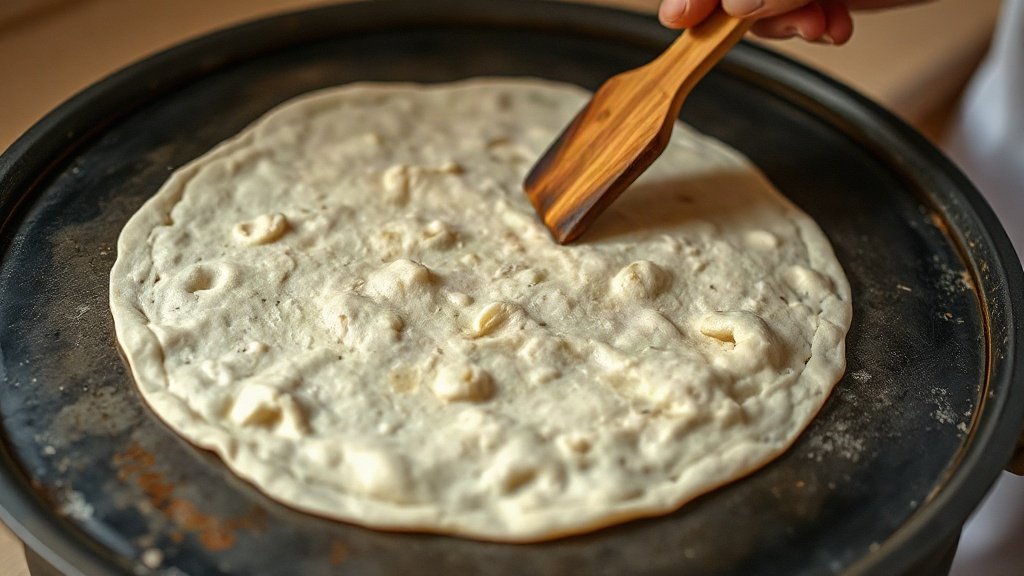
Illustration: AI-generated image
Walk through a traditional souq in the Emirates or along the coast of Oman early in the morning and you might see cooks pouring a thin, watery batter onto a round, hot metal plate. Within seconds, the batter bubbles and sets into a fragile, lace-like sheet: regag. This humble bread, also known as ruqaq or rqaq in other parts of the Gulf, is a staple of Emirati and wider Gulf cuisine, prized for its crispness and versatility.
What is regag?
Regag is an unleavened flatbread made from a simple batter of flour, water and salt. It is cooked very quickly on a large, flat griddle called a tawa or saj. The result is a paper-thin, almost transparent bread with a slightly chewy texture when fresh and a delicate crunch when it cools. Unlike thicker flatbreads such as khubz or tannour bread, regag is closer to a crepe or a very thin pancake in consistency, though it is not sweet and contains no eggs or milk in its most basic form.
How regag is made
The ingredient list is short: plain flour, water and a pinch of salt. Some cooks add a little oil or a splash of milk to make the bread softer, but the traditional recipe keeps it lean. The batter is whisked until smooth and runny, then left to rest for a short while.
The key to good regag is the cooking method. The griddle is heated until very hot, then a ladleful of batter is poured in a spiral or swirled quickly with a wooden spreader to form a large, thin circle. It takes only seconds to cook on one side; the bread is then flipped or simply lifted off and stacked. Skilled cooks can make dozens in an hour, each one as thin as tissue paper.
Ways to eat regag
Regag is incredibly adaptable. In the UAE, it is often served for breakfast with chami (a soft, salty cheese), honey, or date syrup. It can be folded around eggs, cheese, or mihyawa (a tangy fish sauce) for a quick, savoury bite. At lunch or dinner, regag is used as a wrap for grilled fish, chicken, or saloona (vegetable stew). It also appears as a crispy layer in dishes like foul (fava beans) or as a base for traditional sweets.
When regag dries out, it becomes brittle and can be crumbled over soups or salads, similar to how some cuisines use crispy bread. Many families buy regag fresh from markets and keep a stack at home, reheating pieces on a griddle or in a dry pan to revive their softness.
Regional variations
While regag is most associated with the Emirates, similar thin breads exist across the Gulf and the wider Middle East. In Kuwait and eastern Saudi Arabia, a slightly thicker version called ruqaq or khubz ruqaq is common, sometimes made with whole wheat flour. In Oman, the bread is known as ruqaq or khubz rakhal, and it is often cooked on a curved metal dome rather than a flat griddle. In Iran and parts of the southern Gulf, a comparable bread called nan-e-tiri or tawa bread is baked in a similar way.
Where to find regag
Regag is widely sold in traditional markets and bakeries across the Gulf. In the UAE, small shops and street-side stalls, often run by women, prepare it fresh each morning. It is also a common sight during Ramadan, when it appears on iftar tables alongside harees and thareed. Many visitors first encounter regag as part of an Emirati breakfast or a local food tour. Because it is so simple and quick to make, some home cooks enjoy preparing it themselves, using a non-stick pan or a purpose-built tawa.