Nakhal Fort: A Practical Guide to Oman's Ancient Hilltop Stronghold
Rising above a sea of date palms, Nakhal Fort is one of Oman's most impressive historic strongholds. Here's what to know before you visit.
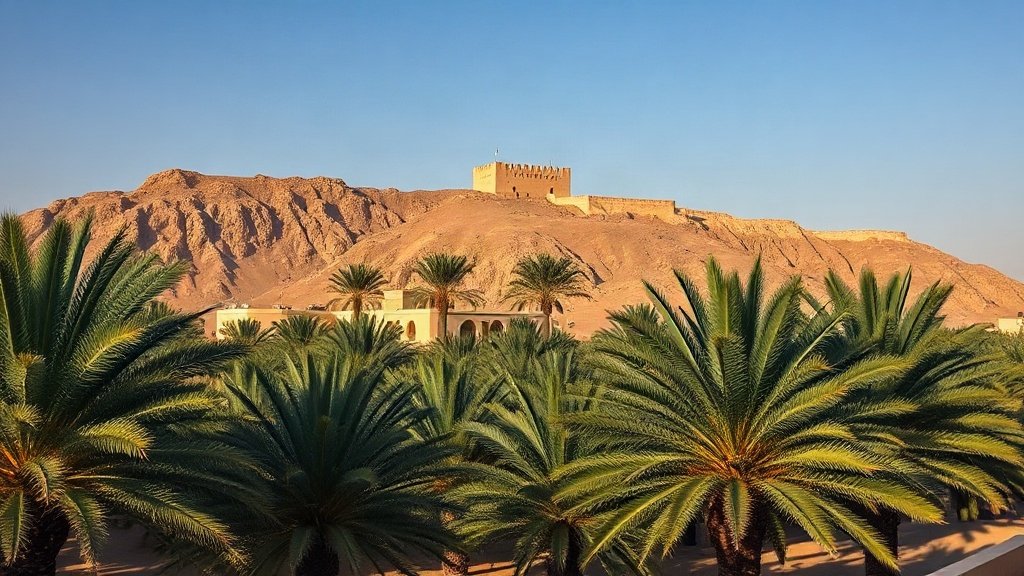
Illustration: AI-generated image
Nakhal Fort sits on a rocky outcrop at the edge of the Hajar Mountains, overlooking a vast oasis of date palms in the South Batinah region of Oman. The fort, whose name means 'palm tree' in Arabic, has guarded this fertile valley for centuries and remains one of the country's most striking and well-preserved historic sites.
A Fort with Deep Roots
The exact origins of Nakhal Fort are lost to time, but it is believed to have been built before the arrival of Islam in the 7th century. Over the centuries, successive rulers expanded and reinforced the structure, with the current form largely dating from the 17th century during the reign of Imam Saif bin Sultan al Ya'arubi. The fort was restored in the 1990s and is now maintained as a museum, offering visitors a window into Oman's military and domestic past.
Exploring the Fort
The fort is built around an irregular rocky base, with walls and towers that follow the natural contours of the hill. Inside, a series of rooms, courtyards, and passageways reveal the lives of the people who once lived and worked here. Key features include:
- The main gate and defensive walls: Look for the carved wooden doors and the slots where hot oil or date syrup could be poured on attackers.
- Residential quarters: These rooms are furnished with traditional Omani rugs, coffee pots, and other artefacts, giving a sense of domestic life.
- The falaj system: An ancient irrigation channel runs through the fort, providing water from the nearby mountains—a reminder of Oman's ingenious water management.
- Viewpoints: Climb to the upper terraces for panoramic views over the palm oasis and the surrounding hills. The contrast between the arid mountains and the lush green plantation is stunning.
Allow at least an hour to wander through the fort's many rooms and corridors. The uneven stone floors and steep steps require sturdy footwear.
Beyond the Fort: Hot Springs and Oasis
A short drive from the fort, the village of Nakhal is also known for its warm mineral springs, which flow into a small pool at the base of the mountains. Locals and visitors alike come here to relax in the therapeutic waters, especially during cooler months. The surrounding date palm oasis is lovely for a short walk, and you may spot farmers tending their trees or harvesting dates in season.
Practical Tips for Your Visit
- Getting there: Nakhal is about a 90-minute drive from Muscat. The route passes through the town of Barka and offers views of the coastal plain before turning inland towards the mountains. A 4WD is not necessary, as the roads are paved.
- What to wear: Respect local customs by dressing modestly. For both men and women, shoulders and knees should be covered. A hat and sunscreen are essential, as much of the fort is exposed to the sun.
- Best time to visit: The cooler months from October to March are ideal. Morning visits offer softer light for photography and fewer crowds. Avoid midday in summer, when temperatures can be extreme.
- Facilities: Restrooms are available near the fort entrance. Carry water, as there are limited refreshment options inside the fort itself, though small shops in the village sell drinks and snacks.
Nakhal Fort combines history, architecture, and natural beauty in one easy day trip from the capital. It is a quieter alternative to some of the region's more visited sites, yet no less rewarding.