Musandam Peninsula: A Practical Guide to Oman's Scenic Fjords
Discover the dramatic coastline of Oman's Musandam Peninsula, where rugged mountains plunge into turquoise waters, and traditional dhow cruises offer a glimpse of a timeless way of life.
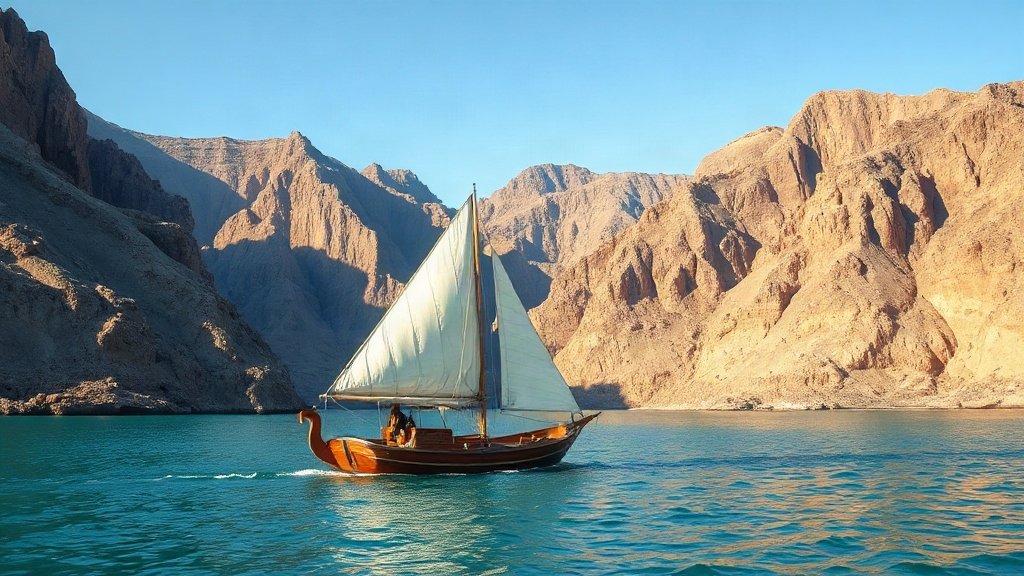
Illustration: AI-generated image
The Musandam Peninsula, separated from the rest of Oman by the United Arab Emirates, is a dramatic sliver of land jutting into the Strait of Hormuz. Its rugged Hajar Mountains plunge directly into the sea, creating fjord-like khors (inlets) that have earned it the nickname “Norway of Arabia.” For travellers based in the Gulf, Musandam offers an easy escape into spectacular coastal scenery, traditional villages and a slower pace of life.
Why visit Musandam?
Musandam’s main draw is its stunning coastline, best explored by traditional wooden dhow. These boats, once used for fishing and trade, now take visitors on leisurely cruises through the khors, past small fishing villages and dramatic cliffs. Dolphins are frequently spotted, and many cruises include stops for swimming and snorkelling in clear, calm waters. Beyond the sea, the peninsula’s interior offers winding mountain roads, ancient watchtowers and terraced farms.
Where is Musandam and how do I get there?
Musandam is an exclave of Oman, bordered by the UAE on its land side. The regional capital, Khasab, is about a three-hour drive from Dubai and around two hours from Ras Al Khaimah. The main road from the UAE crosses the border at Al Darah, where visitors must clear Omani immigration. Most nationalities can obtain a visa on arrival or an e-visa in advance; always check current regulations before travelling as rules can change. The road from the border to Khasab is paved and well-maintained, but it is a mountain road with sharp bends and occasional goats, so drive carefully. A four-wheel drive is not necessary for the main route but is useful for exploring off-road tracks.
Alternatively, domestic flights from Muscat to Khasab operate on a limited schedule, and there is sometimes a seasonal ferry service. For most visitors from the UAE, driving is the most practical option.
What to see and do
A dhow cruise is the quintessential Musandam experience. Half-day and full-day trips depart from Khasab port, with full-day cruises typically reaching the remote Khor Ash Sham, where the water is deep and the cliffs tower overhead. Many cruises stop at Telegraph Island, a tiny islet that once housed a British telegraph relay station in the 19th century; today it is a popular snorkelling spot. Bring swimwear, a towel and sun protection, and expect to be served a simple lunch of rice, grilled fish and fresh fruit on board.
On land, visit Khasab Castle, a 17th-century Portuguese-built fort that now houses a small museum showcasing local history, traditional boats and handicrafts. From Khasab, a steep but scenic road leads up to Jebel Harim, the peninsula’s highest peak at around 2,087 metres. Along the way, you can stop at the village of Sayh, where ancient fossils are embedded in the rock, and enjoy panoramic views over the mountains and sea. The drive takes around an hour each way without stops.
For a glimpse of traditional mountain life, explore the villages of the interior, where the Shihuh people have lived for centuries, building stone houses and cultivating terraced fields. Motorable tracks lead to settlements such as Lima and Bukha, but always carry water and a spare tyre, and let someone know your plans.
When to go and what to bring
The best time to visit is from October to April, when temperatures are mild and outdoor activities are comfortable. Summer months are extremely hot and humid, though dhow cruises can still be pleasant with sea breezes. Modest dress is appreciated throughout Oman: for swimming, a conservative swimsuit or rash vest and shorts are fine on tourist boats. Bring a light jacket for boat rides in winter, sturdy shoes for exploring, and plenty of water.
Mobile phone coverage is generally good around Khasab but patchy in the mountains, so download offline maps before heading out. Fuel stations are available in Khasab and Bukha, but fill up before long drives.
Musandam remains a relatively undeveloped destination, with a focus on nature and culture rather than nightlife or luxury resorts. For travellers willing to look beyond the glitz of the Gulf’s big cities, it offers a raw, unforgettable slice of Arabia’s natural beauty.