Mandi: A Guide to the Gulf's Smoky Rice and Meat Feast
Mandi is a fragrant rice and meat dish from the Arabian Peninsula, cooked in a tandoor for a distinctive smoky flavour. This guide explores its origins, cooking method, and how to eat it like a local.
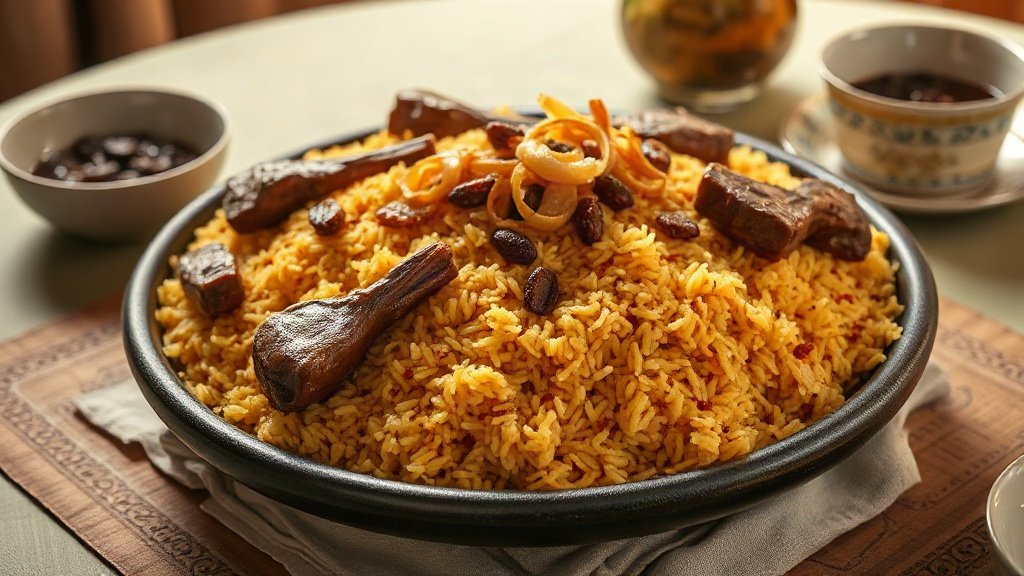
Illustration: AI-generated image
Mandi is one of the most beloved dishes across the Gulf and the wider Arabian Peninsula. This aromatic rice and meat feast, traditionally cooked in a tandoor, is prized for its smoky depth and tender, fall-off-the-bone meat. Whether served at a family gathering or a casual restaurant, mandi is a true taste of regional hospitality.
What is Mandi?
Mandi is a traditional dish of spiced rice and meat, typically lamb, chicken, or sometimes goat. The name comes from the Arabic word 'nada', meaning 'dew', referring to the moist, tender texture of the meat. Originating in Yemen, it spread across the Arabian Peninsula and is now a staple in Saudi Arabia, the UAE, and beyond. Unlike kabsa, which is cooked in a pot, mandi relies on a unique cooking method that infuses both rice and meat with a gentle smokiness.
The Traditional Cooking Method
The hallmark of mandi is its cooking technique. Traditionally, the meat is suspended inside a tandoor—a cylindrical clay oven—above the rice, allowing the meat's juices to drip down and flavour the grains as they cook. The tandoor is heated with wood or charcoal, which imparts a subtle smokiness. In modern kitchens, a similar effect is achieved using a pot with a tightly sealed lid and a charcoal piece placed on top to create smoke, but the best mandi still comes from a proper tandoor.
Key Ingredients and Spices
Mandi rice is typically long-grain basmati, cooked with a blend of warm spices known as hawaij. This mixture often includes cumin, coriander, black pepper, cardamom, cloves, and cinnamon, though recipes vary by region. The rice is coloured a golden yellow, either from saffron or turmeric. The meat is usually seasoned simply with salt, pepper, and a little hawaij, relying on the slow cooking to develop deep flavour. It is often garnished with fried onions, raisins, and toasted nuts like almonds or pine nuts.
How to Eat Mandi
Mandi is traditionally served on a large communal platter, with the rice mounded in the centre and the meat arranged on top. Diners gather around and eat with their right hand, using the fingers to mix rice and meat into small bites. It is commonly accompanied by a fresh tomato and chilli salsa called salata hara, a tangy yoghurt sauce, or a simple salad of cucumbers and tomatoes. A squeeze of fresh lime adds brightness. For drinks, a glass of chilled laban (buttermilk) or a cup of Arabic coffee is a perfect pairing.
Where to Find Mandi in the Gulf
Mandi is widely available across the Gulf, from dedicated mandi restaurants to high-end hotel buffets. In Saudi Arabia, it is a national favourite, while in the UAE, you'll find it in Yemeni and Emirati eateries alike. Many places specialise in one type of meat, and some offer 'madfoon' or 'madhbi' as well, which are similar but use different cooking methods. When ordering, ask for the meat to be 'lahm mandi' if you prefer lamb, or 'dajaj mandi' for chicken. It is a dish best shared, so bring friends and enjoy the experience of eating together.