Kabsa: The Gulf's Beloved Spiced Rice Dish Explained
Discover kabsa, the aromatic spiced rice dish that is a cornerstone of Gulf home cooking and celebrations.
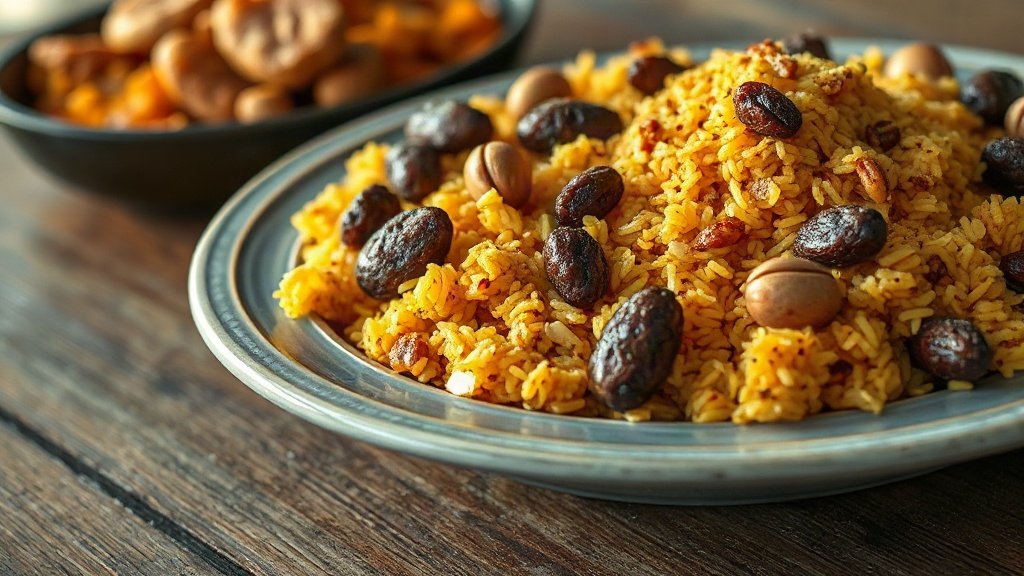
Illustration: AI-generated image
Kabsa is widely considered the national dish of Saudi Arabia and a beloved staple across the Gulf region. This aromatic rice and meat dish combines long-grain rice with a heady blend of spices, creating a meal that is both comforting and celebratory. Whether served at a family gathering or a festive occasion, kabsa holds a special place in Gulf culinary tradition.
What Makes Kabsa Special?
The foundation of kabsa is its spice mix, known as baharat, which typically includes black pepper, cumin, coriander, cardamom, cloves, cinnamon, and nutmeg. Some recipes also add dried lime (loomi) for a subtle tang. The rice is usually cooked in a rich broth made from the meat – chicken, lamb, goat, or even camel – which infuses every grain with deep flavour. Vegetables such as tomatoes, onions, and garlic are often added, giving the dish a reddish hue and a slightly sweet-tart taste.
Unlike mandi, which is traditionally smoked in an underground oven, kabsa is usually prepared on the stovetop or in a regular oven, making it more accessible for home cooks. The meat is browned first, then simmered with spices and liquids before the rice is added to cook together. This method allows the rice to absorb all the savoury juices, resulting in a rich and satisfying one-pot meal.
Serving Kabsa the Traditional Way
Kabsa is typically served on a large communal platter, with the rice mounded in the centre and the meat placed on top. It is common to garnish the dish with toasted almonds, pine nuts, and raisins, adding a pleasant crunch and sweetness. A simple salad of chopped tomatoes, cucumber, and fresh herbs often accompanies it, along with a fiery tomato salsa known as daqqus.
In many Gulf households, kabsa is eaten with the right hand, using the fingers to gather a small amount of rice and meat into a bite-size portion. This practice is not only traditional but also considered a sign of closeness and hospitality. Shared meals like kabsa embody the Gulf values of generosity and togetherness, making it much more than just a dish – it is a social experience.
While recipes vary from family to family and region to region, the essence of kabsa remains constant: fragrant rice, tender meat, and a warmth that brings people together. Whether you are trying it at a local restaurant or preparing it at home, kabsa offers a genuine taste of Gulf hospitality.