How to Host a Gulf-Style Majlis Meal at Home: A Guide to Communal Dining
Learn the traditions of sharing food in the Gulf, from floor seating and hand washing to the rhythm of courses and the ever-present Arabic coffee.
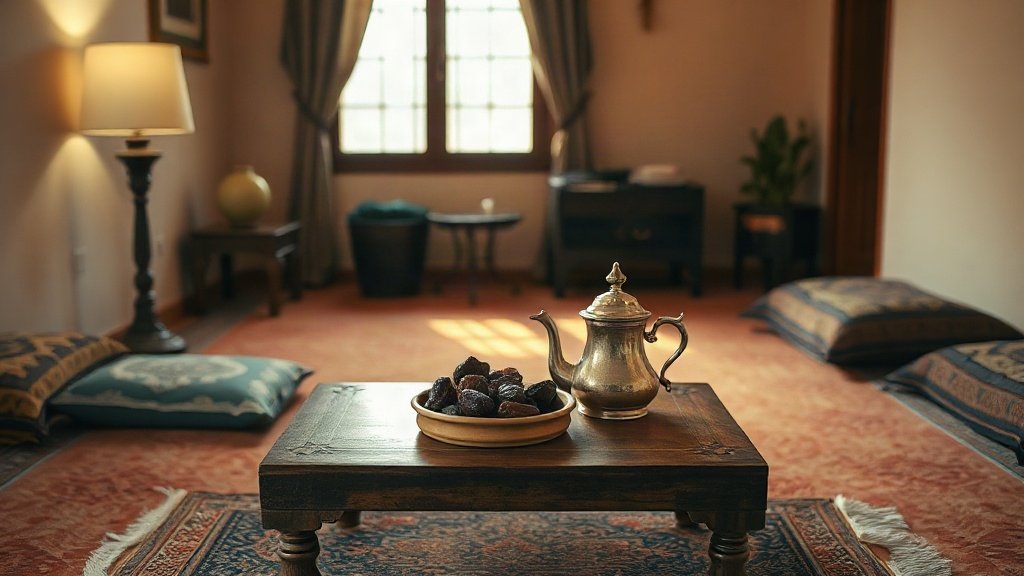
Illustration: AI-generated image
What is a Majlis?
In the Gulf, the majlis is a dedicated reception room where family and guests gather. It is typically furnished with low seating and decorated with carpets and cushions, creating an intimate space for conversation and shared meals.
Setting the Scene
To recreate a majlis at home, spread a large dining cloth or low table (called a sufrah) on the floor and arrange comfortable floor cushions around it. If sitting on the floor is difficult for some guests, a low sofa or chairs can be used while keeping the food at a lower level.
Beginning with Dates and Coffee
Hospitality in the Gulf often starts with Arabic coffee (gahwa) and dates. The coffee is lightly roasted, flavoured with cardamom and sometimes saffron, and served in small handleless cups called finjan. Dates balance the coffee's slight bitterness and symbolise welcome.
The Main Meal: Shared and Generous
Gulf meals are typically served family-style. Large platters of spiced rice dishes like machboos or mandi, hearty stews, or grilled meats are placed in the centre. Everyone eats from the same platter, using the right hand or bread to scoop food. It is polite to eat only from the section directly in front of you.
Hand Washing Ritual
Before and after the meal, a jug and basin are passed around so guests can wash their hands. It is customary to hold your hands over the basin while water is poured, and to use a small towel to dry. In many Gulf traditions, the right hand is used for eating, while the left hand is reserved for other purposes.
Prayers and Gratitude
A short phrase of thanks may be said before beginning, such as "Bismillah" (in the name of God), and after finishing, "Alhamdulillah" (praise be to God). These phrases are common across the region and reflect gratitude for the meal.
Tea and Sweets to Finish
After the meal, sweet tea (often karak or mint tea) is served, followed by desserts such as luqaimat or fresh fruit. The host will continue to offer more food and drink; it is polite to accept at least a small amount.
Adapting the Menu
While traditional dishes are ideal, you can adapt the concept to any shared meal. The key is to place food in the centre and encourage communal eating. Grilled meats, rice, and salads work well, as do breads for scooping.
The Signal to Leave
When the host serves a final round of Arabic coffee, it often signals that the gathering is drawing to a close. Guests may then thank the host and depart.
Hosting a majlis meal is about generosity and togetherness. With a few simple touches, you can bring this warm tradition into your own home.