Ghuraiba: A Guide to the Gulf's Buttery Shortbread Cookies
Discover ghuraiba, the melt-in-the-mouth shortbread cookie loved across the Gulf. Learn about its simple ingredients, variations, and how to make it at home.
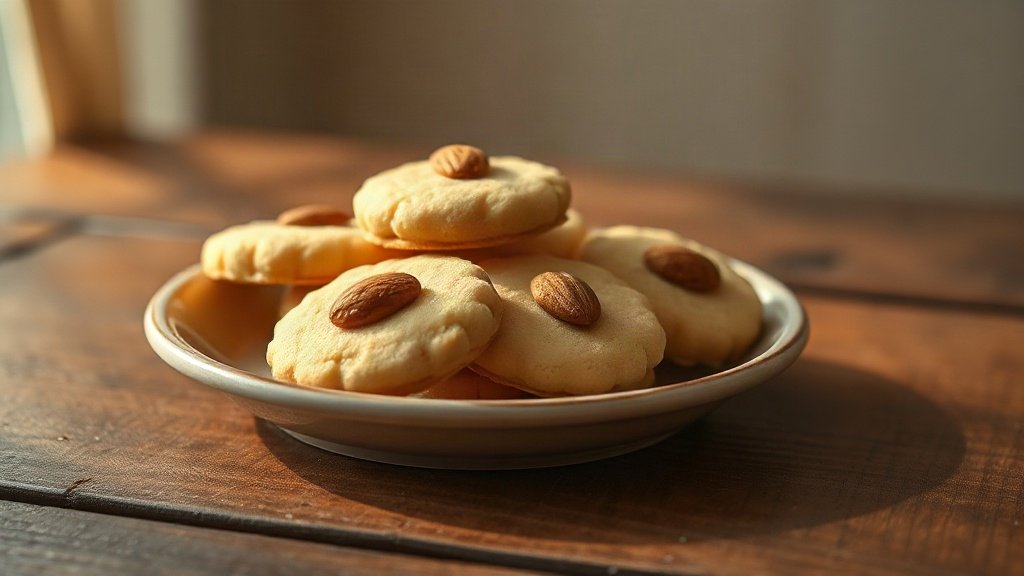
Illustration: AI-generated image
Ghuraiba (also spelled ghraybeh or ghorayeba) is a delicate, melt-in-the-mouth shortbread cookie that holds a cherished place in Gulf and wider Middle Eastern sweet traditions. Its name comes from the Arabic word for 'to disappear', a fitting description for a treat that crumbles softly and vanishes quickly from the plate. Made with just a few pantry staples, ghuraiba is a testament to the beauty of simple, high-quality ingredients.
What is Ghuraiba?
Ghuraiba is a type of shortbread, typically round and flattened with a thumbprint or a single nut pressed into the centre. The dough is based on ghee (clarified butter), plain flour, and icing sugar, which gives it an exceptionally fine, sandy texture that is more delicate than typical Western shortbread. Some versions include a hint of cardamom, rose water, or orange blossom water, but the classic flavour is purely buttery and sweet.
Ingredients and Regional Variations
The core ingredients remain consistent across the Gulf, but small variations reflect local preferences. In the Emirates and Saudi Arabia, ghuraiba is often flavoured with a touch of ground cardamom. In Kuwait and Bahrain, a little rose water or orange blossom water may be added to the dough for a subtle floral note. The nut on top is usually an almond, pistachio, or pine nut, lightly pressed into the centre before baking. Some bakers roll the dough into balls and flatten them slightly, while others use a cookie stamp to create decorative patterns.
How Ghuraiba is Made
Making ghuraiba is straightforward, but the key lies in the texture. The ghee must be at room temperature and creamed with the icing sugar until pale and fluffy. The flour is then folded in gently — never over-mixed — to keep the cookies light. The dough is shaped into small discs, topped with a nut, and baked at a low temperature until just set but not coloured. The result should be pale golden on the bottom and creamy white on top, with a crumbly, short texture that dissolves on the tongue.
When Ghuraiba is Served
Ghuraiba is a year-round treat, but it is especially prominent during Eid celebrations, when platters of assorted sweets are presented to guests alongside Arabic coffee (gahwa). It also appears at weddings, family gatherings, and as a simple accompaniment to afternoon tea. Because the cookies keep well in an airtight container, they are a popular homemade gift during holidays.
Tips for Perfect Ghuraiba at Home
- Use good-quality ghee; it is the backbone of the flavour. Clarified butter gives a richer taste than regular butter.
- Sift the flour and icing sugar to avoid lumps, which could make the cookies dense.
- Chill the shaped cookies for 15–20 minutes before baking to help them hold their shape.
- Bake at 150–160°C (300–320°F) and watch closely — the cookies should not brown on top.
- Allow the cookies to cool completely on the tray before moving them; they are fragile when warm.
Whether you are new to Gulf sweets or revisiting a childhood favourite, ghuraiba offers a taste of tradition in every crumbly bite. Its simplicity makes it an easy recipe to master, and its elegance makes it a welcome addition to any table.