Gulf Architecture: A Practical Guide to Courtyards, Wind Towers and Mashrabiya
Discover the clever design behind the Gulf's traditional architecture, from cooling wind towers to shaded courtyards, and learn where to see these features today.
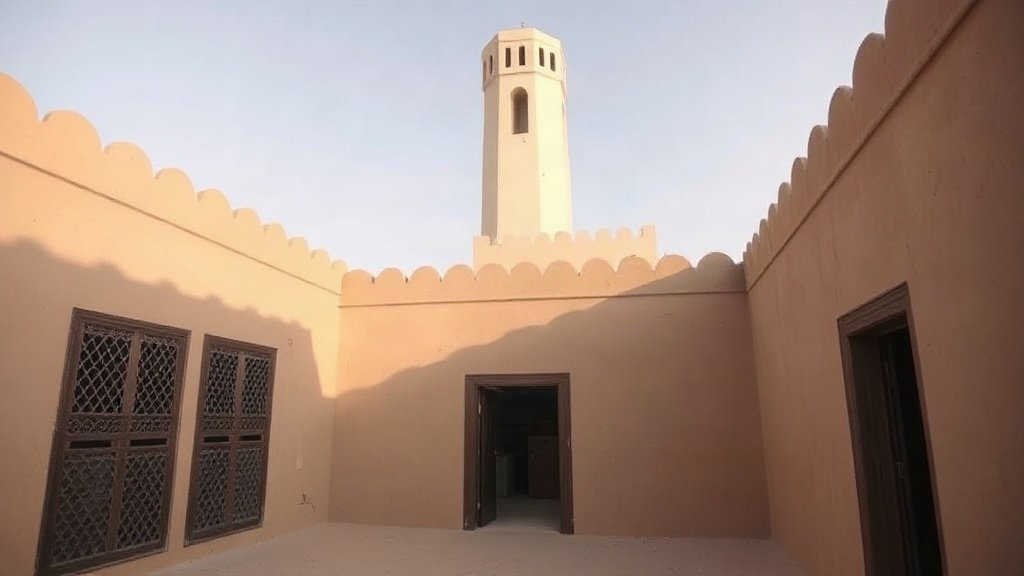
Illustration: AI-generated image
The traditional architecture of the Gulf states is far more than a style – it is a clever response to a harsh desert climate and a reflection of deep-rooted social values. For visitors, learning to read these buildings turns any stroll through an old neighbourhood into a richer experience.
Courtyards: the heart of the home
Almost every traditional Gulf house is built around a central courtyard, or hosh. This open space serves as an outdoor living room, a light well and a natural air conditioner. During the day, hot air rises from the courtyard and is replaced by cooler air drawn from shaded rooms around it. At night, the walls slowly release stored heat, keeping the space comfortable.
Courtyards also provide privacy – a key concern in Gulf culture. High walls shield family life from the street, while the courtyard allows women and children to move freely without being seen. Look for clues that a building once had a courtyard: many restored homes in heritage districts now feature them as central attractions, often planted with date palms, citrus trees and fragrant jasmine.
Wind towers: the original air conditioning
The wind tower, or barjeel, is the Gulf's most iconic architectural feature. These square or rectangular towers rise above rooflines, with openings on all four sides. They capture even the slightest breeze and channel it down into the rooms below, where it passes over water jars or damp cloths to cool further.
Wind towers are particularly common in the older quarters of Dubai, Sharjah, Bahrain and Qatar. In the Al Fahidi Historical Neighbourhood in Dubai and the old souq area of Muharraq in Bahrain, you can see excellent examples. Some have been restored to working order; others stand as monuments to a time before electricity.
Mashrabiya: beauty with a purpose
Mashrabiya are the carved wooden screens that cover windows and balconies. Their intricate geometric patterns are not just decorative – they filter harsh sunlight, reduce glare and allow breezes to pass through while maintaining privacy. From inside, you can see out; from outside, it is nearly impossible to see in.
The patterns often draw on Islamic geometric design, with stars, octagons and interlocking shapes. Modern architects in the Gulf still use mashrabiya-inspired screens, both for their beauty and their energy-saving benefits. When exploring heritage houses, take a moment to study the screens up close and notice how the light plays through them at different times of day.
Other elements to look for
- Thick walls: Built from coral stone, mud brick or gypsum, they insulate against extreme heat.
- Small, high windows: Placed to let in light without too much heat, and to maintain privacy.
- Flat roofs: Often used for sleeping in summer and for drying dates or laundry.
- Decorative gypsum and coral: Doorways and niches often feature carved plasterwork or embedded shells.
Where to see traditional architecture
Many Gulf cities have restored entire heritage districts where you can wander freely and enter museums or cultural centres housed in old buildings. Good starting points include the Al Fahidi Historical Neighbourhood in Dubai, the Souq Waqif area in Doha, Muharraq's pearling trail in Bahrain, and Al Balad in Jeddah. In Oman, the villages of Misfat Al Abriyeen and Al Hamra preserve traditional mud-brick houses with courtyards and date gardens.
When visiting, remember that some private homes are still occupied – always respect signs and ask before entering. Many museums offer guided tours that explain the architectural features in detail.
Understanding these design elements not only enriches your visit but also highlights a sustainable approach to building that is increasingly relevant in a warming world.