Freekeh: A Guide to the Gulf's Smoky Roasted Green Wheat
Discover freekeh, the ancient roasted grain that adds a nutty, smoky depth to soups, pilafs and salads across the Gulf.
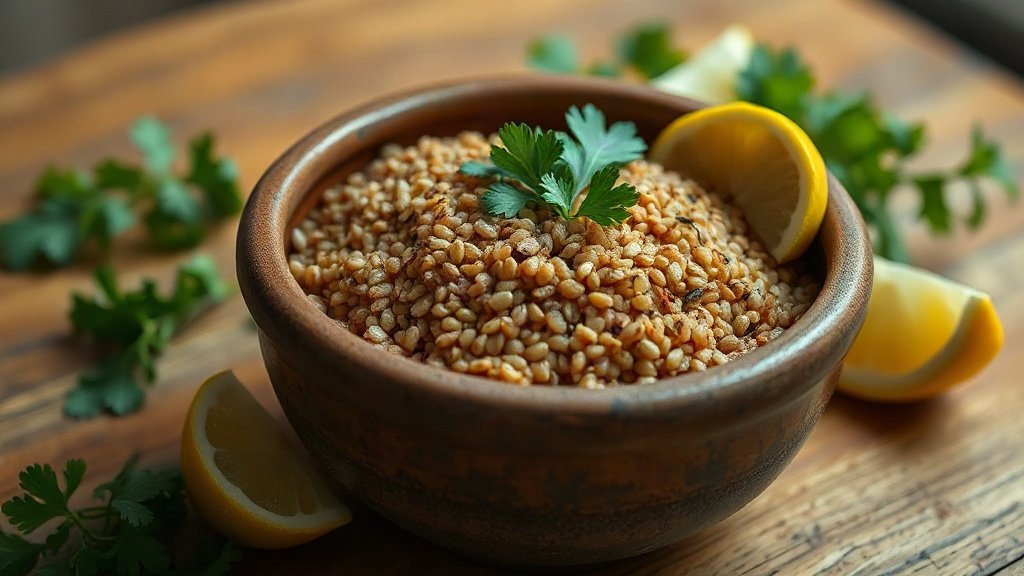
Illustration: AI-generated image
Freekeh (also spelled frikeh or farik) is a traditional whole grain made from young green wheat that is roasted and rubbed to remove the chaff. With a distinctive smoky, nutty flavour and a pleasantly chewy texture, it has been a staple in Eastern Mediterranean and Gulf kitchens for centuries. In the Gulf, freekeh appears in hearty soups, pilafs and even stuffed vegetables, offering a nutritious alternative to rice or bulgur.
What is freekeh?
Freekeh is made from durum wheat harvested while the grains are still green and soft. The wheat is piled and set on fire to burn off the straw and chaff; the high moisture content of the young kernels protects them from burning, while the fire imparts a subtle smokiness. The grains are then dried and cracked to varying degrees, from whole to coarsely ground. This ancient technique is thought to have originated in the Levant and spread across the Arab world, where freekeh remains a beloved pantry staple.
How freekeh is made
The production of freekeh is a careful process that begins in early spring when the wheat is at its milky stage. Farmers harvest the green stalks, tie them into bundles, and sun-dry them briefly. The bundles are then carefully set alight, so the chaff and straw burn away while the moist grains survive. After cooling, the grains are threshed and winnowed to remove any remaining debris. The result is a greenish-brown grain with a smoky aroma that intensifies when cooked. Artisanal producers still use this method, though modern facilities may use controlled roasting to achieve a similar result.
Freekeh in Gulf cooking
In the Gulf, freekeh is prized for its robust flavour and ability to absorb rich broths. It is often cooked with lamb or chicken, similar to a pilaf, and seasoned with warm spices like cinnamon, cardamom and black lime. A popular dish is freekeh ma' lahm (freekeh with meat), where the grain is simmered in a spiced meat stock until tender and then topped with slow-cooked meat and nuts. Freekeh is also used in soups, such as the Palestinian-style shorba, and as a filling for vegetables like courgettes or vine leaves. During cooler months, it appears in comforting one-pot stews that reflect the region's Bedouin heritage.
How to cook with freekeh
Cooking freekeh is straightforward, but a few tips ensure the best texture. Rinse the grains well to remove any dust, then toast them lightly in a dry pan to enhance their smokiness. The general ratio is one part freekeh to two and a half parts liquid; use water, stock or a mix. Bring to a boil, reduce to a simmer, cover and cook for 20–30 minutes for cracked freekeh, or up to 45 minutes for whole grains, until the liquid is absorbed and the grains are tender but still chewy. Let it rest off the heat for five minutes before fluffing with a fork.
Freekeh works wonderfully as a base for grain bowls, tossed with roasted vegetables, herbs and a lemony dressing. It can replace rice in many recipes, adding a deeper flavour profile. For a traditional Gulf-style dish, sauté onions and garlic in ghee, add soaked freekeh, then pour in chicken or lamb stock with a cinnamon stick and a pinch of ground cardamom. Simmer until cooked, then top with shredded meat, toasted almonds and fresh parsley.
Nutritional benefits
Freekeh is celebrated for its nutritional density. Because it is harvested young, it retains higher levels of protein, fibre and minerals like iron and calcium compared to mature wheat. It is also low on the glycaemic index, making it a satisfying choice for sustained energy. A serving of cooked freekeh provides about 8 grams of protein and 8 grams of fibre, along with prebiotic properties that support gut health. For those seeking whole-grain alternatives, freekeh is an excellent option.
Where to find freekeh
Freekeh is widely available in supermarkets across the Gulf, often sold in boxes or bulk bins alongside rice and other grains. It comes in two main forms: whole and cracked. Whole freekeh takes longer to cook but has a more pronounced texture, while cracked freekeh cooks faster and works well in soups and stuffings. Look for grains that are uniform in colour and free from debris. Store freekeh in an airtight container in a cool, dry place; it will keep for up to a year.