Chebab: A Guide to the UAE's Soft Yeasted Pancakes
Chebab are light, spongy Emirati pancakes with a delicate tang from yeast and a hint of saffron, traditionally enjoyed for breakfast or as a sweet snack.
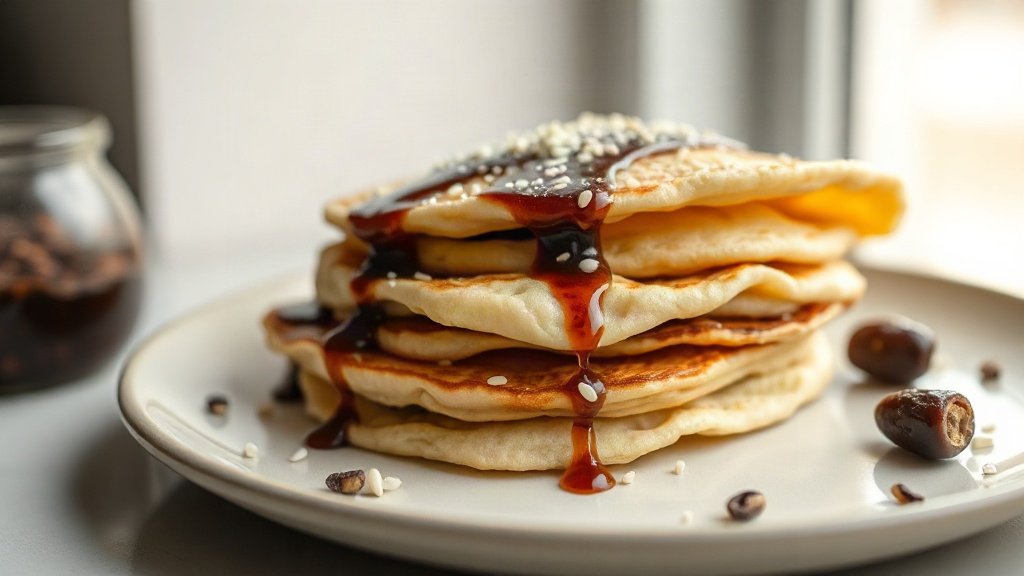
Illustration: AI-generated image
Chebab are a staple of Emirati home cooking: small, slightly puffed pancakes with a soft, airy crumb and a gentle tang from yeast. Unlike Western pancakes, they are not overly sweet, which makes them perfect for drizzling with date syrup or honey and a scattering of sesame seeds.
What are chebab?
Chebab (sometimes spelled chabab or chebab bread) are traditional Emirati pancakes made from a simple batter of flour, yeast, sugar, eggs, milk or water, and a touch of saffron and cardamom. The batter is left to rest so the yeast can work, giving the pancakes their characteristic spongy texture and subtle sourness. They are cooked on a flat griddle or frying pan, often without oil, until golden brown on both sides.
How chebab are made
The process begins with mixing the dry ingredients and then gradually adding the wet ingredients to form a smooth batter. Saffron threads are often steeped in warm water or milk first to release their colour and aroma, giving the pancakes a pale golden hue. The batter is then covered and left in a warm place to rise for about an hour. Once ready, small ladlefuls are poured onto a hot, lightly greased surface. As the surface bubbles and the edges set, the pancake is flipped briefly to cook the other side. The result is a soft, slightly chewy pancake that is best served warm.
When and how to enjoy chebab
Chebab are most commonly eaten for breakfast, especially on weekends and during Ramadan when families gather for a leisurely suhoor or iftar. They are also served as an afternoon snack with Arabic coffee or tea. The traditional accompaniment is date syrup (dibs), which adds natural sweetness, but many also enjoy them with honey, cream cheese, or a sprinkle of sugar and cinnamon. Some savoury versions include a pinch of turmeric or black seed for extra flavour.
Why chebab matter
Chebab are more than just a breakfast item; they are a reminder of the UAE's Bedouin heritage and the importance of simple, nourishing food. The use of yeast, rather than baking powder, reflects a time when leavening was achieved through natural fermentation, and the addition of saffron – a prized spice – shows the influence of trade routes on local cuisine. Today, chebab remain a beloved comfort food, often made by grandmothers and mothers whose recipes are passed down through generations.