Basbousa: A Guide to the Gulf's Sweet Semolina Cake
A soft, syrup-soaked semolina cake beloved across the Gulf, basbousa is easy to make at home and endlessly adaptable with coconut, nuts or floral waters.
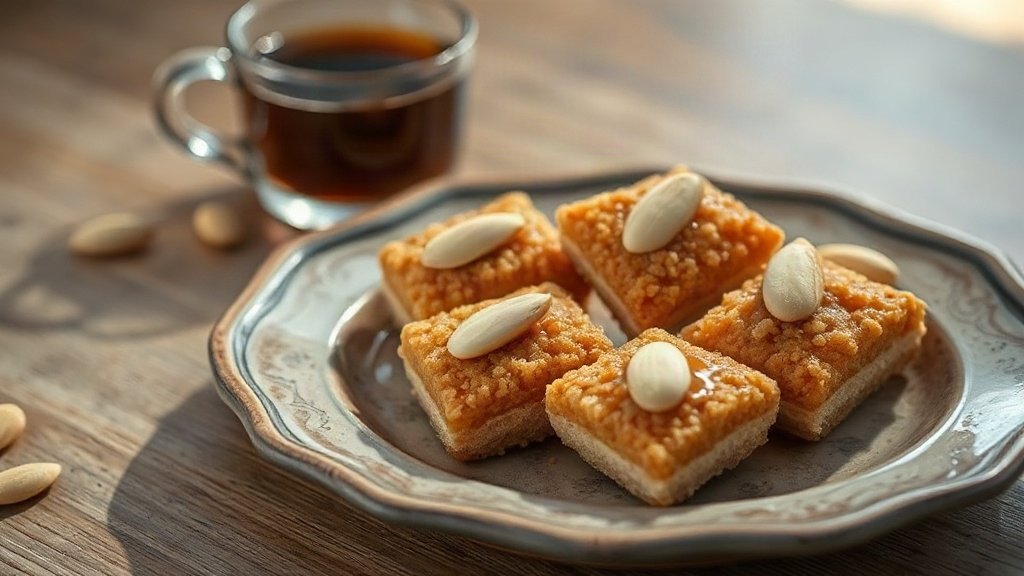
Illustration: AI-generated image
Basbousa is one of the most beloved sweets across the Gulf and the wider Arab world. This golden semolina cake, soaked in fragrant sugar syrup, is a staple at family gatherings, religious celebrations and everyday tea times. Its crumbly yet moist texture and gentle sweetness make it a comforting treat for any occasion.
What is Basbousa?
At its heart, basbousa is a simple cake made from coarse semolina, yoghurt or milk, butter or ghee, and sugar. Once baked to a light golden colour, it is drenched in a cooled syrup flavoured with rose water, orange blossom water or lemon juice, which seeps into the warm cake to keep it moist. The result is a tender, slightly grainy cake with a delicate floral aroma.
The name 'basbousa' comes from the Arabic word for 'kneaded' or 'moistened', referring to the syrup that saturates the cake. In some Gulf countries it is also known as 'hareeseh' or 'nammoura', though the basic concept remains the same.
How It's Made
Making basbousa is straightforward, even for novice bakers. The dry ingredients — semolina, sugar, baking powder and sometimes desiccated coconut — are mixed together. Melted butter or ghee is worked in until the mixture resembles damp sand, then yoghurt or milk is added to form a thick batter. The batter is spread into a greased tin, often scored into diamond or square shapes, and topped with a blanched almond in the centre of each piece. It bakes until the top is golden and a skewer comes out clean.
While the cake is still warm, the cooled syrup is poured evenly over it. The syrup must be at room temperature and the cake hot (or vice versa) so it absorbs properly without becoming mushy. The cake is then left to rest for several hours, allowing the flavours to meld and the syrup to distribute evenly.
Variations Across the Gulf
Every family has its own twist on basbousa. In the UAE and Saudi Arabia, it often includes a generous amount of desiccated coconut, which adds texture and a subtle nutty sweetness. Some recipes swap part of the semolina for fine flour to create a softer crumb. Others add a spoonful of tahini to the batter or smear it on the baking tin for a hint of sesame.
Floral waters are the classic flavouring, but cardamom or cinnamon can be mixed into the syrup for a spiced version. A few tablespoons of ground pistachios or walnuts may be sprinkled on top before baking, or the finished cake can be decorated with crushed nuts and dried rose petals.
When and How It's Served
Basbousa is a year-round sweet, but it is especially popular during Ramadan when it appears on iftar tables alongside other traditional desserts. It is also served at Eid celebrations, weddings and as a welcoming treat for guests. Because it keeps well for several days in an airtight container, it is a practical make-ahead dessert for busy hosts.
Traditionally, basbousa is eaten with the fingers, cut into small diamonds or squares for easy sharing. It pairs beautifully with unsweetened Arabic coffee (gahwa) or spiced tea, which balances the sweetness of the syrup.
Making Basbousa at Home
If you would like to try your hand at basbousa, start with a simple recipe. Use equal parts coarse semolina and sugar, half as much melted butter, and enough yoghurt to bring the mixture together. Add a teaspoon of baking powder and a pinch of salt. Bake at 180°C for 30–40 minutes, then pour over a syrup made from equal parts sugar and water, boiled until slightly thickened and flavoured with a teaspoon of rose or orange blossom water. Let the cake rest before cutting and serving.
For a Gulf-style twist, add 100 grams of desiccated coconut to the dry ingredients and top each square with an almond before baking. The coconut adds a delightful chew and a hint of tropical sweetness that is much loved in the region.