Balaleet: The Gulf's Sweet-and-Savoury Vermicelli Breakfast
Balaleet is a comforting Gulf breakfast dish of sweetened vermicelli topped with a thin omelette, often served during Eid and family gatherings.
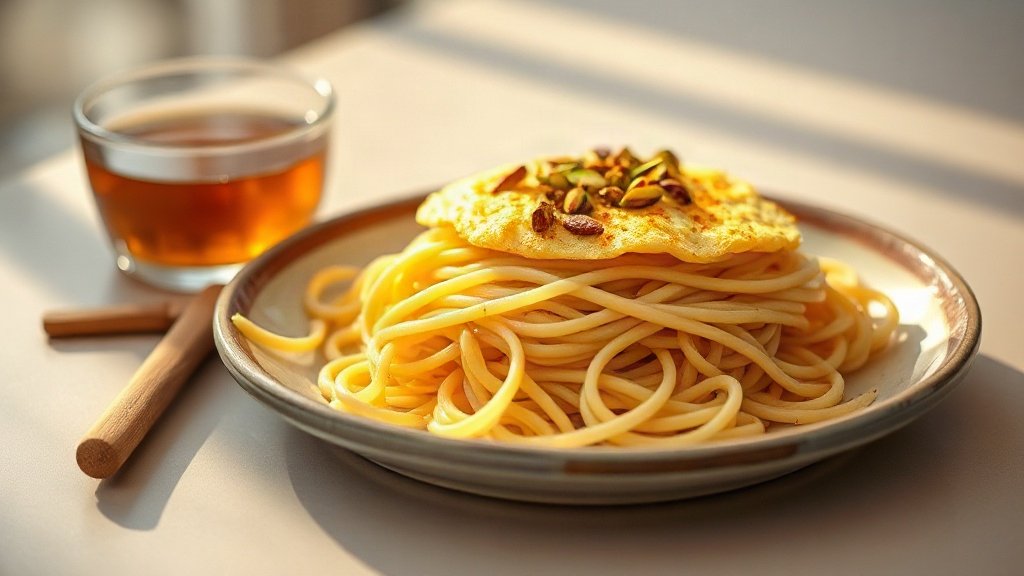
Illustration: AI-generated image
In many Gulf households, the aroma of saffron and cardamom drifting from the kitchen signals a special morning. Balaleet, a dish of sweetened vermicelli topped with a delicate omelette, is a beloved start to the day in the UAE, Qatar, Bahrain, and beyond. Its unusual pairing of sweet and savoury flavours makes it a distinctive part of the region's culinary heritage.
What is balaleet?
Balaleet is made from thin vermicelli noodles that are cooked until soft, then sweetened with sugar and scented with saffron, cardamom, and rose water. The noodles take on a golden hue and a fragrant, gently spiced sweetness. A thin, flat omelette is placed on top or served alongside, creating a contrast between the sugary noodles and the plain, savoury egg.
The dish is typically eaten for breakfast or as a light meal, often accompanied by a cup of karak tea or Arabic coffee. It appears on tables during Eid celebrations, family gatherings, and Friday brunches, though many families also prepare it on ordinary mornings for a comforting start to the day.
Ingredients and preparation
The core ingredients are simple: fine vermicelli (sometimes labelled as 'sha'iriya'), eggs, sugar or date syrup, saffron, cardamom, and rose water. Some cooks add a pinch of salt or a splash of orange blossom water for extra fragrance. The vermicelli is first browned in a little oil or ghee, then cooked in water until tender. Sugar and spices are stirred in, and the mixture is left to absorb the flavours. Separately, eggs are beaten and cooked into a thin, crepe-like omelette, which is then draped over the noodles or cut into strips.
While the basic method is shared across the Gulf, small variations exist. In some households, the omelette is seasoned with black pepper or a touch of cinnamon; in others, the noodles are garnished with toasted nuts or raisins. The sweetness can be adjusted to taste, and some modern versions use honey instead of sugar.
Cultural roots and family memories
Balaleet is more than just a recipe; it is a taste of home and hospitality. For many Gulf residents, the dish evokes childhood memories of waking up to its sweet smell on Eid mornings or during visits to grandparents. Because it is inexpensive and quick to prepare, it was historically a practical way to feed a family before a long day. Today, it remains a symbol of tradition passed down through generations.
The sweet-savoury combination may surprise first-time tasters, but it reflects the Gulf's layered approach to flavour, where spices and aromatics are used with care. Serving balaleet to guests is considered a warm gesture, and it often appears as part of a larger breakfast spread that includes dates, cheese, and flatbreads.
How to enjoy balaleet at home
If you want to try balaleet, it is easy to make at home. Look for fine vermicelli in Middle Eastern grocery shops or the international aisle of larger supermarkets. Saffron can be expensive, so a pinch is enough; some families use turmeric for colour if saffron is unavailable. The key is to balance the sweetness of the noodles with the plainness of the egg, so resist the urge to add sugar to the omelette.
Serve the dish warm, with the omelette on top or folded alongside. A cup of strong tea or lightly spiced coffee completes the experience. Balaleet can also be prepared in advance and reheated gently, making it a convenient option for busy mornings or weekend gatherings.
In a region where food is central to hospitality, balaleet holds a special place. It is a reminder that simple ingredients, when combined with care and tradition, can create something truly comforting and memorable.