A Practical Guide to the Traditional Men's Dress of the Gulf: Dishdasha, Ghutra and Agal
Understanding the traditional clothing worn by men across the Gulf states helps visitors appreciate local culture and dress appropriately. This guide explains the key garments, their names, and how to wear them respectfully.
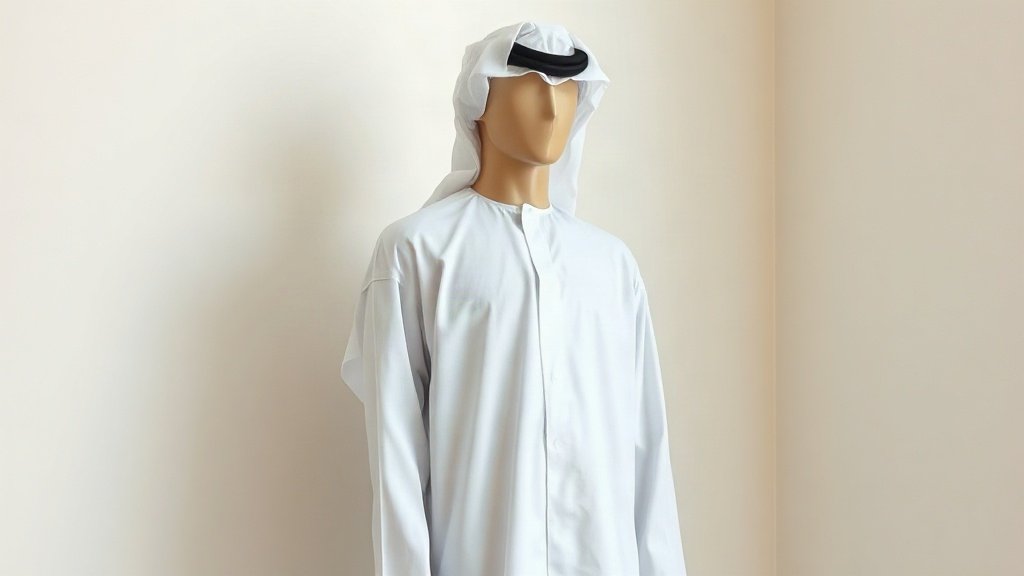
Illustration: AI-generated image
Across the Gulf states, the flowing white robe worn by men is one of the most recognisable symbols of the region. Known by different names in different countries — dishdasha in Kuwait, Oman and parts of the UAE; thobe in Saudi Arabia and Qatar; kandura in the UAE — it is more than just clothing. It is a practical garment for the desert climate and a marker of cultural identity. For visitors, understanding its components offers a deeper insight into local traditions and helps when choosing what to wear or buy as a souvenir.
The Dishdasha or Thobe
The dishdasha is a long, ankle-length robe, usually white but sometimes found in other colours such as beige, grey or light blue, particularly in winter. Made from cotton or a cotton-polyester blend, its loose fit allows air to circulate, keeping the wearer cool in high temperatures. The design is simple, with long sleeves and a collar, but subtle variations exist. In Oman, the dishdasha often features a tassel called a furakha at the collar, which is sometimes scented with perfume. Saudi thobes may have a stiff, pointed collar and a placket with buttons. The white colour reflects sunlight, while darker shades provide extra warmth during cooler months.
The Headscarf: Ghutra or Shemagh
Men cover their heads with a square cloth, folded into a triangle and draped over a small cap called a taqiyah or kufi. The cloth goes by different names: ghutra in the Gulf, shemagh in Saudi Arabia and parts of Jordan. It is typically red-and-white checked or plain white. The red-and-white pattern is often associated with Saudi Arabia and Bedouin heritage, while plain white is common across the Gulf states. The fabric is usually cotton, which absorbs sweat and provides shade. The way the ghutra is worn varies: some men let it hang loose, while others wrap it around the head, a style known as hamdaniyah.
The Agal
To keep the ghutra in place, a black cord called an agal is worn over the head. Traditionally made from goat hair or wool, it was originally a rope used to hobble camels at night, later repurposed. Today, the agal is often made from synthetic fibres wrapped around a core, and it has become a formal accessory. It sits on top of the head, holding the folded ghutra securely. In some Gulf countries, the agal is worn only on formal occasions or by older men, while younger men may choose to go without it.
The Bisht
For important events such as weddings, Eid prayers or official ceremonies, men may wear a bisht — a flowing outer cloak made from fine wool, often black, brown, beige or cream, with gold or silver embroidery along the edges. The bisht is a symbol of prestige and hospitality, worn by dignitaries, grooms and clerics. It is not an everyday garment, and its weight provides warmth during cooler evenings.
Practical Tips for Visitors
Visitors are not expected to wear traditional Gulf clothing, but it is acceptable to do so respectfully. If you wish to buy a dishdasha as a souvenir, remember that white is the most versatile and culturally appropriate colour. Tailored versions are available in local souqs, and many shops will make one to measure within a day or two. When trying on a ghutra, avoid wearing it in a way that covers the face unless you are in a dusty environment — the headscarf is worn over the head, not the face. Always ask permission before photographing someone in traditional dress, and avoid touching or adjusting another person's agal, as it is considered part of their personal space.
Understanding these garments helps visitors appreciate the practical wisdom of desert clothing and shows respect for local customs. Whether you choose to wear them or simply observe, the dishdasha and its accessories are a window into the Gulf's enduring heritage.