Traditional Gulf Pottery: A Guide to Its Craft and Heritage
From water jars to incense burners, pottery has shaped daily life in the Gulf for millennia. Discover the techniques, styles and enduring legacy of this ancient craft.
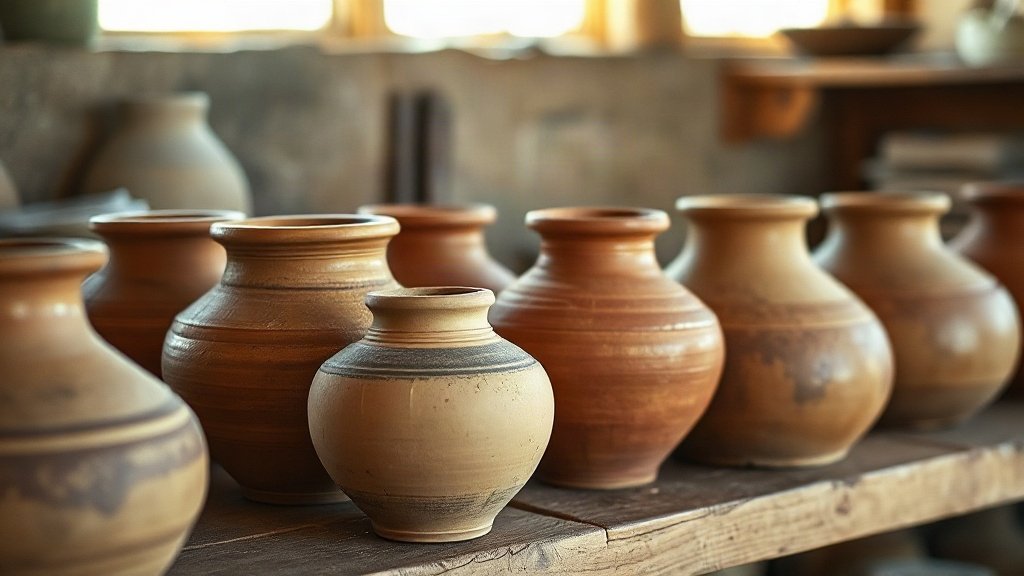
Illustration: AI-generated image
Pottery is one of the oldest crafts in the Arabian Gulf, with roots stretching back to the Bronze Age Dilmun civilisation on the island of Bahrain. For thousands of years, local potters have shaped the region's clay into vessels for water, food and trade, and the tradition continues today in heritage centres and artisan workshops across the Gulf.
History and influence
The Gulf's position on ancient trade routes meant its pottery absorbed influences from Mesopotamia, Persia and the Indus Valley. Early pieces were often utilitarian—large storage jars, cooking pots and water coolers—but many also featured simple geometric patterns or a burnished finish. The famous "Barbar pottery" from Bahrain, for example, is known for its reddish-brown clay and rope-like decorations.
Materials and techniques
Traditional potters source clay from local deposits, such as those near wadis in the UAE and Oman, or from coastal areas in Bahrain and Kuwait. The clay is cleaned, kneaded and then shaped by hand or on a simple kick wheel. After shaping, pots are dried in the shade before being fired in open pits or simple kilns, often using palm fronds or dried dung as fuel. This low-temperature firing gives the pottery its characteristic porous quality, which is ideal for evaporative cooling in the desert heat.
Common forms and uses
Gulf pottery is primarily functional, and many forms have remained unchanged for centuries:
- Water jars (hib or khars): Tall, narrow-necked vessels that keep water cool through evaporation.
- Incense burners (mabkhara): Small clay censers used for burning frankincense and oud.
- Cooking pots: Rounded pots with thick walls, used for slow-cooking stews and rice dishes.
- Storage jars: Large containers for dates, grains and other dry goods.
- Toys and miniatures: Small animal or human figures made for children.
Where to see traditional pottery today
Heritage villages and museums across the Gulf showcase historic pottery and sometimes demonstrate the craft. In Bahrain, the A'ali burial mounds area is surrounded by traditional pottery workshops that still use ancient techniques. In the UAE, the Al Ain Oasis and Sharjah's heritage area feature pottery displays, while Oman's Nizwa and Bahla are known for their distinctive green-glazed ceramics, though these are technically a later development. Saudi Arabia's eastern province also has a long pottery tradition, particularly in the town of Al-Ahsa.
Visitors to these sites can often watch potters at work and purchase authentic pieces. When buying, look for irregular shapes and uneven surfaces—telltale signs of a handmade item—and avoid pieces with a uniform, factory-made appearance.
Why it matters
Pottery is more than a utilitarian craft; it is a tangible link to the Gulf's past. Each vessel tells a story of adaptation to the environment, of trade and cultural exchange, and of the ingenuity of ordinary people. By supporting traditional potters and learning about the craft, we help keep this heritage alive for future generations.