Traditional Gulf Games to Play at Home: A Guide for Families
Discover traditional Gulf games that have entertained families for generations. From board games to outdoor classics, learn the rules and how to play them at home.
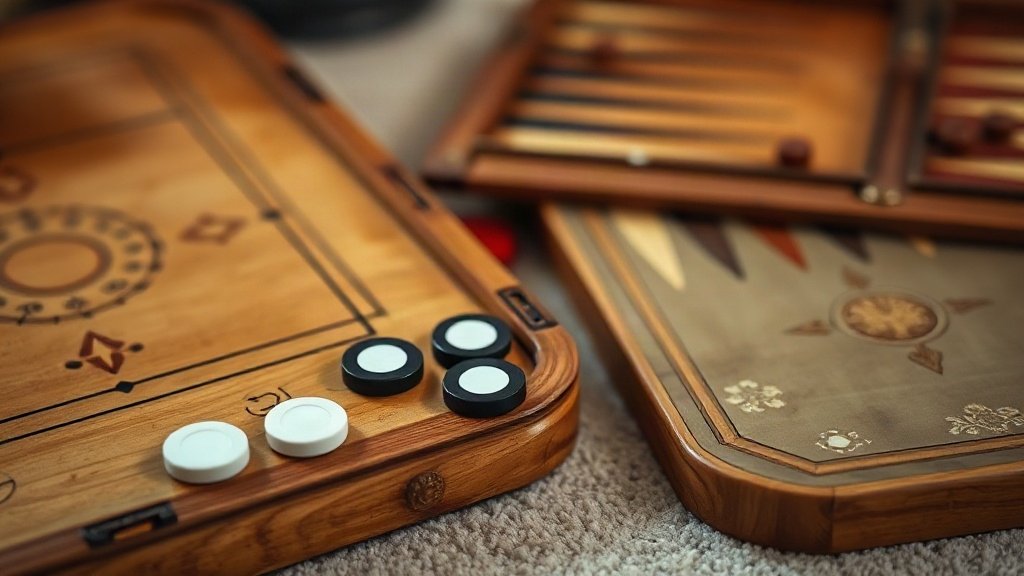
Illustration: AI-generated image
From the cool shade of a courtyard to the comfortable floor of a modern majlis, traditional games have long brought Gulf families together. These pastimes are more than just entertainment – they teach patience, strategy and social skills, while keeping cultural heritage alive. Best of all, most require little more than everyday objects and a willingness to play.
Carrom: A Classic Board Game for All Ages
Carrom is a beloved indoor game across the Gulf, often played on a wooden board with pockets in the corners. Similar to billiards or shuffleboard, it involves flicking small discs into pockets using a larger striker piece. The game can be played by two or four players, making it perfect for family gatherings.
To play at home, you will need a carrom board, which is widely available in Gulf markets, along with a set of discs (usually black and white) and a red disc called the queen. Players take turns flicking the striker from their baseline, aiming to pocket their own coloured discs. The queen must be pocketed before the last disc, and the player who pockets the queen must also pocket one of their own discs in the same turn to 'cover' it. The first player or team to pocket all their discs wins.
Tawla: The Ancient Game of Strategy
Tawla, or backgammon, has been played in the Arab world for centuries. It is a two-player game combining luck from dice rolls with strategic movement of pieces around a board. Many Gulf homes have a tawla set, often beautifully crafted from wood with inlaid mother-of-pearl.
The goal is to move all your fifteen pieces around the board and bear them off before your opponent. Each player rolls two dice to determine how many points their pieces can move. If a player lands on a point occupied by a single opposing piece, that piece is 'hit' and must start again from the bar. The first to remove all pieces wins the round. Tawla is an excellent way to sharpen mental arithmetic and forward planning, and it can be played quickly or savoured over a cup of gahwa.
Five Stones: A Simple Game for Quick Fun
Known by various names across the region, this game requires only five small stones, pebbles or even dried beans. It is usually played by two or more players and helps develop hand-eye coordination. To begin, scatter the five stones on the ground or a low table. The first player throws one stone into the air and, while it is airborne, must pick up one of the remaining stones from the surface, then catch the falling stone. The process repeats, but with each round the player must pick up more stones at once: first singly, then in twos, then three and one, and finally all four in one go. A player loses their turn if they fail to catch the thrown stone or touch a stone they are not meant to pick up.
This game is ideal for younger children and can be played anywhere, from a carpeted floor to a shaded outdoor step.
Spinning Tops: A Test of Skill and Patience
Traditional spinning tops, often called al-dorbaha in the Gulf, have entertained children for generations. Made from wood or sometimes metal, a top is set spinning using a quick flick of the wrist or a pull of a string. In one common competitive version, players mark a circle on the ground and take turns spinning their tops inside it. The winner is the one whose top spins the longest or knocks others out of the circle.
Modern plastic tops are available, but making your own from a wooden peg and a short string is a rewarding craft project. To play, wind the string tightly around the top, hold it firmly, then pull the string sharply while releasing the top onto a flat surface. With practice, you can achieve long, impressive spins.
Bringing Tradition into the Modern Home
These games are more than rainy-day activities – they are a bridge between generations. Grandparents can share memories of playing carrom in the neighbourhood, while children learn the same rules and create new memories. Hosting a game night with tawla and carrom, accompanied by Arabic coffee and dates, is a wonderful way to embrace Gulf hospitality and culture in a relaxed setting. All you need is a little space, a few simple items, and an open mind to learn a timeless tradition.