How to Maintain a Swimming Pool in the Gulf: A Practical Guide
Clear water and a clean pool make summer days at home much more enjoyable. Here is how to keep your pool in good condition despite the heat, sand and humidity of the Gulf.
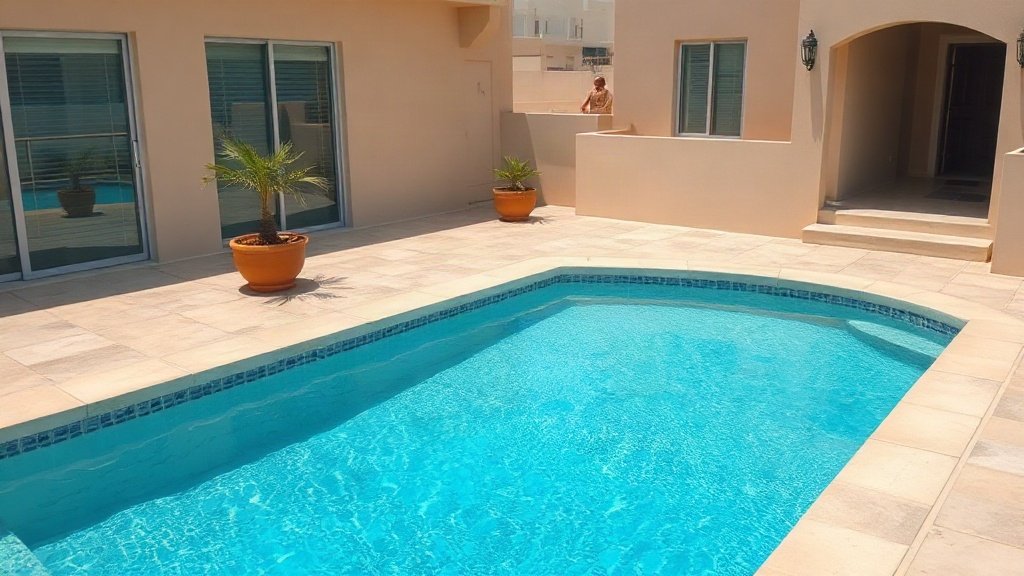
Illustration: AI-generated image
A private swimming pool is one of the great pleasures of living in the Gulf. But the region's intense heat, blowing sand and high evaporation rates mean a pool needs regular care to stay clean, safe and inviting. With a simple weekly routine you can avoid murky water, algae growth and damaged equipment.
Balance the water chemistry
Water chemistry is the foundation of pool maintenance. Test the water at least once a week using a reliable test kit. Aim to keep the pH between 7.2 and 7.6 – slightly alkaline – as this range is comfortable for swimmers and allows chlorine to work effectively. In the Gulf's hard water, pH can drift upward, so check it often.
Chlorine is the most common sanitiser. Keep free chlorine levels between 1 and 3 parts per million. Because strong sunlight breaks down chlorine quickly, many pool owners use a stabiliser such as cyanuric acid to protect it from UV rays. Follow product instructions carefully, as too much stabiliser can reduce chlorine's effectiveness.
Also monitor total alkalinity, which helps buffer pH changes. A range of 80 to 120 parts per million is ideal. If the water is cloudy or you notice a strong chemical smell, it is often a sign of chloramines, which form when chlorine combines with sweat or oils. The solution is to "shock" the pool with a higher dose of chlorine, usually at dusk so it can work overnight without sun interference.
Keep the pool clean
Sand and dust are constant companions in the Gulf. Empty the skimmer baskets daily or every other day, as a full basket reduces water circulation. Use a pool brush to scrub the walls, steps and floor at least once a week – this prevents algae from taking hold and removes the fine layer of dust that settles on surfaces. For the pool floor, a manual vacuum or an automatic pool cleaner can pick up debris that sinks to the bottom.
Watch for algae, especially in hidden corners or behind ladders. Algae can bloom quickly in warm water, turning surfaces green, yellow or black. Brushing and maintaining proper chlorine levels will prevent most algae problems. If you do see algae, brush it off and then shock the pool.
Leaves and larger debris are less common in many Gulf neighbourhoods, but if you have plants nearby, a leaf net or pool cover can help. A pool cover also reduces water evaporation, which is significant in the summer heat. Covering the pool when it is not in use can cut water loss and reduce the need for top-ups.
Protect the equipment
The pump and filter are the heart of the pool's circulation system. Run the pump for at least eight hours a day, ideally during the cooler evening and early morning hours to save energy and reduce strain. Clean or backwash the filter according to the manufacturer's schedule – sand filters are common in the Gulf and need regular backwashing to remove trapped dirt.
Check the pump strainer basket weekly and remove any debris. Also inspect seals and O-rings for cracks, as the dry heat can cause rubber parts to degrade faster. Keep the area around the pump clear of sand and dust to avoid overheating.
If your pool has a heater, you probably will not need it most of the year. But if you use one in cooler months, inspect it regularly and descale it as needed, because Gulf water is high in minerals that can build up inside the unit.
Manage the heat and sun
High temperatures increase evaporation and chemical consumption. Add water to maintain the correct level – usually about halfway up the skimmer opening – using a hose filter if you are topping up from a desalinated supply. Consider using a pool cover to slow evaporation and keep out sand when the pool is not in use, especially during sandstorms.
Run the pool pump overnight when electricity tariffs may be lower and the water is cooler. This can also help distribute chemicals more evenly. If you go away for an extended period, arrange for someone to check the pool every few days, or use a timer and automatic chlorinator to keep the water balanced.
With these straightforward steps, you can enjoy a crystal-clear pool all year round. The routine takes only a few minutes each day and a little more effort once a week, but the reward is a refreshing escape from the Gulf heat.