Traditional Board Games of the Gulf: A Guide to Family Fun
Discover the beloved board games that bring families and friends together across the Gulf, from fast-paced carrom to strategic backgammon, and learn how to play them yourself.
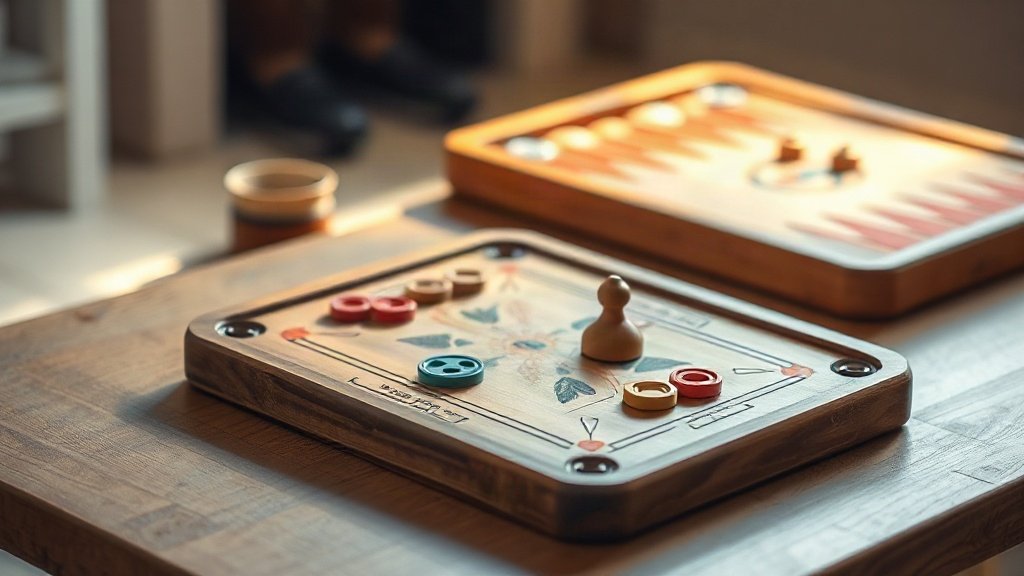
Illustration: AI-generated image
Long before screens and digital entertainment, families across the Gulf gathered around wooden boards, polished stones and dice for hours of friendly competition. These traditional games remain a cherished part of social life, passed down through generations and still played in homes, majlis gatherings and community spaces today. If you are new to the region or simply looking for a screen-free way to connect with family and friends, learning a few of these games is a wonderful way to embrace local culture.
Carrom: The Fast-Paced Flicking Game
Carrom is one of the most popular board games in the Gulf and across South Asia. Played on a square wooden board with corner pockets, it involves flicking small discs (called carrom men) into the pockets using a larger striker. The game is usually played in pairs or teams, with players taking turns to pot their assigned colour discs. The first to clear their discs and the red 'queen' wins. Carrom requires both skill and patience, making it perfect for all ages. Boards are widely available in toy shops and hypermarkets, and many families keep a set at home for spontaneous games after dinner.
Backgammon (Tawla): The Game of Strategy and Luck
Known locally as tawla, backgammon is a classic two-player game found in cafés and homes throughout the Arab world. The board features 24 narrow triangles called points, and each player has 15 checkers that must be moved according to the roll of two dice. The objective is to bear off all your checkers before your opponent. Tawla blends strategy with the unpredictability of the dice, and matches can be intense yet friendly. Traditional boards are often beautifully crafted from wood with inlaid mother-of-pearl, making them as much a decorative piece as a game. Learning the basic rules takes only a few minutes, but mastering the game can take a lifetime.
Dominoes: Simple Rules, Endless Possibilities
Dominoes are a staple in many Gulf households, especially among older generations who gather in the evenings to play. The game uses rectangular tiles with two numbers on each, and players take turns matching tiles with the same number. There are many variations, from simple block games for children to more complex scoring games like Mexican Train. Dominoes are lightweight, easy to learn and ideal for groups of four or more, making them a social favourite. You will often hear the satisfying clack of tiles on tables in community centres and clubhouses.
Where to Play and Learn
If you do not have a set at home, many community centres, social clubs and cultural organisations in the Gulf host regular game nights where newcomers are welcome. Public libraries sometimes have board game collections, and some parks have dedicated areas for traditional games. Asking neighbours or colleagues is also a great way to learn; locals are often delighted to teach newcomers the rules and share a cup of Arabic coffee while playing.
Bringing the Tradition Home
Introducing these games to your own family is a wonderful way to slow down and spend quality time together. They require no electricity, little space and very little cost. More importantly, they open a window into the region's social customs, where hospitality and conversation are as important as the game itself. So clear the table, pour some tea and let the games begin.