The Gargoor: A Guide to the Gulf's Traditional Fish Trap
Dome-shaped and baited, the gargoor has shaped coastal fishing in the Gulf for generations. Here's how it works and why it remains a symbol of maritime heritage.
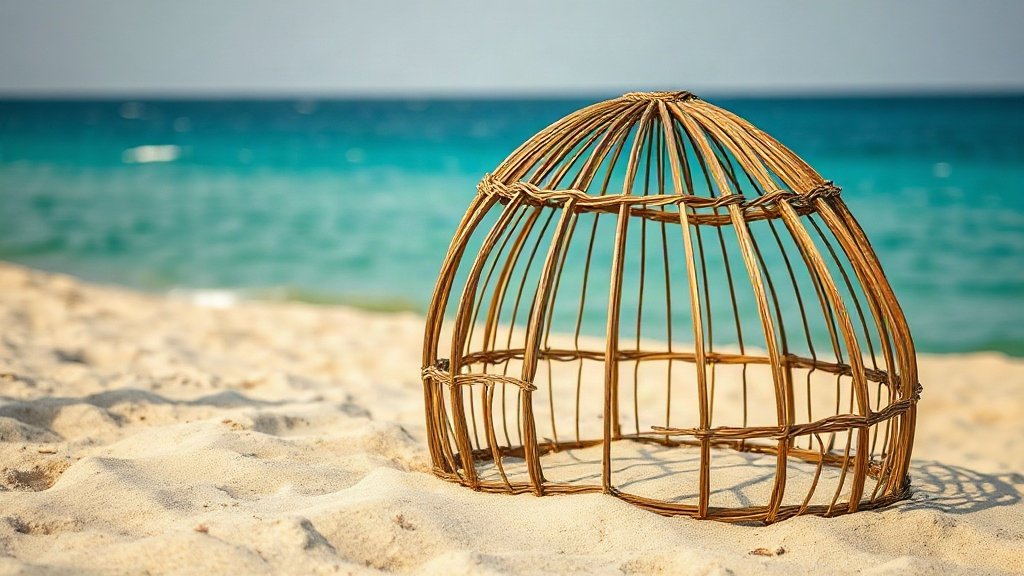
Illustration: AI-generated image
Scattered along the shallow coastal waters of the Arabian Gulf, dome-shaped structures rest silently on the seabed. These are gargoors — traditional fish traps that have been used by Gulf fishermen for generations. Simple in design yet remarkably effective, the gargoor is a living symbol of the region's maritime heritage.
The gargoor is a basket-like trap with a broad circular base, tapering to a rounded top. Traditionally woven from date palm fronds or reeds, it features a funnel-shaped entrance at one side. Bait — often pieces of fish or squid — is placed inside. Fish swim in through the funnel, but the inward-pointing fronds or wire mesh make it difficult for them to find their way out. The trap is then left on the seafloor for a day or two before being retrieved.
Making a gargoor was once an essential skill for coastal communities. Fishermen would gather palm fronds, soak them to increase flexibility, and weave them into a sturdy lattice. The traps were lightweight, cheap to make, and easy to repair. Today, many gargoors are constructed from galvanised wire mesh, which lasts longer but follows the same basic principle. They come in various sizes, from small traps for crabs to larger ones for hammour and other reef fish.
Gargoor fishing is a patient, low-impact method. Unlike trawling or large nets, it targets specific species and allows undersized fish to escape through the gaps in the mesh. In many Gulf countries, traditional gargoors are still used by small-scale fishermen who pass down their knowledge from father to son. The traps can be seen stacked at fishing harbours, and replicas are displayed in museums and heritage villages as reminders of a way of life tied to the sea.
Although modern fishing methods have transformed the industry, the gargoor remains a cherished part of Gulf culture. It reflects a deep understanding of local marine ecology and a resourcefulness born of necessity. For visitors and residents alike, learning about this humble trap offers a window into the region's enduring connection to the waters that have sustained it for centuries.