The Bisht: A Guide to the Gulf's Traditional Cloak of Elegance
Worn over the thobe for weddings, graduations and official occasions, the bisht is a symbol of prestige, dignity and heritage across the Arabian Gulf.
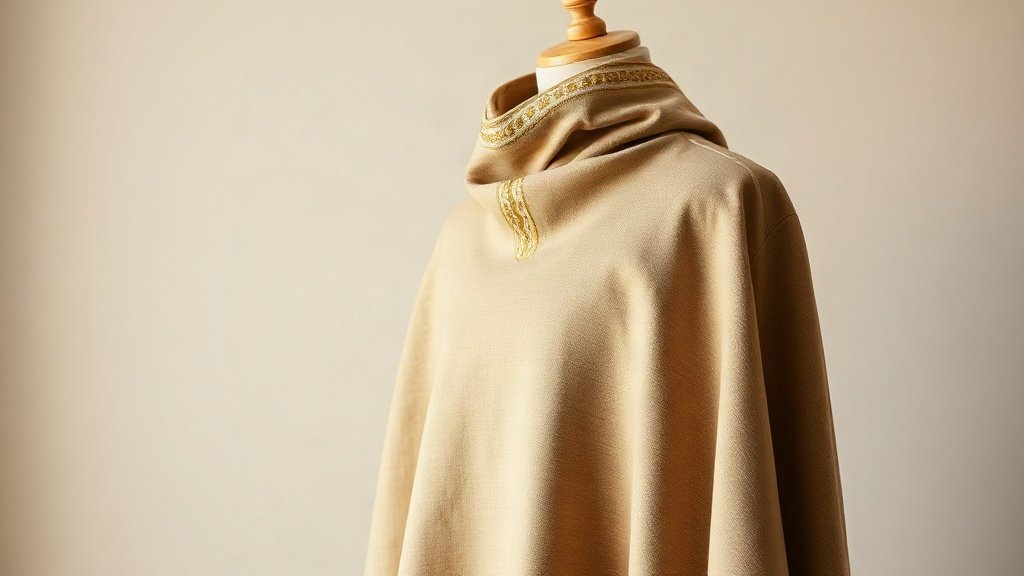
Illustration: AI-generated image
Walk into any Gulf wedding, graduation ceremony or formal national celebration and you will see a garment that instantly commands respect: the bisht. This flowing, cloak-like overgarment, worn over the traditional white thobe, is more than just clothing. It is a powerful marker of honour, status and timeless elegance across the Arabian Peninsula.
What is a bisht?
The bisht is a long, loose outer cloak, typically made from fine wool or a wool blend, and often edged with intricate golden braid known as zari. It is open at the front and has wide, flowing sleeves, though the arms are usually not placed through them. Instead, the bisht drapes over the shoulders, giving the wearer a distinguished silhouette.
Unlike the everyday thobe, which is usually white, the bisht comes in a variety of colours. Black, brown, beige and cream are the most common, while white bishts are reserved for particularly grand occasions, often worn by religious scholars or high-ranking officials. The golden trim is a hallmark, though silver or contrasting thread may also be used.
History and symbolism
The bisht has ancient roots, believed to trace back to the traditional cloaks worn by Persian and Arabian nobility. Over centuries it became a symbol of authority and prestige in the Gulf. Historically, it was worn by rulers, tribal leaders and wealthy merchants. Today, that symbolism endures: a man wearing a bisht is marking a moment of significance, whether it is his wedding day, a graduation, a promotion or a national ceremony.
In the Gulf, the bisht is never worn casually. It is reserved for formal and celebratory events, and its presence signals respect for the occasion and the people attending. It is also a common gift of honour, presented to esteemed guests or individuals being recognised for achievement.
How it is worn
The bisht is worn over a thobe that is typically white or matching in tone. The thobe underneath is usually well-pressed, as the bisht is open and reveals the garment beneath. The bisht is simply draped over the shoulders, and while it has sleeves, they are not used; the arms remain free. For most events, the bisht is paired with the traditional head covering — the ghutra and agal, though on some occasions a gahfiya (cap) alone may suffice.
There is an art to carrying the bisht with grace. The fabric should flow naturally, and many men adjust the front edges slightly to ensure the golden trim sits symmetrically. Some choose to fasten the bisht loosely with a hidden cord at the neck, but more often it is left open to display the fine embroidery.
Craftsmanship and materials
A high-quality bisht is a work of art. Traditional bishts are made from fine wool, sometimes blended with camel hair or cashmere for softness and drape. The weaving is done on specialised looms, and the fabric must be lightweight enough to move elegantly yet substantial enough to hold its shape.
The most distinctive feature is the zari trim, which runs along the front edges, cuffs and sometimes the back neckline. This trim is often hand-embroidered with metallic threads, traditionally gold or silver, and can feature intricate geometric or floral motifs. The value of a bisht often lies in the quality of its wool and the fineness of its embroidery. Some bespoke bishts take weeks to complete and are treasured as heirlooms passed down through generations.
Modern relevance
While the bisht is firmly rooted in tradition, it remains very much alive in contemporary Gulf society. Designers have introduced subtle variations in colour, cut and trim, but the essential form and symbolism remain unchanged. It is now common to see young men wearing bishts at their university graduations, and grooms almost always wear a bisht over their wedding thobe.
For visitors to the Gulf, understanding the bisht offers a window into the region's values of honour, hospitality and respect. Seeing a man in a bisht is a reminder that some traditions are not merely preserved; they are proudly lived.