The Art of Henna in the Gulf: A Guide to Traditional Designs and Meanings
Henna has been used for centuries across the Gulf to adorn hands and feet for weddings, Eid and other joyful occasions. This guide explores the cultural significance, common motifs and the social ritual of applying henna.
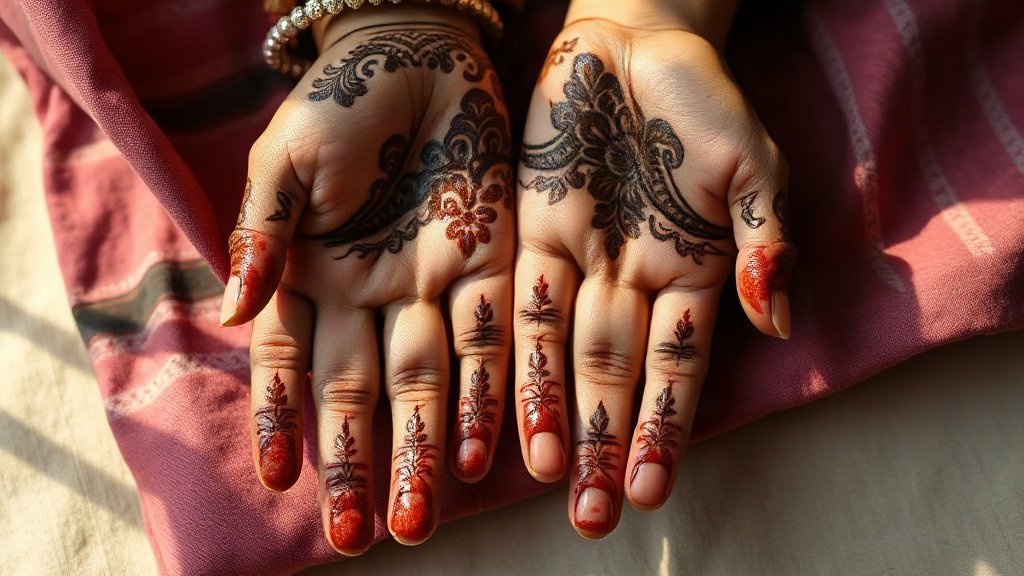
Illustration: AI-generated image
Henna, known locally as hinna or mehndi, is one of the most recognisable forms of adornment across the Arabian Gulf. Derived from the crushed leaves of the henna plant (Lawsonia inermis), the reddish-brown dye has been used for centuries to decorate the hands and feet of women and girls for weddings, Eid celebrations and other special gatherings. The tradition remains deeply woven into Gulf social life, blending artistry, symbolism and community.
A Tradition Rooted in Celebration
In Gulf societies, henna is strongly associated with joy and festivity. The most elaborate application takes place before a wedding, during a gathering often called laylat al-hinna (henna night), when the bride is adorned with intricate patterns while female relatives and friends sing traditional songs. Henna is also commonly applied for the two Eid holidays, for the birth of a child, and for other happy milestones. The act of applying henna is rarely solitary; it is a social occasion where women gather, share food and conversation, and pass down knowledge from one generation to the next.
Common Motifs and Their Meanings
Gulf henna designs tend to be bold and floral, often covering the entire palm and extending up the fingers in a glove-like fashion. While modern interpretations vary, many patterns draw on a shared visual vocabulary:
- Floral and vine motifs – symbolise growth, fertility and new beginnings, making them especially popular for brides.
- Geometric shapes and lattice patterns – reflect the region's architectural heritage, echoing mashrabiya screens and sadu weaving.
- Dots and paisley forms – represent abundance and good fortune.
- Abstract flowing lines – often used to elongate the fingers, adding an elegant, delicate touch.
Unlike some South Asian traditions where animals or religious symbols may appear, Gulf henna tends to favour abstract and botanical forms, aligning with local aesthetic preferences for symmetry and repetition.
The Ritual of Application
Traditionally, henna paste is made fresh by mixing henna powder with water, lemon juice or strong tea, and sometimes a little sugar or essential oil to improve the paste's texture and colour. The paste is applied using a small stick, a plastic cone, or a syringe-like applicator, depending on the desired precision. Once applied, the paste must dry and remain on the skin for several hours—often overnight—to achieve the deepest stain. The dried paste is then scraped off, revealing an orange stain that darkens to a rich reddish-brown over the following day or two.
The process is unhurried and often accompanied by Arabic coffee and dates, reinforcing the sense of hospitality and togetherness that defines the tradition. Elder women in the family are frequently the most skilled artists, having learned the craft from their own mothers and grandmothers.
Henna Beyond Weddings
While bridal henna is the most elaborate, the practice is not limited to marriage. Many women and girls apply simple henna designs on the palms for Eid mornings, after returning from the mosque, or simply as a weekend treat. Men in some Gulf communities may also apply henna to the soles of the feet or the palms for cooling purposes, though this is less common today. The dye's natural cooling sensation made it historically valuable in the desert climate, and it was sometimes used on the hair as well.
A Living Craft
Today, henna remains a vibrant part of Gulf culture, adapting to contemporary tastes while preserving its core traditions. Professional henna artists can be found in many salons and at cultural festivals, and the art form has gained international recognition. Whether applied for a wedding, a holiday, or simply for beauty, henna continues to connect people to a shared heritage that values artistry, celebration and community.