The Art of Arabic Perfumery: A Guide to Gulf Fragrance Traditions
Discover the rich traditions of Gulf perfumery, from precious ingredients like oud and rose to the rituals of hospitality and personal adornment.
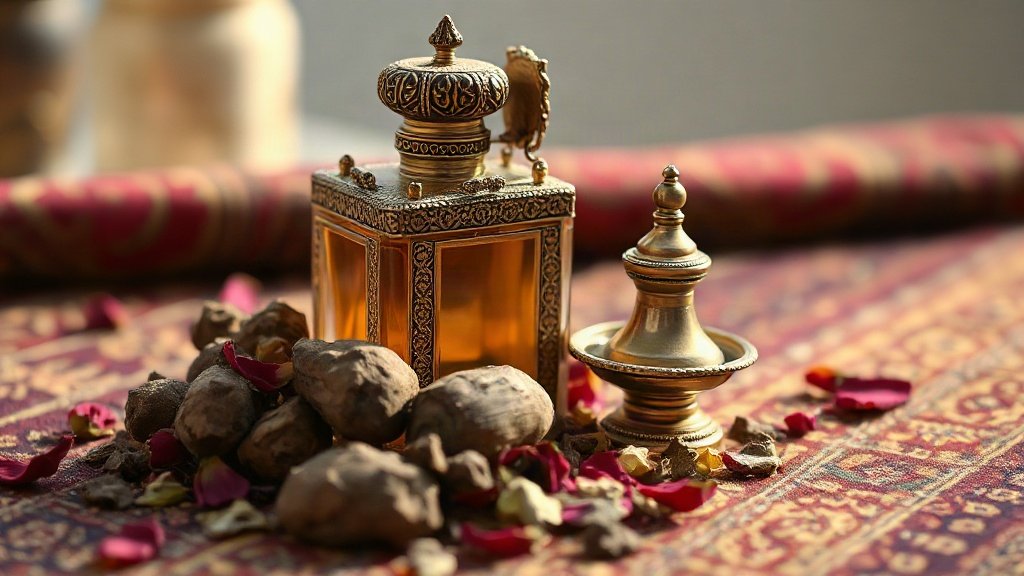
Illustration: AI-generated image
Perfume holds a place of deep cultural significance in the Gulf, where scent is woven into daily life, hospitality, and personal identity. The region's fragrance traditions date back centuries, drawing on a rich palette of natural ingredients and time-honoured techniques. From the smoky allure of bakhoor to the refined elegance of attar oils, Arabic perfumery offers a sensory journey through history and heritage.
Signature Ingredients
At the heart of Gulf perfumery lies oud, a dark, resinous wood prized for its complex, woody aroma. Sourced from the agar tree, oud has been treasured for millennia and remains a cornerstone of many traditional blends. Rose, particularly the Damask rose from Taif in Saudi Arabia, contributes a sweet, floral note that balances deeper scents. Other cherished ingredients include ambergris, a rare marine substance, and musk, both valued for their warmth and longevity. Saffron, cardamom, and sandalwood are also commonly used, creating layered fragrances that evolve on the skin.
How Perfume is Worn and Shared
In Gulf culture, wearing perfume is a daily ritual, often layered: a base of oil-based attar is applied to pulse points, followed by a spritz of alcohol-based eau de parfum. Both men and women take pride in their signature scents, which can signal personality, status, and taste. Perfume is also a gesture of generosity; guests are often welcomed with a dab of concentrated oil or a pass of bakhoor smoke, a custom that embodies the region's famed hospitality.
The Role of Bakhoor
Bakhoor—incense made from wood chips soaked in fragrant oils and blended with resins—is a staple in Gulf homes. Burned on a mabkhara (incense burner), its aromatic smoke is used to perfume clothing, hair, and living spaces. The practice is especially common before Friday prayers, during celebrations, and when hosting visitors. The swirling smoke is believed to purify the air and uplift the mood, making it an integral part of social and spiritual life.
Modern Expressions
Today, the art of Arabic perfumery thrives, with contemporary perfumers reinterpreting classic combinations for global audiences. While synthetic alternatives exist, many still seek authentic oud and traditional attars, ensuring that these ancient crafts endure. For those new to Gulf fragrances, exploring a local souk or visiting a specialised perfumery offers an introduction to a world where scent tells stories of tradition, luxury, and identity.