The Arish: A Guide to the Gulf's Traditional Palm-Frond Summer House
Discover how the arish, a breezy home woven from date palm leaves, kept Gulf families cool long before air conditioning – and why it still matters today.
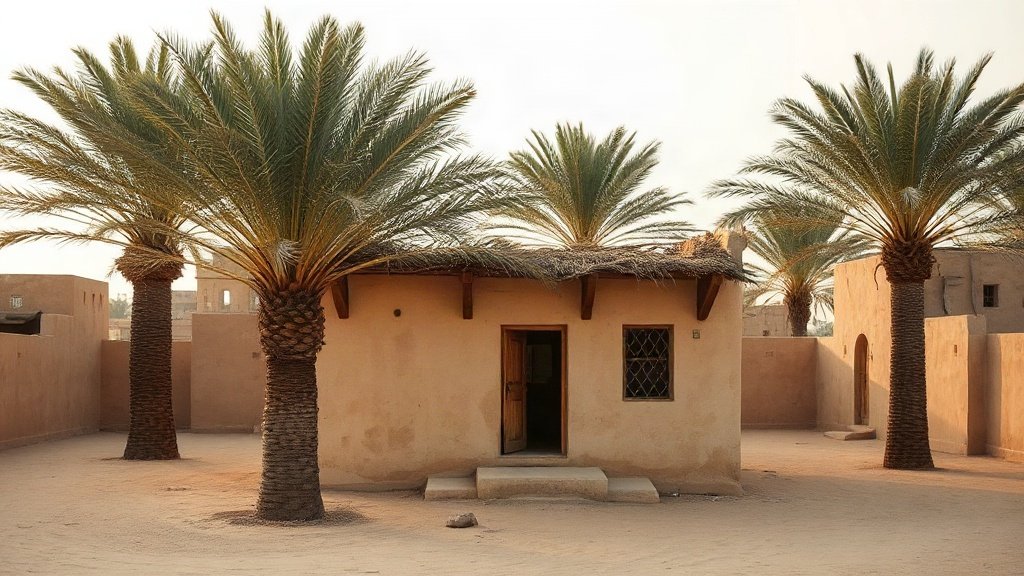
Illustration: AI-generated image
Before the age of air conditioning, the people of the Gulf found a remarkably effective way to stay cool during the fierce summer months. They built their homes from the leaves of the date palm, creating light, airy structures known as arish (or areesh). These traditional palm-frond houses were once a common sight across the coastal and inland regions of the UAE and Oman, offering shade and natural ventilation in a climate where temperatures can soar above 40°C.
How an arish is built
The arish is a masterpiece of simple, sustainable construction. Builders use the long, dried fronds of the date palm, which are woven into large mats called khous or safafeh. These mats are then tied onto a wooden frame, often made from mangrove poles or palm trunks, using rope twisted from palm fibre. The roof is usually a ridge of palm trunks covered with more woven mats, creating a pitched shape that sheds the rare rain. No nails or modern materials are needed; every part comes from the palm tree, which has been called the “tree of life” in the Gulf for good reason.
Natural cooling and practical design
The arish works on the principle of cross-ventilation. The woven palm fronds are not tightly sealed; they allow sea breezes or desert winds to pass through, carrying away heat and humidity. During the day, the thick layers of fronds provide deep shade, keeping the interior noticeably cooler than outside. Many arish houses were built close to the water’s edge or within date gardens, where the air was naturally cooler. Families often used the arish as a summer retreat, moving from their more solid winter homes made of stone or coral. It could serve as a sleeping area, a majlis for receiving guests, or a storage space for dates and fishing gear.
A symbol of heritage and sustainability
The arish is more than just a building technique; it reflects a deep understanding of the environment and a resourceful way of life. Building and repairing an arish was a communal activity, with skills passed down through generations. In a region where timber was scarce, the date palm provided an abundant, renewable material. The arish could be erected quickly and dismantled or moved when needed, suiting the semi-nomadic rhythms of coastal and Bedouin communities. Today, it stands as a proud symbol of intangible heritage, celebrated in museums and heritage villages across the UAE and Oman.
Why the arish still matters
As modern cities rise with glass and steel, the arish offers a timely lesson in passive cooling and low-impact living. Architects and designers are increasingly looking to traditional Gulf architecture for inspiration, exploring how woven palm fronds and natural ventilation can reduce reliance on energy-hungry air conditioning. Some eco-lodges and heritage sites now feature arish-style buildings, allowing visitors to experience their simple comfort. For anyone interested in Gulf culture, seeing an arish up close is a reminder that true innovation often comes from living in harmony with the land.