Reem Al Mubarak's 'What We Left In The Sandbox' opens on Abu Dhabi's Reem Island
The Emirati artist's interactive new solo show at Rizq Art Gallery uses bubble wrap, sand and familiar objects to explore childhood memory and play. It runs until 10 January.
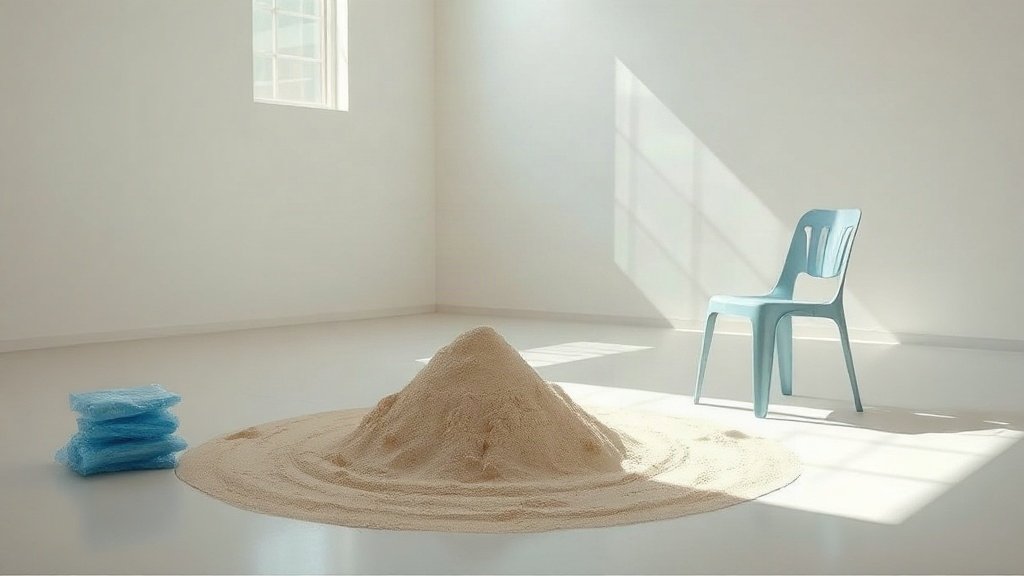
Illustration: AI-generated image
An interactive solo exhibition that invites visitors to step back into childhood has opened at Rizq Art Gallery on Abu Dhabi's Reem Island. Emirati artist Reem Al Mubarak's What We Left In The Sandbox runs until 10 January 2027, turning ordinary objects such as bubble wrap, sand and plastic chairs into playful works about memory.
The show is curated by Emirati architect and researcher Azza Aboualam. It opened on Friday and draws heavily on Al Mubarak's six-month residency at the Cultural Foundation in Abu Dhabi, where she experimented with overlooked materials and collected sands from across the UAE.
A sandcastle built for childhood memories
One of the exhibition's most distinctive works is a sandcastle constructed inside the gallery. It is deliberately proportioned the way a child might remember it, meaning most adults have to stoop to enter. Nearby, a photograph has been turned into a sliding puzzle cast in metal, allowing visitors to rearrange its pieces without ever quite restoring the original image.
Other pieces include acrylic works, plastic chairs and elements inspired by tic-tac-toe. Al Mubarak says the project grew from a personal realisation that modern life offers fewer chances to create lasting memories, despite the ease of documenting them. She has changed how she spends time with her nieces and nephew, prioritising shared experiences over shopping or coffee.
She said she now makes a point of doing things together with them, going outside and playing, because those shared moments stay with them far longer than a coffee or a trip to the mall.
Why touch matters more than photos
Aboualam deliberately designed the exhibition without a prescribed route, so visitors follow whatever catches their eye. The tactile nature of the works also encourages people to engage physically rather than simply photographing each piece. The curator notes that while many people photograph every experience, those images often receive little attention afterwards. She believes one or two photographs would be enough, and that once a memory is unlocked visitors can take as many as they like.
Al Mubarak agrees that photography alone cannot communicate the full experience of encountering her work. Simply turning up, photographing every artwork and leaving means you have not really experienced it, she says.
From residency experiments to the gallery floor
During the Cultural Foundation residency, conversations with visitors often became source material. One person described riding a bicycle over bubble wrap to pop the bubbles in a straight line. Al Mubarak tried the same thing in her studio, then created a mould from the experiment. The result is one of the blue works now on display. She said the memory became shared, and that recreating someone else's memory made it her own.
The six-month period also led her to lay out previous works, identify recurring ideas, and write an essay titled The Thinking Archive about her attachment to certain objects. The resulting exhibition combines personal research, physical experimentation and the experiences of others into a space where visitors are encouraged to touch, play and talk.
What We Left In The Sandbox runs at Rizq Art Gallery, Reem Island, Abu Dhabi, until 10 January 2027.