Pearl Diving in the Gulf: A Deep Dive into a Maritime Heritage
Long before oil, pearl diving shaped the economy and culture of the Gulf. Discover the traditions, tools and rituals of this remarkable seafaring heritage.
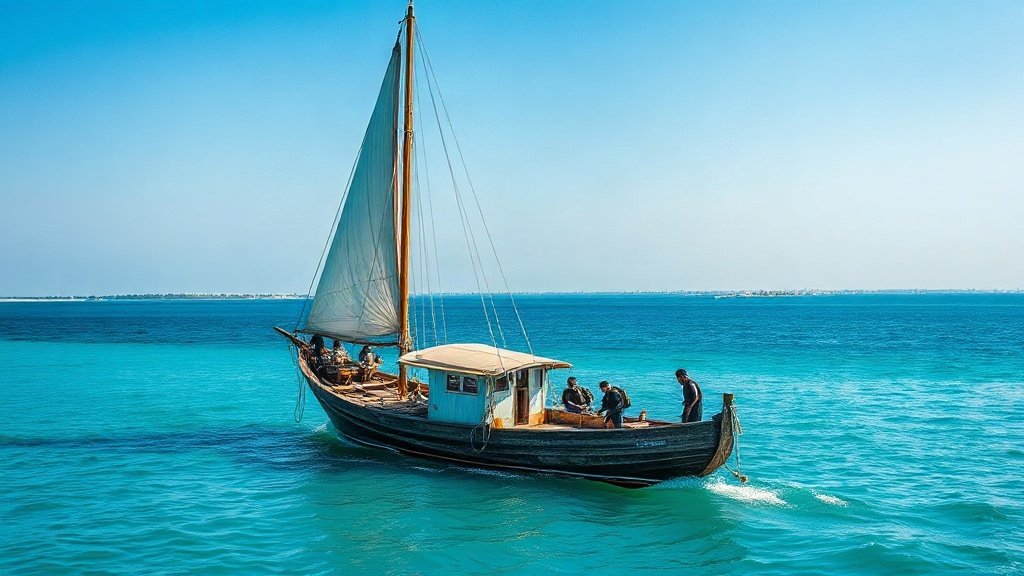
Illustration: AI-generated image
For centuries, the warm waters of the Arabian Gulf yielded a treasure that shaped the region's economy, society and identity: the natural pearl. Before the discovery of oil, pearl diving was the primary source of income for many coastal communities, and its seasonal rhythms dictated life across the Gulf. Today, this maritime heritage is remembered with pride, offering a window into a world of skill, endurance and communal bonds.
A Season of Pearls
The pearling season, known as al-ghaws, typically ran from June to September, when the sea was calm and warm enough for divers to spend long hours underwater. Entire fleets of wooden dhows would set sail from ports such as Kuwait, Bahrain, Doha, Abu Dhabi and Dubai, carrying crews of up to 60 men. Each voyage could last several weeks, during which the men lived and worked aboard the vessel, returning only when the captain deemed the haul sufficient or the season ended.
The work was gruelling and dangerous. Divers would descend repeatedly to depths of 10 to 20 metres using only a nose clip, leather finger protectors and a weighted stone to speed their descent. They stayed underwater for as long as their breath allowed—often one to two minutes—while gathering oysters from the seabed into a rope basket. The rhythm of the day was punctuated by the songs of the nahham, the ship's singer, whose chants encouraged the divers and kept morale high.
The Tools of the Trade
Pearl diving required minimal equipment, reflecting both the harshness and simplicity of the profession. The essential items included the futam, a clip made of turtle shell that closed the nostrils; the khabt, leather sheaths worn on the fingers to protect against sharp oyster shells; and the zubail, a rope basket tied around the neck or waist to collect oysters. The diver was also attached to a lifeline, the yeda, held by a saib (puller) on board, who hauled him up when he tugged for air.
On deck, a team of jassas (openers) used a curved knife called a maflaqah to pry open the oysters, searching for pearls. The pearls were graded by size, shape, colour and lustre, with the most valuable—perfectly round and with a deep, silvery sheen—fetching extraordinary prices in international markets, particularly in India and Europe.
A Communal Way of Life
Pearl diving was not merely an occupation; it was a way of life that bound families and communities. The months at sea meant long separations, and the return of the fleet was a time of great celebration. The captain, or nakhuda, held immense authority, and profits were divided according to a traditional system that rewarded experience and role. Divers, pullers, apprentices and the ship's cook all had defined shares, ensuring that even the youngest crew member benefited.
The industry also had a profound social impact. Wealth from pearls funded the construction of homes, mosques and souks, and supported trades such as shipbuilding, rope-making and sail-weaving. Women played a crucial role on shore, managing households and often trading goods while the men were away, contributing to a resilient and adaptable society.
Decline and Enduring Legacy
The introduction of cultured pearls in the 1920s, pioneered in Japan, dealt a devastating blow to the Gulf pearling industry. Cultured pearls were cheaper and could be produced reliably, making natural pearls uneconomical. Combined with the discovery of oil in the region, which offered alternative employment, the pearling fleets gradually disappeared. By the 1950s, the traditional practice had all but ceased.
Today, the heritage of pearl diving is preserved through museums, festivals and educational programmes across the Gulf. Traditional dhow sailing regattas, such as the annual Al Gaffal race in Dubai, celebrate the seafaring skills of the past, while efforts are underway to revive natural pearl beds in a sustainable manner. For visitors, a trip to a pearl museum or a dhow-building yard offers a tangible connection to a time when the Gulf's wealth lay not beneath the sand, but beneath the sea.