Omani Halwa: A Practical Guide to the Gulf's Iconic Sweet
Discover the history, varieties and serving customs of Omani halwa, a rich, gelatinous sweet that is a hallmark of hospitality across the Sultanate.
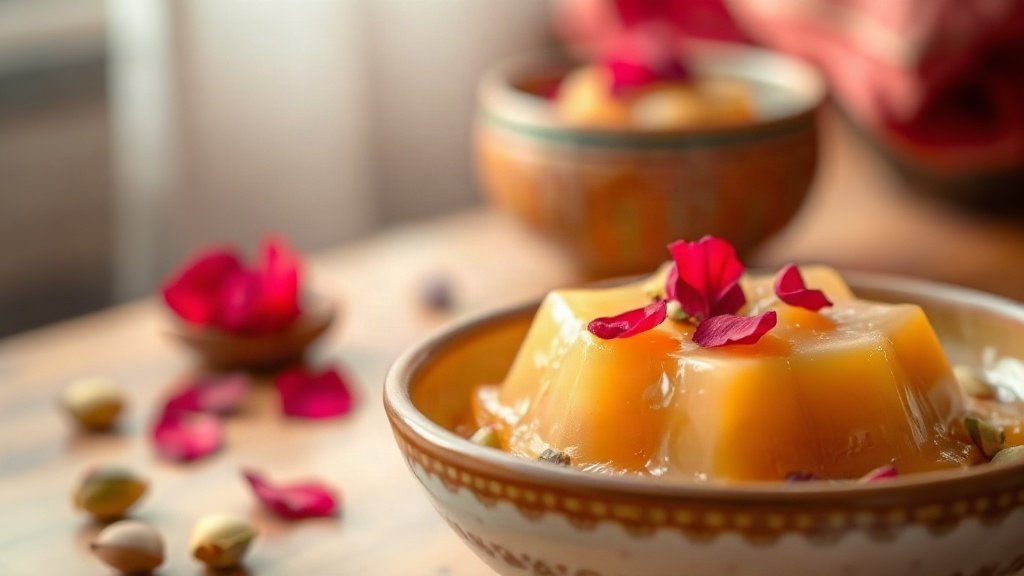
Illustration: AI-generated image
Omani halwa is much more than a dessert. It is a symbol of generosity, a staple at celebrations, and one of the most distinctive sweets in the Arabian Peninsula. Made from just a handful of ingredients—sugar, water, starch, and aromatic flavourings—it transforms into a glossy, amber-hued confection with a uniquely dense and sticky texture. For visitors to Oman, tasting halwa is an essential cultural experience.
What Is Omani Halwa?
Unlike the crumbly semolina-based halwa found in South Asia or the tahini-based halva of the Levant, Omani halwa is a smooth, gelatinous sweet. Its base is a mixture of water, sugar, and corn starch or wheat starch, which is simmered and stirred for hours until it thickens and turns translucent. The mixture is then enriched with ghee (clarified butter) and perfumed with rosewater, saffron, and cardamom. Chopped nuts—usually almonds, pistachios, or cashews—are folded in near the end, adding a pleasant crunch. The result is a glossy, golden-brown sweet that is often compared to a very thick jelly or Turkish delight, but with a deeper, more complex flavour.
A Sweet with Deep Roots
Halwa has been made in Oman for centuries, though its exact origins are murky. Some food historians suggest it was introduced by traders from Persia or India, while others argue it evolved from a local date-based confection. Regardless of its beginnings, halwa is now deeply woven into Omani social fabric. It is served at weddings, Eid celebrations, funerals, and during Ramadan to break the fast. It is also offered to guests as a gesture of welcome, often alongside a small cup of Omani coffee (qahwa). In many homes, the recipe is passed down through generations, and making a large batch of halwa can be a communal event, with family members taking turns stirring the heavy pot over a wood fire.
Varieties and Flavours
While the classic version is flavoured with saffron and rosewater, there are several regional and household variations. Some cooks add date syrup for a darker colour and caramel-like sweetness. Others incorporate dried fruits such as raisins or apricots, or a medley of nuts including walnuts and almonds. A particularly prized version is made with pure honey instead of sugar, giving it a richer, more floral taste. In the southern Dhofar region, halwa may be flavoured with a touch of cardamom and nutmeg, while coastal towns might add a hint of coconut. No two batches are exactly alike, which is part of its charm.
How It Is Served
Omani halwa is traditionally served in small portions, often in a shallow bowl or on a small plate. It is usually eaten with a spoon, though it can also be scooped up with a piece of flatbread. It is customary to serve it warm or at room temperature, as the texture becomes softer and more fragrant when it is not chilled. A typical serving size is just a tablespoon or two, as the sweet is extremely rich. It pairs beautifully with the bitter, cardamom-infused notes of Omani coffee; the contrast is a classic combination that has been enjoyed for generations.
Where to Try It
If you are invited to an Omani home, you will almost certainly be offered halwa—accepting it is a way of showing respect for your host. Outside of private homes, the best places to sample halwa are traditional souqs and local restaurants. In Muscat, the Muttrah Souq and the souq in Nizwa are known for their halwa stalls, where large copper pots are often on display. Many bakeries and sweet shops across the country also sell halwa by weight or in decorative boxes. For a truly authentic experience, look for a shop where the halwa is still made in the traditional way, stirred by hand in a massive pot over an open flame.
Buying and Storing
Halwa makes an excellent souvenir or gift, as it travels well and can be kept for several weeks if stored properly. When buying, look for a glossy, uniform texture without any separation of oil. It is usually sold in sealed plastic containers or ornate tins. Once opened, it should be refrigerated and consumed within two to three weeks. If you are taking it home, pack it in your checked luggage and keep it away from extreme heat. Most halwa does not require refrigeration until opened, but it is best to follow any storage instructions on the packaging.
Etiquette Tips
When halwa is offered, it is polite to accept at least a small piece, even if you are full. Use your right hand if you are eating without utensils, as the left hand is traditionally reserved for hygiene purposes. If you are at a formal gathering, wait until the host invites you to begin eating. It is also considered good manners to compliment the halwa, as it is often a point of pride for the person who made it. Avoid cutting a piece that is too large—it is meant to be savoured in small bites, not eaten like a cake.
Omani halwa is a delicious entry point into the culinary traditions of the Gulf. Its unique texture and fragrant flavours are unlike anything else in the region, and its role in Omani hospitality makes every taste a small cultural lesson. Whether you try it in a bustling souq or a quiet family home, you will be tasting a piece of Omani heritage that has been lovingly preserved for generations.