Muttrah Souq: A Practical Guide to Muscat's Historic Waterfront Market
Wander through narrow alleys filled with frankincense, silver and Omani crafts at one of the oldest marketplaces in the Arab world.
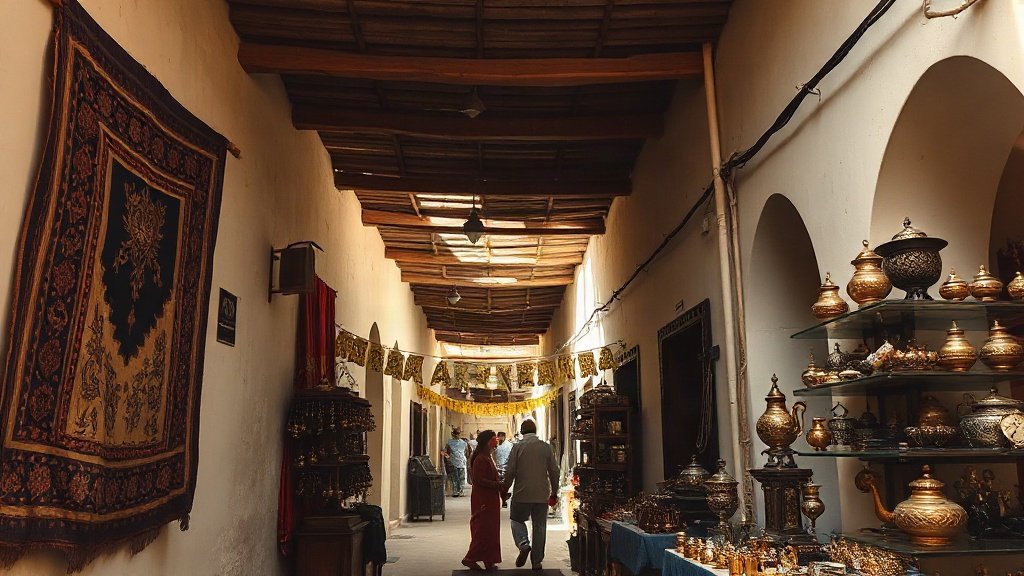
Illustration: AI-generated image
Muttrah Souq is one of the oldest continuously operating marketplaces in the Arab world, set beside the corniche in Muscat's Muttrah district. Its maze of narrow covered alleys has drawn traders for centuries, thanks to the nearby natural harbour that once linked Oman to India, East Africa and beyond. Today it remains a lively destination where the scent of frankincense hangs in the air and shopkeepers still call out to passers-by.
History and atmosphere
The souq's exact origins are uncertain, but it has long been a hub for goods arriving by sea. The main entrance faces the waterfront, where dhows once unloaded cargo. Inside, timber roofing keeps the lanes cool while shafts of light fall through gaps, illuminating shelves stacked with spices, textiles and silver. The architecture is simple and practical, with small shops opening directly onto the walkways.
What to see and buy
Frankincense is the signature product of Oman, and Muttrah Souq sells it in many grades and forms, from raw resin to scented oils. Silver jewellery, particularly Omani designs with geometric patterns, is another traditional craft. You will also find khanjars – the curved ceremonial daggers worn by Omani men – although visitors usually buy decorative versions. Other typical items include pashmina shawls, hand-woven baskets, antique-style brassware, and dates from local farms.
Navigating the lanes
The souq is best explored on foot, and getting slightly lost is part of the charm. The main corridor runs parallel to the corniche, with smaller alleys branching off on both sides. Early morning and late afternoon are quieter times, while evenings can be busier with locals and tourists. Bargaining is expected for many goods, but it is done politely – a smile and a counter-offer are enough to begin.
Practical tips
Dress modestly out of respect for local culture; loose, shoulder-covering clothing is suitable for both men and women. The souq is open daily, though some shops close during midday heat and on Friday mornings. Carry cash in small denominations, as not all vendors accept cards. The corniche outside offers pleasant views of the harbour and the nearby mountains, making the area easy to combine with a longer stroll.