Muttabaq: A Guide to the Gulf's Stuffed Griddled Bread
Crisp on the outside, soft and savoury within, muttabaq is a beloved street food and home staple across the Gulf. Here's what it is, how it's made and how to enjoy it.
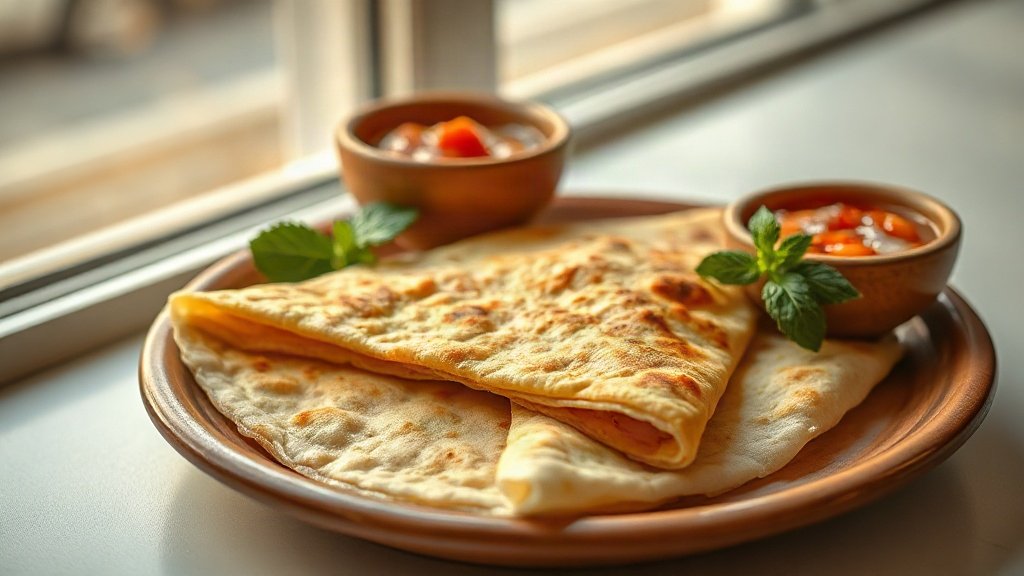
Illustration: AI-generated image
Muttabaq (also spelled mutabbaq or murtabak) is a satisfying stuffed bread that has earned a devoted following across the Gulf. The name comes from an Arabic word meaning 'folded', which describes exactly how this dish comes together: a thin, stretchy dough is wrapped around a savoury or sweet filling, then cooked on a hot griddle until golden and crisp.
It is a close relative of the stuffed flatbreads found throughout the Indian Ocean rim, from Yemen to Malaysia. In the Gulf, muttabaq has become a favourite for both street-side snacks and family meals, prized for its contrast of textures and its ability to turn simple ingredients into something deeply comforting.
What is muttabaq?
At its heart, muttabaq is a parcel of dough filled with a seasoned mixture, folded into a square or rectangle, and pan-fried with a little oil or ghee. The dough is usually made from wheat flour, water, a pinch of salt and sometimes a little oil, kneaded until smooth and rested to become elastic. It is then stretched very thin — often by hand — until almost translucent, before the filling is placed in the centre and the edges folded over to form neat layers.
The result is a bread that is crisp and golden on the outside, with soft, flavourful layers inside. Muttabaq can be eaten as a snack, a light lunch, a side dish or even a sweet treat, depending on the filling.
Typical fillings
The most common savoury filling in the Gulf is a mixture of minced meat (usually beef or lamb), finely chopped onions, fresh herbs such as coriander or parsley, and a blend of warm spices including black pepper, cumin, turmeric and sometimes a little chilli. Some cooks add beaten egg to the filling, which sets as the bread cooks and gives the inside a rich, almost quiche-like texture.
Other popular savoury options include:
- Spiced vegetables, such as finely shredded cabbage, carrot and spring onion
- Cheese, often a mild white cheese that melts well
- Leftover cooked chicken or lamb, shredded and mixed with spices
- A combination of egg, onion and tomato for a simple breakfast version
Sweet muttabaq is also enjoyed, especially as a dessert or afternoon treat. Fillings may include sweetened ricotta-style cheese, mashed banana, or a mixture of chopped nuts, sugar and a little ground cardamom. A drizzle of honey or date syrup on top is a common finishing touch.
How muttabaq is made
Making muttabaq at home is a rewarding project. The key steps are:
- Prepare the dough: Mix flour, water, salt and a little oil, then knead until smooth. Cover and rest for at least 30 minutes to relax the gluten.
- Divide and ball: Portion the dough into small balls and coat them lightly with oil. Rest again so they become very soft and stretchy.
- Stretch the dough: On an oiled surface, gently press and pull each ball into a very thin round or rectangle. It should be thin enough to see your hand through.
- Add the filling: Place a spoonful of the filling in the centre. Fold the dough over the filling from four sides to create a square packet, pressing gently to seal.
- Cook: Heat a griddle or heavy frying pan over medium heat with a little oil or ghee. Place the muttabaq seam-side down and cook until golden brown, then flip and cook the other side. Press lightly with a spatula to ensure even browning.
- Rest and serve: Remove to a cutting board, let it rest for a minute, then cut into squares or strips.
How to eat and serve it
Muttabaq is best enjoyed hot, straight from the pan, when the outside is at its crispiest. It is often served with a simple dipping sauce — a spoonful of plain yoghurt, a squeeze of lemon, or a small bowl of daqqus (a fresh tomato and chilli salsa). In many Gulf homes, it appears as part of a larger spread alongside soups, salads and rice dishes.
For a lighter meal, pair savoury muttabaq with a cucumber and mint salad. Sweet versions are wonderful with a cup of Arabic coffee or karak chai, their richness balanced by the warm, spiced drinks.
Making muttabaq at home
If the thought of hand-stretching dough feels daunting, start with ready-made spring roll wrappers or thin flour tortillas as a shortcut. Place the filling in the centre, fold into a square, and cook exactly as you would with homemade dough. The result is slightly different in texture but still delicious.
Because muttabaq freezes well, it is a practical make-ahead food. Assemble the parcels, layer them between sheets of baking paper, and freeze. Cook them straight from frozen over a slightly lower heat, adding a few extra minutes per side.
Whether you try a traditional spiced meat filling or a sweet cheese and nut version, muttabaq is a wonderful way to explore the layered, comforting side of Gulf cooking.