Mleiha: A Practical Guide to Sharjah's Ancient Desert Site
Discover ancient tombs, fossil rocks and desert adventures at one of the UAE's most significant archaeological areas.
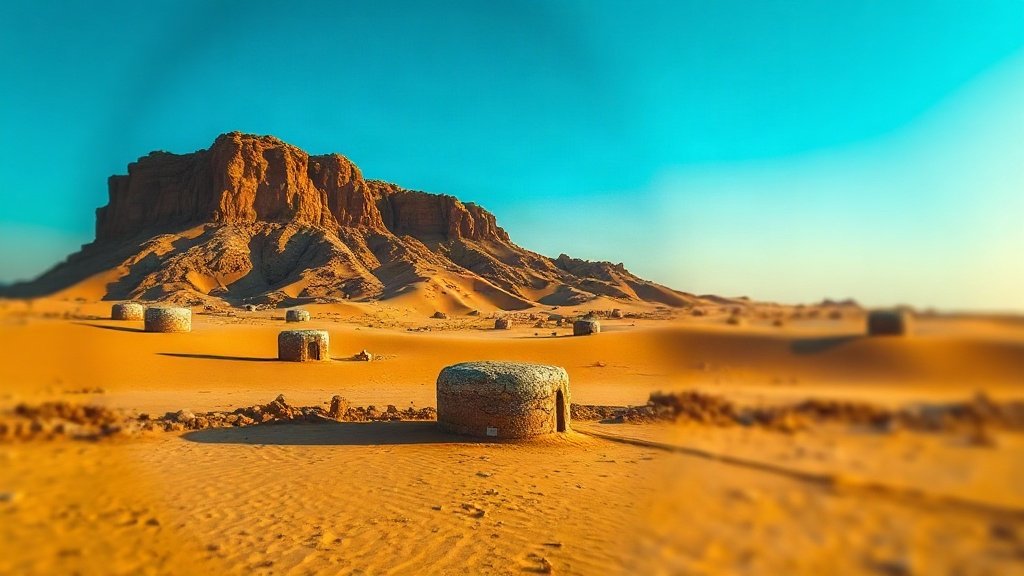
Illustration: AI-generated image
Mleiha is a remarkable destination in the emirate of Sharjah, where the desert unveils stories going back over 100,000 years. Located roughly an hour's drive from Dubai and Sharjah city, this archaeological and natural wonderland offers a compelling mix of deep history, striking landscapes and outdoor adventures. Here is what you need to know to plan a visit.
Getting there and the setting
Mleiha lies in the central region of Sharjah, on the desert plains near the Hajar Mountains. The main access is via the Sharjah–Kalba road (E102) or the Dubai–Hatta road (E44) with a turn-off towards the town of Mleiha. A paved road leads to the Mleiha Archaeological Centre, the modern visitor hub that serves as the gateway to the area's treasures. The surrounding terrain is a mix of golden dunes, gravel plains and dramatic rocky outcrops, including the iconic Jebel Faya, a limestone massif that rises abruptly from the desert floor.
A journey through time
The region has been inhabited since the early Stone Age, making it one of the most important archaeological sites in the Arabian Peninsula. Key discoveries include Faya Cave, a rock shelter at the base of Jebel Faya, where stone tools have been dated to around 125,000 years ago — some of the earliest evidence of modern human activity outside Africa. The area is also rich in Bronze Age tombs from the Umm an-Nar culture, circular stone structures used for communal burials. Later, during the pre-Islamic era, Mleiha flourished as a major caravan stop on trade routes linking the Gulf to the Mediterranean, and remains of a fort, palace and residential quarters from that period can still be seen.
What to see and do
Start at the Mleiha Archaeological Centre, which features informative displays, artefacts and interactive exhibits that explain the site's significance. From there, you can explore several key outdoor locations:
- Fossil Rock (Jebel Faya): This striking limestone outcrop is embedded with marine fossils from millions of years ago, when the area was covered by sea. It is a favourite spot for photography and panoramic views.
- Camel Rock: A natural rock formation that resembles a resting camel, easily visible from the main road.
- Bronze Age tombs: Scattered across the desert, these well-preserved circular graves offer a glimpse into ancient funerary practices.
- Pre-Islamic fort and palace: The excavated remains of a large mudbrick complex show Mleiha's importance as a trading hub.
Beyond archaeology, the desert around Mleiha invites outdoor pursuits. Guided excursions offer dune driving, sandboarding, and hiking through scenic wadis. The area is also known for its dark skies, making it an excellent location for stargazing tours on clear nights. Horse riding and camel treks are available from local operators, allowing you to experience the landscape as ancient travellers did.
Practical tips
Mleiha is a desert environment, so preparation is key. The best time to visit is between October and April, when temperatures are mild. Wear lightweight, comfortable clothing that covers your shoulders and knees, and bring a hat, sunglasses and sunscreen. Sturdy walking shoes are recommended for exploring rocky areas. Carry plenty of water, as there are limited facilities away from the visitor centre. If you plan to drive off-road, a four-wheel-drive vehicle is essential, and it is safer to join a guided tour. Always respect the archaeological sites: do not climb on tombs, remove artefacts or leave litter. Check with the archaeological centre for current opening times and any entry requirements before you go.
Mleiha offers a rare combination of ancient history and desert adventure, often without the crowds found at other attractions. It is an ideal day trip for anyone curious about the deep past of the Arabian Peninsula and the natural beauty of the Sharjah desert.