Misfat Al Abriyeen: A Practical Guide to Oman's Enchanting Mountain Village
Discover the timeless charm of Misfat Al Abriyeen, a traditional mudbrick village nestled in the Hajar Mountains, where ancient falaj channels still water lush date palm terraces.
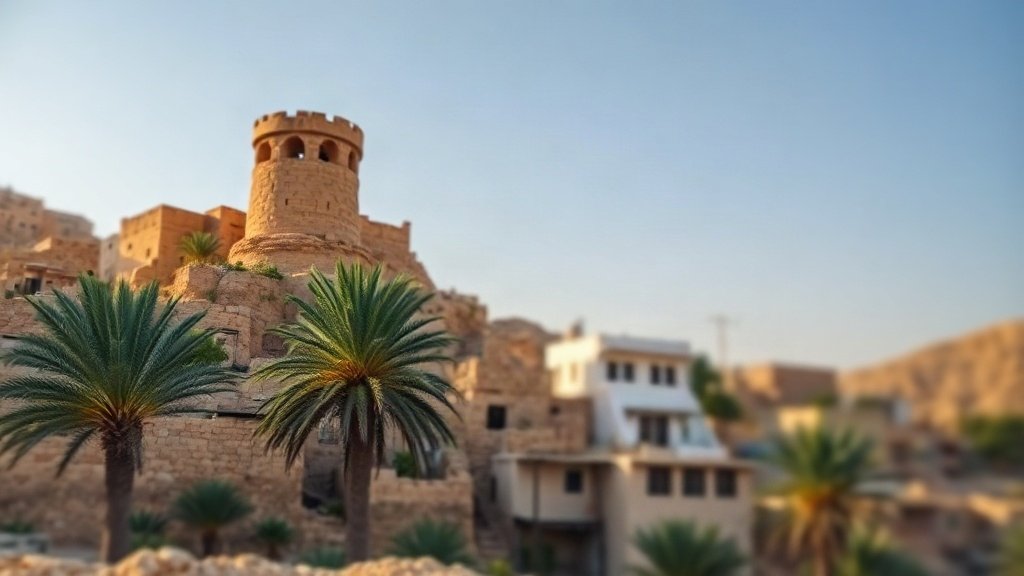
Illustration: AI-generated image
Tucked into the rugged slopes of the Hajar Mountains, Misfat Al Abriyeen feels like a place frozen in time. This centuries-old village, with its stacked mudbrick houses, winding stone lanes and lush date palm terraces, offers a serene escape from the bustle of modern Gulf cities. It is one of Oman's best-preserved mountain settlements and a highlight for travellers seeking authentic culture and natural beauty.
Where is Misfat Al Abriyeen?
The village sits in the Ad Dakhiliyah region of northern Oman, about 200 kilometres from Muscat. It lies just a short drive from the town of Al Hamra and near the base of Jebel Shams, Oman's highest peak. The journey by car takes around two and a half hours from the capital, passing through dramatic wadis and mountain scenery. A four-wheel-drive vehicle is recommended for the final approach, though the main road is paved for most of the way.
What to see and do
Misfat Al Abriyeen is best explored on foot. Park near the entrance and wander through the narrow alleys, where traditional houses with wooden doors and carved lintels line the pathways. Many homes are still occupied, so visitors should be respectful of residents' privacy and avoid entering private courtyards.
The village's ancient falaj system, a network of water channels that has irrigated the terraces for centuries, is a UNESCO-recognised example of traditional water management. Follow the channels as they gurgle past small gardens and plunge into shaded pools. The sound of running water accompanies you throughout the village.
Walking trails and viewpoints
Several signposted walking trails lead from the village into the surrounding mountains. The most popular route climbs to a viewpoint overlooking the entire settlement and its green terraces, with the arid peaks beyond. The hike takes about 45 minutes each way and is moderately easy, though sturdy shoes are essential. Early morning or late afternoon offers the best light for photography and cooler temperatures.
Where to stay and eat
Misfat Al Abriyeen has a small number of traditional guesthouses, often restored mudbrick homes with simple but comfortable rooms. Staying overnight allows you to experience the village after day-trippers leave, when the call to prayer echoes across the valley and lanterns glow in the alleys. Local families sometimes prepare traditional Omani meals, including slow-cooked shuwa and sweet halwa, for guests by prior arrangement.
Practical tips for visitors
- Dress modestly, covering shoulders and knees, as this is a conservative rural community.
- Ask permission before photographing people, especially women and children.
- Carry water and wear sun protection; shade is limited on the trails.
- Visit on weekdays to avoid weekend crowds from Muscat.
- Combine your trip with nearby Al Hamra, Bahla Fort or Jebel Shams for a full day of exploration.
Best time to visit
The cooler months from October to March are ideal, with pleasant daytime temperatures for walking. Summer can be extremely hot, making outdoor activity uncomfortable. Even in winter, evenings at this altitude can be chilly, so bring a light jacket.
Misfat Al Abriyeen rewards those who slow down and soak in the details: the textures of sun-baked clay, the scent of ripening dates, the timeless rhythm of water in the falaj. It is a place to pause, breathe and appreciate a way of life that has endured for generations.