Machboos and Kabsa: A Friendly Guide to the Gulf's Favourite Spiced Rice
From Kuwait to Muscat, a fragrant platter of spiced rice and meat sits at the heart of family meals. Here is what goes into machboos and kabsa, and how to enjoy them.
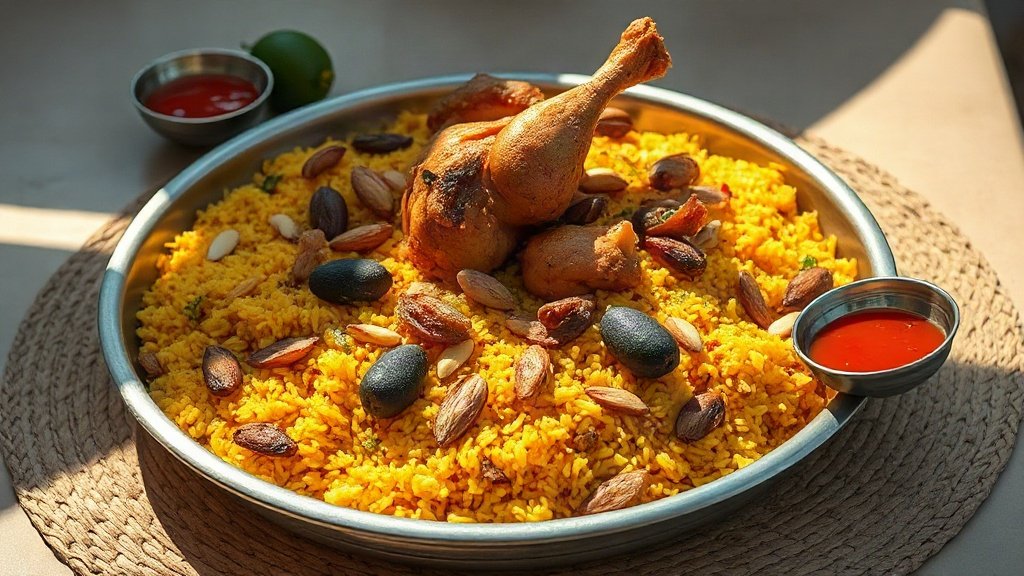
Illustration: AI-generated image
If there is one dish that brings the Gulf to the table, it is a generous platter of spiced rice crowned with tender meat, chicken or fish. In Kuwait, Bahrain, Qatar and the UAE it usually goes by machboos (sometimes spelled majboos). In Saudi Arabia, the close cousin most people reach for is kabsa. Whatever you call it, it is the food of Friday lunches, family gatherings and celebrations.
For newcomers, these dishes can look similar to biryani or pilaf. They share a family resemblance, but the flavours are distinctly Gulf, and once you know what to look for, every plate tells you a little about where it was cooked.
What goes into it
At its simplest, machboos is rice cooked in the rich, spiced broth left from simmering the meat, so the grains soak up all the flavour. A few ingredients do most of the work:
- Long-grain rice, usually basmati, washed and soaked so it cooks up fluffy and separate.
- Loomi, or dried black lime, which is pierced and dropped into the pot. It gives a sour, slightly smoky depth that is the signature of Gulf rice dishes.
- Baharat, a warm spice blend that typically includes black pepper, cardamom, cinnamon, cloves, cumin and coriander. Every household has its own version.
- Onions and tomatoes, softened at the start to build a savoury base.
- Saffron or turmeric, for colour and fragrance, along with a splash of rose water in some kitchens.
The protein varies. Chicken is the everyday favourite, lamb is popular for special occasions, and along the coast you will find versions made with fish or prawns, reflecting the region's long seafaring history.
Machboos versus kabsa
The two dishes are close relatives, and people in different countries will happily debate the details. Broadly speaking, machboos tends to lean on loomi for its tangy edge, while Saudi kabsa often has a slightly sweeter, tomato-forward profile and may be finished with toasted nuts and raisins.
You may also come across mandi, which is a different dish with roots in Yemen. Mandi is traditionally cooked in a pit or sealed oven, giving the meat a smoky, fall-apart texture. It is widely loved across the Gulf, but it is not the same as machboos.
The trimmings
Machboos rarely arrives alone. Common companions include:
- Daqoos, a tangy tomato sauce with garlic and chilli, especially associated with Bahrain and Kuwait.
- Hashu or caramelised onions, sometimes with raisins and chickpeas, spooned over the top.
- Fresh salad of cucumber, tomato and onion to cut through the richness.
- Laban or yoghurt, cool and refreshing alongside the spices.
- Toasted almonds or pine nuts scattered over the rice for crunch.
How to eat it like a local
Traditionally, machboos is served on one large communal platter, with the meat placed on top of a mound of rice. Diners sit around it and share, which is part of the pleasure.
Eating with your hand is customary in many homes, and it is always done with the right hand. Gather a small amount of rice and meat with your fingertips, press it gently together and bring it to your mouth. If that feels unfamiliar, nobody will mind if you ask for a spoon.
A few more courtesies help: eat from the section of the platter in front of you, let elders or guests start first, and expect your host to keep offering more. Leaving a little on your plate is a polite signal that you are satisfied.
Making it at home
Machboos is a forgiving dish for home cooks. Brown the onions slowly, add your spices and meat, then pour in water with a couple of pierced dried limes and simmer until tender. Lift out the meat, measure the broth and use it to cook the soaked rice. Many cooks finish the meat under a hot grill or in the oven for a golden crust before laying it back on the rice.
Loomi and ready-made baharat are easy to find in supermarkets and spice souqs across the region. Buy whole dried limes rather than powder if you can, as they keep their aroma longer.
Why it matters
More than a recipe, machboos is a reminder of the Gulf's trading past, when spices, rice and dried limes travelled across the Indian Ocean to port towns along the coast. Sharing a platter today carries that same spirit of hospitality. Whether you try it at a family table, a traditional restaurant or your own kitchen, it is one of the most rewarding ways to taste the region.