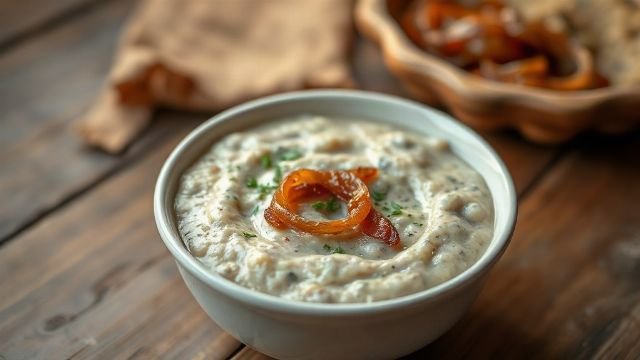
Khabees: A Guide to the Gulf's Toasted Flour and Ghee Sweet
Khabees is a traditional Gulf sweet made from toasted flour, ghee, sugar and cardamom, often served with Arabic coffee during celebrations. Here's what makes it special.
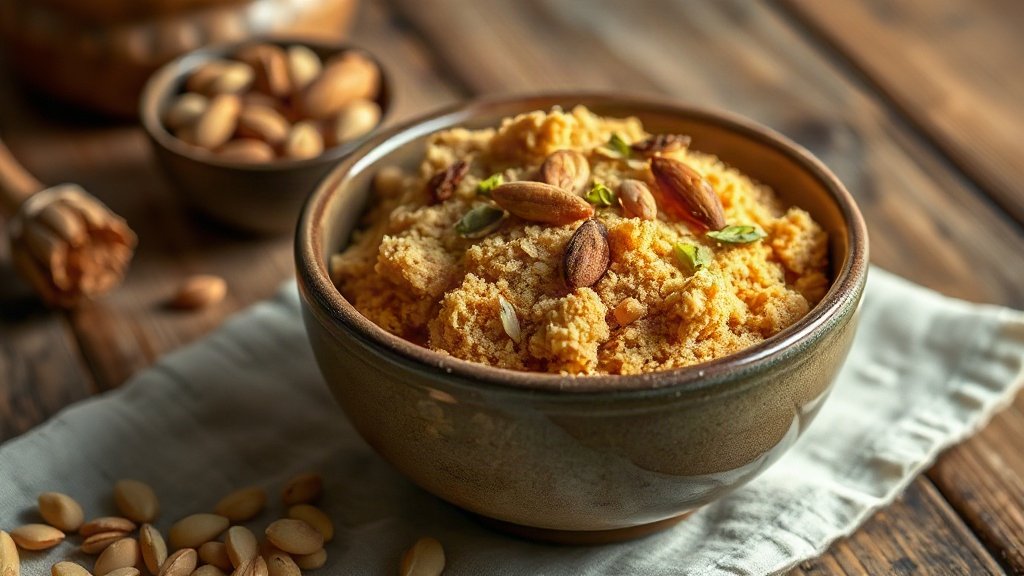
Illustration: AI-generated image
If you have ever been offered a small bowl of golden, crumbly sweetness alongside a cup of Arabic coffee in the Gulf, you have likely tasted khabees. This simple yet deeply satisfying dessert is a cornerstone of hospitality across the region, from Saudi Arabia to Bahrain, the UAE and beyond.
What is khabees?
Khabees is a traditional sweet made primarily from wheat flour that is toasted in ghee until it turns a light golden brown. Sugar, cardamom and often a pinch of saffron are added, along with a splash of rose water or orange blossom water. The result is a warm, aromatic mixture with a texture somewhere between crumbly and sticky — not as dense as halva, but far more substantial than a cake. It is usually shaped into a mound or pressed into a dish and decorated with nuts such as almonds or pistachios.
How is khabees made?
The process is straightforward but requires patience. The flour is slowly toasted in plenty of ghee over a low flame, stirred constantly until it releases a nutty aroma and turns a pale golden colour. Sugar is then dissolved in a little water or milk and poured into the flour, along with ground cardamom and saffron. The mixture is cooked until it comes together and pulls away from the sides of the pan. Finally, a dash of rose water is added for fragrance before the khabees is transferred to a serving dish.
Serving and enjoying khabees
Khabees is rarely eaten on its own. It is traditionally served in small bowls or on a shared platter, often alongside a pot of freshly brewed Arabic coffee (gahwa). The slight bitterness of the coffee balances the sweetness of the dish perfectly. It is a common sight during Eid celebrations, Ramadan iftars, weddings and family gatherings. In some homes, it is also offered as a simple afternoon treat or as a welcoming gesture to guests.
Regional variations
While the basic recipe is similar across the Gulf, small differences exist. In Bahrain, khabees is sometimes made with a mix of wheat and chickpea flour for extra texture. In Saudi Arabia, it may be flavoured with a little cinnamon or topped with date syrup. In the UAE, it is often enriched with extra ghee and decorated with slivered almonds. Some families prefer to use brown sugar or honey instead of white sugar, which gives the dish a deeper colour and a more caramel-like taste.
Whatever the variation, khabees remains a beloved example of how a few humble ingredients can be transformed into something that feels both comforting and celebratory. If you have the chance to try it, accept the offer — and do not forget the coffee.