How to Make Traditional Arabic Coffee at Home: The Gulf's Welcome Drink
Discover the art of brewing gahwa, the lightly spiced coffee that symbolises Gulf hospitality, and learn how to prepare and serve it with confidence.
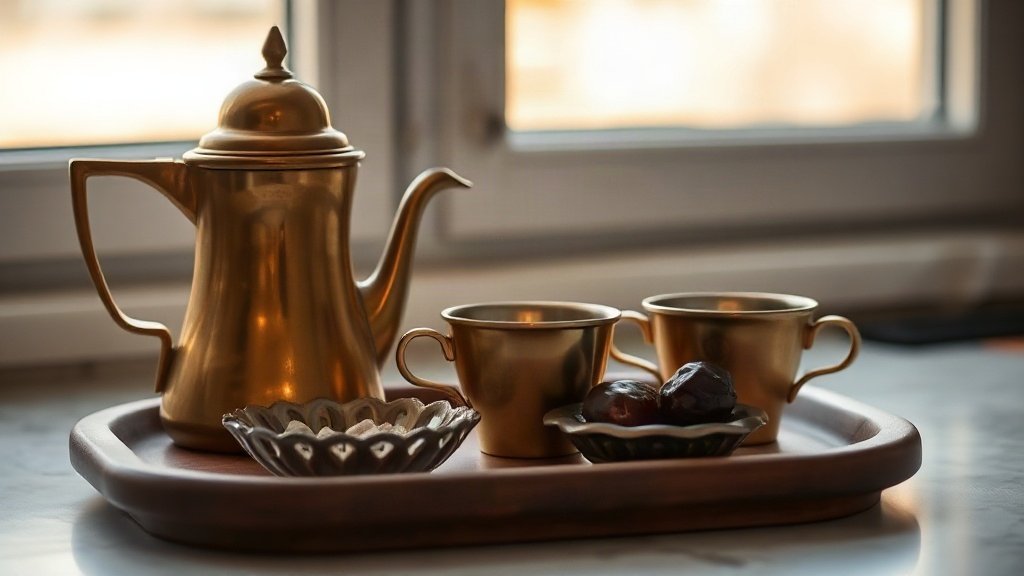
Illustration: AI-generated image
In homes across the Gulf, a pot of traditional Arabic coffee, or gahwa, is rarely far from the stove. It is the drink of welcome, offered to guests before any meal, after a long journey, or simply as a pause in the day. Unlike darker Turkish or espresso preparations, gahwa is pale, lightly spiced, and served in tiny handleless cups that encourage slow sipping and conversation.
The Beans and Spices
The foundation of gahwa is lightly roasted coffee beans, which give the brew its characteristic golden colour and gentle flavour. Look for beans labelled as “Arabic coffee” or “Saudi coffee” in specialist shops, or use a very light roast. The beans are ground to a fine powder, often together with cardamom pods. Some families also add a pinch of saffron, a few cloves, or a small piece of cinnamon, depending on regional tradition.
Freshly grinding the beans makes a noticeable difference. If you buy pre-ground Arabic coffee, store it in an airtight container away from heat and light, and use it within a few weeks.
Brewing the Perfect Pot
Making gahwa is simple but requires a little patience. You will need a traditional dallah (the long-spouted Gulf coffee pot) or any small stainless steel pot. Follow these steps:
- For every cup of water, add about one tablespoon of ground Arabic coffee.
- Pour the water into the pot and bring it to a gentle boil.
- Add the ground coffee and stir once, then reduce the heat to low.
- Let it simmer uncovered for 10 to 15 minutes. Do not stir again.
- Remove from heat and let the grounds settle for a minute.
- Add crushed cardamom pods to taste, then pour carefully, leaving the sediment behind.
Some households boil the coffee twice or add a few strands of saffron just before serving for a deeper colour and aroma. The key is to keep the brew light and clear, never thick or bitter.
Serving with Tradition
Gahwa is always served in small cups called finjan, often with no handles. The host pours from the dallah into the cups while standing, filling each cup only about a third full—just a few sips. This allows the coffee to stay hot and encourages guests to ask for refills, which is considered a compliment.
Coffee is traditionally accompanied by fresh dates. The sweetness of the dates balances the gentle bitterness of the brew and is an essential part of the experience. Some hosts also offer dried fruits or nuts, but dates remain the classic pairing.
A Few Simple Etiquette Tips
If you are a guest, accept the coffee with your right hand and drink it in small sips. When you have had enough, gently shake the empty cup from side to side or place it on the table and say “shukran” with a smile. The host will understand. Refusing the first cup can be seen as a rejection of hospitality, so it is polite to accept at least one.
Making gahwa at home is a wonderful way to bring a piece of Gulf culture into your own kitchen. With a little practice, you will be able to offer the same warm welcome that has defined the region for centuries.