How to Make Thareed: The Gulf's Comforting Bread and Stew Dish
Learn to prepare thareed, a beloved Gulf dish of tender meat and vegetables ladled over layers of thin flatbread. It is a satisfying meal for family gatherings and cool evenings.
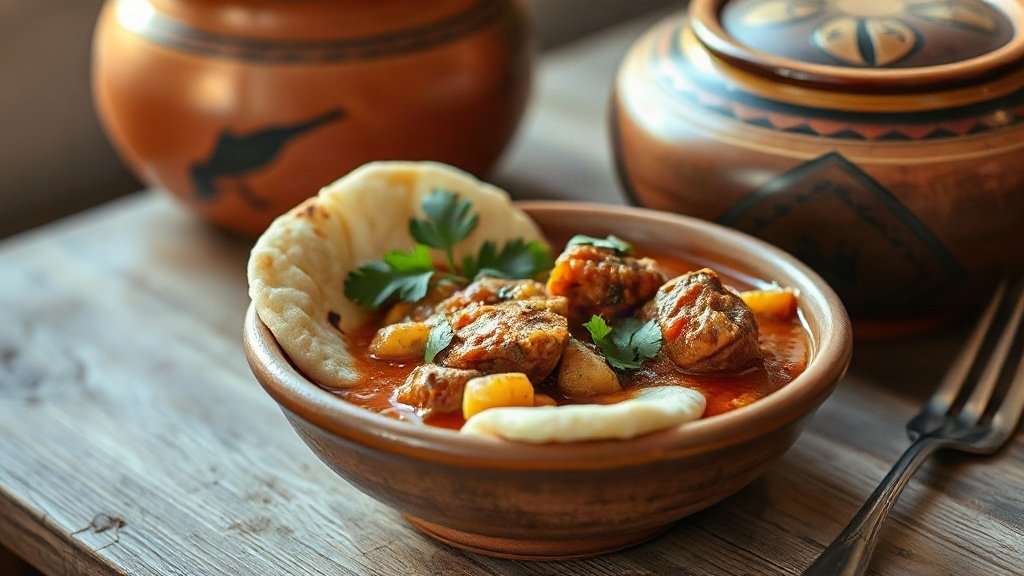
Illustration: AI-generated image
Thareed is one of the Gulf's most cherished comfort foods, a dish that brings together two staples of the region's cuisine: slow-cooked stew and thin flatbread. Often served during Ramadan to break the fast, it is equally enjoyed throughout the year as a warming family meal. The concept is simple: a rich broth with tender meat and vegetables is poured over layers of paper-thin bread, which soaks up the flavours and softens into a delicious, spoonable texture.
The most common version uses lamb, though chicken or even vegetables can be used for a lighter alternative. The stew is typically seasoned with a blend of Gulf spices including turmeric, cumin, coriander, and dried lime (loomi), giving it a distinctive, aromatic depth. Vegetables such as potatoes, carrots, courgettes, and tomatoes are often added, creating a wholesome one-pot dish.
To make thareed at home, start by preparing the flatbread. Traditional recipes call for regag, a very thin, crepe-like bread, but you can substitute with thin pita or even tortillas. The bread is torn into pieces and placed in a deep serving dish. Meanwhile, the meat is browned and then simmered with onions, garlic, spices, and water or stock until tender. Vegetables are added partway through cooking so they retain some texture.
Once the stew is ready, it is ladled generously over the bread, ensuring every piece is soaked. The dish is often garnished with fresh coriander and served immediately, sometimes accompanied by a side of yoghurt or a simple salad. The key is to allow the bread to absorb the broth without becoming completely mushy—just soft enough to scoop with a spoon.
Thareed is more than a meal; it is a reflection of Gulf hospitality and resourcefulness, using simple ingredients to create something deeply satisfying. Whether you are new to Gulf cuisine or looking to recreate a taste of home, this dish is a wonderful addition to your culinary repertoire.