Gulf Heritage Doors: The Art and Symbolism of Carved Wooden Entrances
Traditional wooden doors across the Gulf are more than entryways—they are canvases of geometric artistry, symbols of welcome, and enduring links to a rich craft heritage.
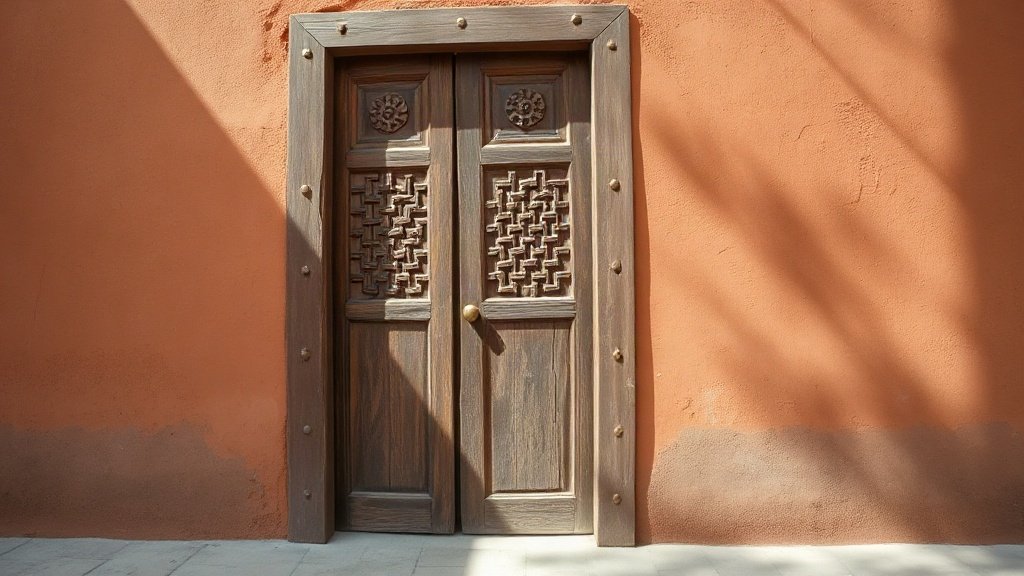
Illustration: AI-generated image
Walk through the old quarters of any Gulf city—from the narrow lanes of Al Fahidi in Dubai to the restored houses of Jeddah's Al Balad—and you will notice doors that are far more than functional. These heavy wooden entrances, often studded with brass and carved with intricate patterns, are enduring examples of a craft that once defined the region's architecture and social life.
Craftsmanship and Materials
Traditional Gulf doors were typically made from teak imported from India or East Africa, valued for its durability and resistance to termites. Local woods such as sidr (jujube) were sometimes used for interior doors. Craftsmen, known as najjar, shaped the wood by hand, using chisels and mallets to carve recessed geometric patterns. Brass or iron studs were hammered into the surface, both to reinforce the planks and to create decorative motifs. Many doors featured a smaller door set within the larger one—a khokha—allowing ventilation and a discreet view without fully opening the entrance.
Symbolism and Design
The designs carved into Gulf doors are rich with meaning. Geometric patterns—stars, hexagons, latticework—reflect a broader Islamic artistic tradition that avoids depicting living forms. Floral motifs, such as the eight-pointed star or the arabesque, appear in regions with Ottoman or Persian influences. Some doors are painted in deep greens, blues, or reds, colours believed to offer protection or signal the owner's status. Brass door knockers, often shaped like a hand (the Hand of Fatima) or a simple ring, were both practical and symbolic, inviting guests while warding off ill fortune.
Hospitality and Status
In a culture where hospitality is paramount, the door served as a public face of the household. A well-crafted, ornate door signalled the family's prosperity and taste. The threshold itself was treated with respect; stepping over it was a deliberate act of entering a protected, private space. In some Gulf towns, doors were wide enough to allow a loaded camel to pass, reflecting the importance of trade and travel in daily life.
Preservation Today
Today, these historic doors are preserved in heritage villages, museums, and restored neighbourhoods across the Gulf. Conservation efforts often focus on retaining original wood and hardware, while modern reproductions keep the craft alive for new buildings that seek a traditional aesthetic. The art of carving is passed down through apprenticeships, though the number of master craftsmen has dwindled. Visitors can still appreciate the ingenuity and beauty of these doors—silent witnesses to centuries of Gulf life.