Gahwa: A Practical Guide to Arabic Coffee in the Gulf
Discover the rituals, flavours and etiquette of Arabic coffee, the Gulf's most welcoming tradition, and how visitors can experience it authentically.

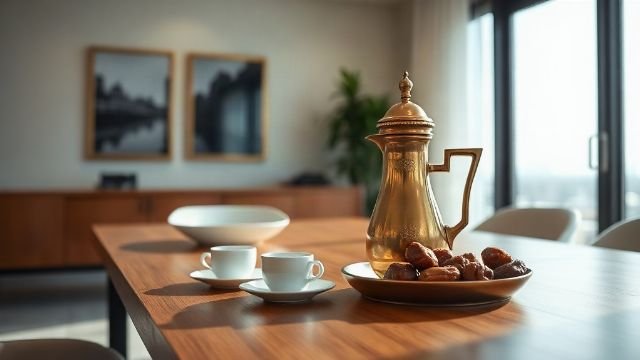
Illustration: AI-generated image
In the Gulf, hospitality begins with a small cup of gahwa – Arabic coffee. This lightly roasted, cardamom-scented brew is far more than a drink; it is a symbol of welcome, generosity and cultural identity. For visitors, understanding gahwa opens a door into the region's traditions and everyday social life.
What is gahwa?
Gahwa is made from lightly roasted coffee beans, which give it a pale golden colour and a mild, slightly earthy flavour. The beans are ground and brewed slowly in a traditional pot called a dallah. Cardamom is the classic addition, though saffron, cloves, rosewater or cinnamon may appear in some versions. Unlike Western coffee, it is never sweet and is always served black, in small handleless cups called finjan.
A ritual of welcome
Serving gahwa follows a set of unspoken rules. The host pours from the dallah with the left hand holding the pot and the right hand offering the cup. Guests receive the cup in their right hand. The cup is only filled a quarter or a third full – just enough for a few sips. When you have had enough, you gently tilt the empty cup from side to side or say "bas" (enough). Refills are offered until you decline, and the coffee is often accompanied by dates to balance the bitterness.
Where to experience gahwa
You will find gahwa in many settings across the Gulf:
- Traditional coffee houses – often called maqha or coffee shops, especially in historic neighbourhoods and souqs. These are relaxed places to sit, sip and watch daily life.
- Heritage villages and cultural centres – many offer demonstrations of coffee preparation and explain its social role.
- Bedouin-style desert camps – a cup of gahwa on arrival is a standard welcome, often served around a fire.
- Private homes – if invited, accepting a cup of gahwa is a respectful gesture. Follow your host's lead.
Etiquette tips for visitors
- Always accept the first cup offered – it is a sign of respect.
- Hold the finjan in your right hand.
- Drink the coffee slowly; it is meant to be savoured, not gulped.
- To indicate you are finished, shake the empty cup gently or say "bas" with a smile.
- Do not ask for milk or sugar; gahwa is traditionally served black.
- If dates are offered, take one – they are part of the experience.
Making gahwa at home
If you wish to recreate the taste, you can buy lightly roasted Gulf coffee and grind it with cardamom pods. Use a small pot or a dallah, boil water, add the coffee and simmer for ten minutes. Let the grounds settle before pouring. The exact proportions vary by family, but a common ratio is one heaped tablespoon of coffee and one crushed cardamom pod per cup of water. Serve in small cups without handles, with dates on the side.
Gahwa is not just a drink – it is a conversation, a pause, a connection. By understanding its customs, visitors can share in one of the Gulf's most enduring and gracious traditions.